Choosing a coffee maker for your home can feel overwhelming. There are so many different types of coffee maker out there, each promsing the greatest coffee you’ve ever tasted, the most convenient cup you’ll ever make, or cafe-quality results whilst still in your pajamas. From drip machines and pod systems to espresso makers and manual brewers, the “best” coffee maker really depends on what flavor you’re looking for, your budget, and how much effort you want to put in.
To help you cut through the noise, in this guide we’ll explain the 18 most popular types of coffee makers. We’ll break down how each one works, what style of coffee they make, the pros and cons, and who they’re best suited to. So you can confidently choose the right option for your lifestyle and preferences.
As a former barista with commitment issues, I’ve owned, tested, and regularly use all of these coffee makers at home. This article isn’t about hyping up methods or trends, just helping you pick the one you’ll actually enjoy using every day. Let’s get to it:
This article may contain affiliate/ compensated links. As an Amazon Associate, we earn from qualifying purchases at no additional cost to you. For more information please see our disclaimer here.

SAVE BIG on coffee gear
It’s the last few days of Amazon’s Big Spring Sale with whopping savings of up to 40% off
We’ve combed through the sale to find the genuinely good deals on espresso machines, grinders, and coffee gadgets (not the fake “discounts” 👀). If you’re thinking about upgrading your setup, this is where to start:

How to Use This Guide
If you’re new to making coffee at home, the most important thing to understand is that the biggest difference between coffee makers is how they brew the coffee. The brewing method (not the machine) will have the biggest impact on how your coffee tastes, feels, and fits into your routine.
Some coffee makers use pressure, others rely on immersion, and some slowly filter water through coffee grounds. Each method produces a different result, from light and clean to rich and full-bodied. And they’ll suit different routines and preferences.
Start with the overview and infographic below to understand the main brewing methods and what to expect from the coffee makers that use them. You can then focus on the options that best fit how you like your coffee and how much effort you want to put into making it.

Brief Overview of the Different Types of Coffee Maker
The easiest way to understand the different types of coffee maker is to group them by brewing method, as each method produces a distinct style of coffee. Under each method, you’ll find the most well-known coffee makers as examples.

Pressure Coffee Machines
Use pressure to force hot water through coffee grounds, producing strong, concentrated coffee with bold flavour.
- Espresso Machine (Manual, Semi-Automatic, Automatic, and Super-Automatic)
- AeroPress
- Moka Pot

Filtration Coffee Machines
Brew coffee by filtering hot water through grounds, creating a clean, balanced cup.
- Automatic Drip Brewer
- Pour Over (V60, Chemex)
- Percolator
- Vietnamese Phin
- Cold Drip Coffee Machine

Brewing via Steeping
Coffee grounds steep fully in water before being separated, resulting in a richer body and fuller mouthfeel.
- French Press
- Siphon / Vacuum Coffee Maker
- Cold Brew Coffee Makers

Single Serve Coffee Makers
Use pre-portioned coffee pods or capsules to deliver quick, consistent coffee with minimal effort.
- Nespresso
- Keurig Machines using the K-Cup
- Tassimo Disc Coffee Maker

“Boil” Based Coffee Makers
Coffee is brewed by boiling water and grounds together, producing a very strong, intense, and often unfiltered cup.
- Turkish Coffee Maker (Ibrik)
- Cowboy Coffee

Combo Coffee Makers
Combine multiple brewing styles in one machine, offering flexibility for households with different preferences.
- Drip and K-Cup Combo
- Espresso and Drip Combo

Best Coffee Makers by Lifestyle
If you’re not sure where to start, the easiest way to choose a coffee maker is to think (realistically) about how coffee fits into your day. Do you need multiple quick and easy caffeine hits throughout the day? Or would you prefer to make one labor of love every morning?
If one of the following lifestyles sounds like you, use the links to jump ahead to that coffee maker below to see whether it’s the right fit for you:
- Best for busy mornings: Pod coffee makers or automatic drip machines
Quick, consistent coffee with minimal setup or cleanup. - Best for hands-on coffee lovers: Pour-over brewers (manual drip) or AeroPress
More control over flavor and strength, with a more involved brewing process. - Best for espresso-style drinks at home (including lattes): Espresso machines
Ideal if you enjoy strong coffee like an espresso shot or milk-based drinks like lattes and cappuccinos (that includes iced lattes too) - Best for low-maintenance brewing: Single-serve pod machine or French press
Simple to use, easy to clean, and reliable – great if convenience is your number 1 priority. - Best for strong, traditional coffee: Turkish coffee maker or Moka pot
Bold, intense coffee with minimal equipment and a traditional feel.

Infographic: Types of Coffee Maker & Brewing Techniques

Pressure Coffee Makers
With this style of coffee maker, intense pressure is used to force water through the coffee grounds quickly. The exact amount of pressure and time varies depending on the exact coffee maker used.
Espresso Machines
These are probably the most iconic coffee machines. It’s what I first learned to make coffee using, and is what you’ll see at your favorite coffee shop. For some people, this is where they let their inner coffee nerd out, obsessing over every tiny detail (though that’s not a requirement of using one!)
Originally, they were designed so coffee shops could make coffee faster. Now, espresso forms the base of most popular coffee drinks (lattes, flat whites, Americanos…)
You’ll find huge variation in design, complexity, and cost (!) between the different types of espresso machines, but they all work on the same principle:
They generate a minimum amount of pressure (9 bars) to force hot water through finely ground coffee, resulting in a set-sized espresso shot (1oz).
Where they really differ is how much effort you have to put in and how much control you get over the final drink. There are options from 0% input to 100%, so the world is your espresso-filled oyster. Generally speaking, the more effort you put in, the more control you have over flavor and quality (for better or worse). So automatic machines trade off some of that potential for speed and convenience.
The 4 Different Types
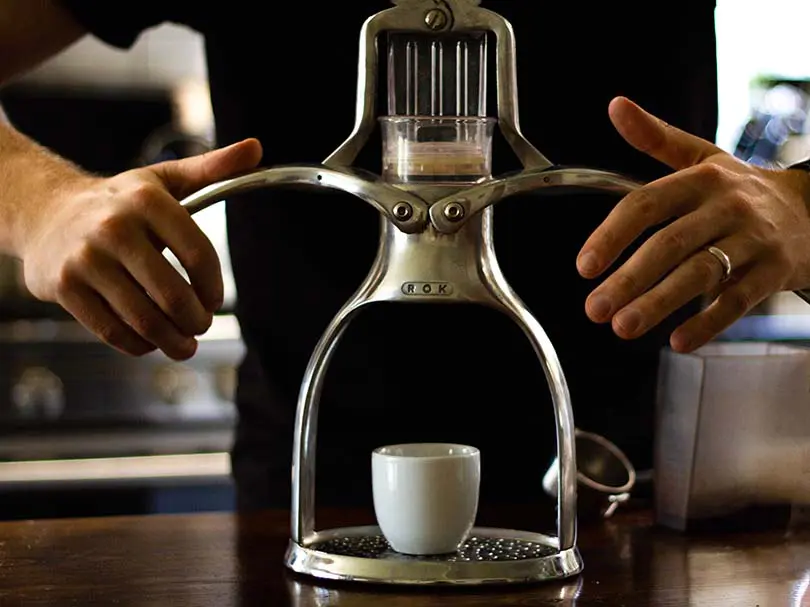
Manual Espresso Machines:
You do everything yourself – heat the water, grind and tamp the coffee, generate pressure manually (usually with a lever), and time the shot. This means you get maximum control but they require practice, patience, and the desire to learn.
Best suited to experienced or highly motivated home coffee makers.
Examples: Rok GC (pictured) and Wacaco Nanopresso
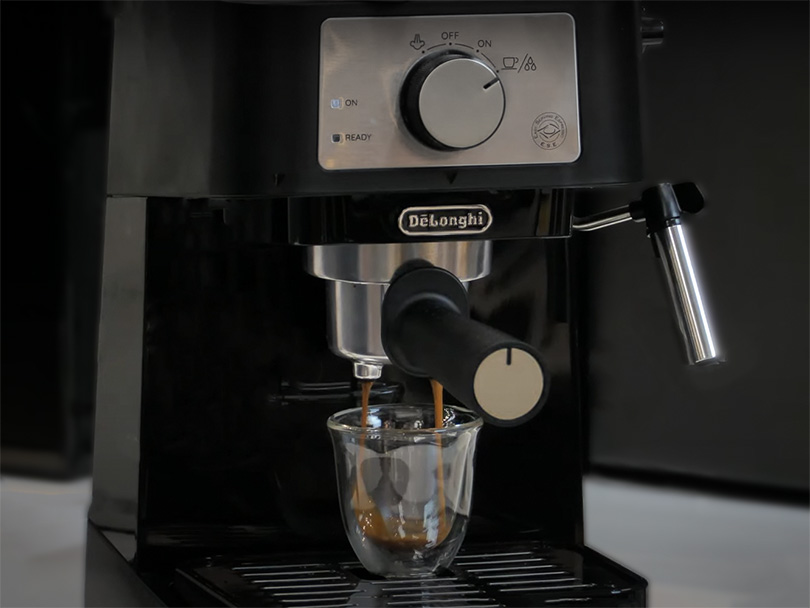
Semi-Automatic Espresso Machines:
The machine will heat and pressurize the water, but you need to grind and tamp the coffee, then time the shot (i.e., how long you want water going through the grounds).
Best suited to home espresso enthusiasts and those on a budget – this is usually where you find the most budget-friendly espresso machines.
Examples: DeLonghi Stilosa (pictured) and Gaggia Classic
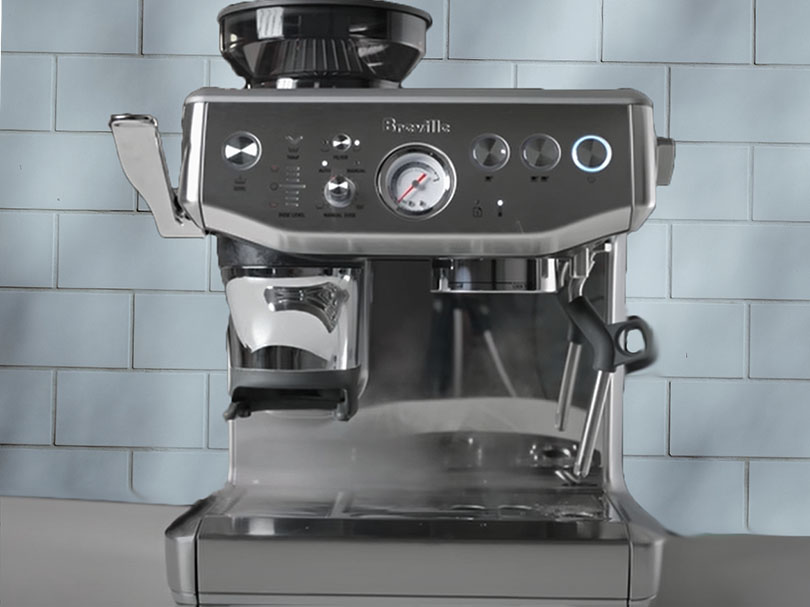
Automatic Espresso Machines:
You still grind and tamp the coffee beans, but the machine controls the shot volume and extraction time. Plus, it will take over control of the temperature and pressure. This makes the results more consistent.
Best suited to anyone wanting quality espresso with fewer variables.
Examples: Breville Barista Express Impress (pictured) and the Mr Coffee Cafe Barista.

Super-Automatic Espresso Machines:
These are the machines that do everything – grind, tamp, extract, and sometimes even steam the milk. They’re the most premium machines as they work at just the touch of a button.
Best suited to someone looking for total ease and less experimentation (and with a healthy budget)
Examples: Jura Z10 (pictured) and the Breville Oracle Touch.
Pros & Cons of Espresso Machines
✅ Pros
- Produces strong, concentrated coffee and all your favorite café-style drinks
- Forms the base for lattes, cappuccinos, and flat whites
- There’s a wide range of machines to suit different budgets and skill levels
- Highly rewarding… once you dial in your technique
❌ Cons
- Can be expensive, especially at higher quality levels
- Unless you get a super-automatic, there’s a steeper learning curve than most other coffee makers
- Often requires additional equipment (grinder, tamper, milk jug)
- Takes more time and maintenance than pod or drip machines
Discover our recommendations for the best espresso machines for all occasions:
Best Espresso Machines Under $100 | Best Portable Espresso Machine | Best Espresso Machines Under $200
Or explore by brand:
Jura | Breville | DeLonghi | KitchenAid | Gaggia
AeroPress
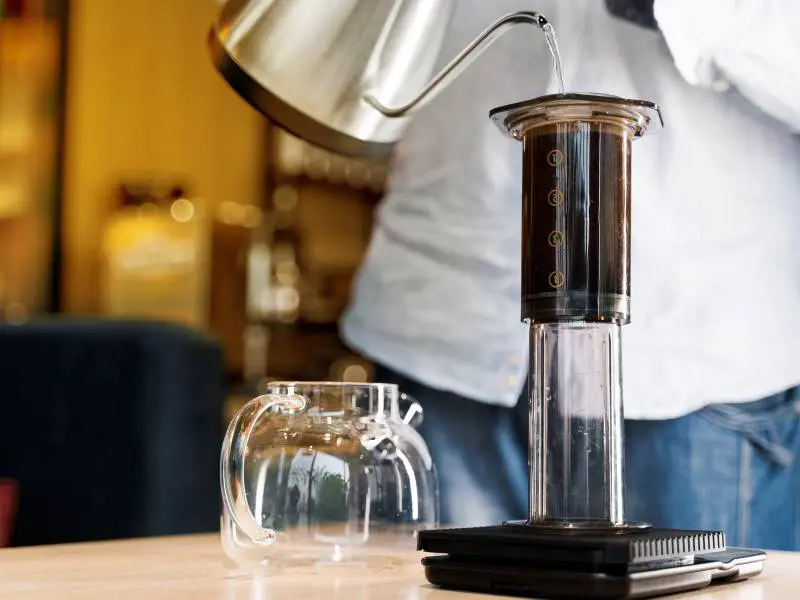
The AeroPress is a small but mighty coffee maker, beloved by coffee fans the world over. (There are even competitions dedicated to it!)
It’s a simple manual device that combines pressure and steeping. The pressure is a lot lower than that of an espresso machine, so the result is a richer, more syrupy coffee. It can really show off the unique flavor of your beans, especially as there are so many techniques you can try.
Making coffee in an AeroPress is an involved process, so it’s not great when you’re in a hurry or if you’re making coffee for the family (it makes 1-2 cups at a time). But where it excels is giving you the control of a manual espresso machine at a fraction of the price. Plus, it’s a lot easier to use.
As it’s so small, you can easily throw it in the cupboard when you’re done or in your bag for work or vacation if you want to be “that guy.” I’m that guy (though I prefer the AeroPress Go Plus for travel).
Best suited to coffee drinkers who love experimenting and having fun with their coffee (and total control). Or if you’re short on space, either at home or for life on the road.
Pros and Cons of the AeroPress
✅ Pros
- Extremely versatile. You can brew something similar to espresso (but not exactly it), filter-style coffee, and cold brew
- Fast brew time (usually under 2 minutes)
- Compact, lightweight, and highly portable – I never travel without mine
- Produces smooth coffee and gives you flexibility to try new beans
- Affordable option compared to many other coffee makers
❌ Cons
- Brews small volumes (enough for 1-2 people at a time)
- Requires some manual effort and experimentation, so you should expect a learning curve
- Results vary depending on recipe and technique
- Can’t make true espresso (lower pressure than espresso machines)
- Awkward to clean when you’re traveling
- For best results, you need a grinder and scale
Moka Pot
Check prices in a range of sizes
Or read our full review
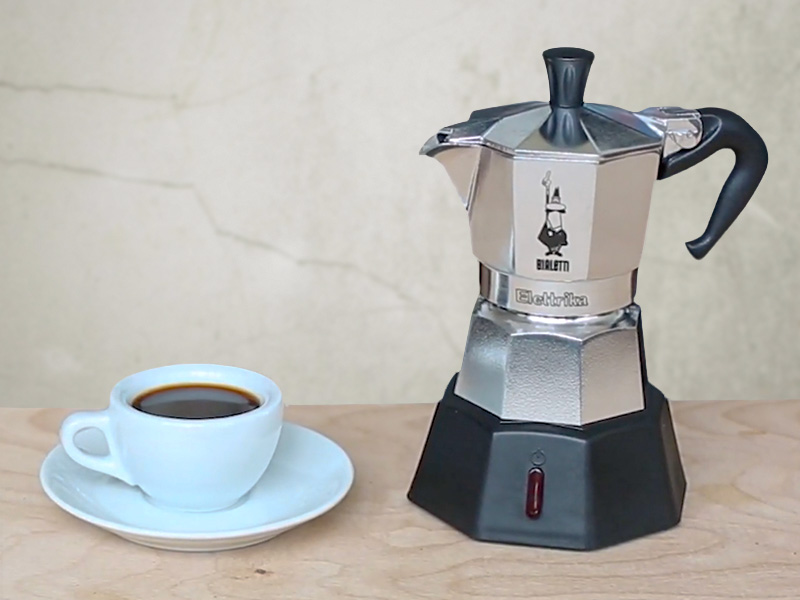
Buy the Bialetti Elettrika
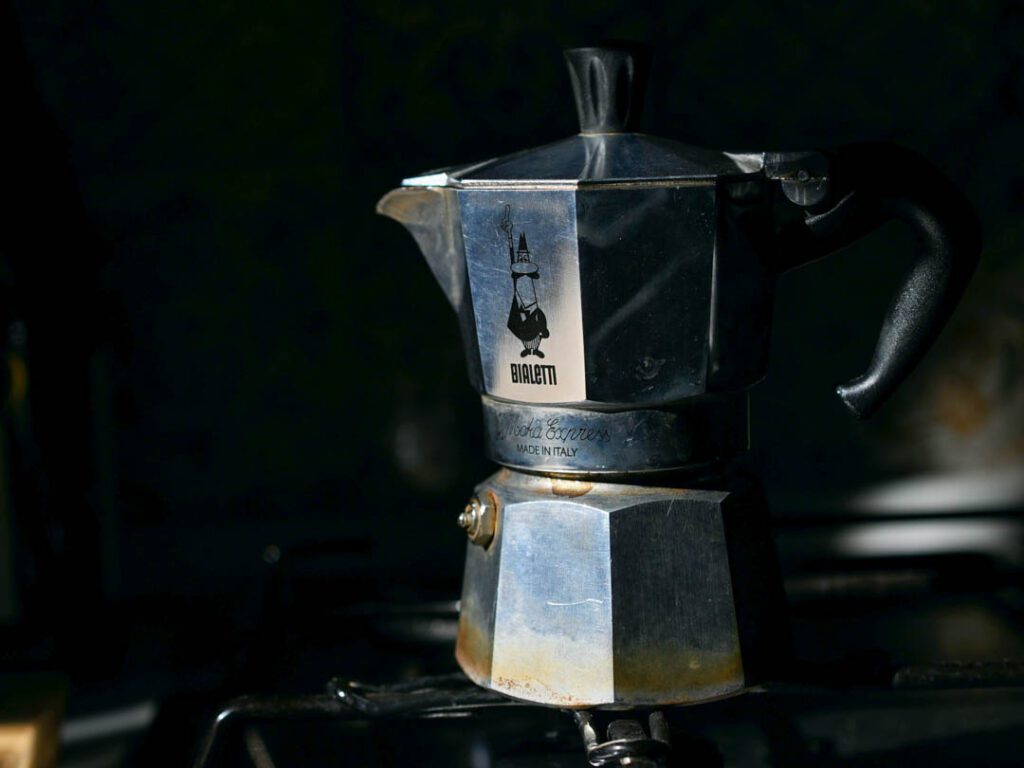
Way back in 1933, the Moka pot was invented by Italian engineer Alfonso Bialetti and named after the Yemeni city of Mocha. Unchanged over time, it’s still an iconic staple of Italian coffee culture and can be used on any stovetop, plus there are some electric options.
Water in the base is heated, creating steam that is then forced through the coffee grounds into the top section. It makes a distinctive sputtering sound as the last of the water is forced through the coffee.
Getting it right can take a bit of practice and almost all Moka recipes recommend wrapping the coffee maker in a cold towel straight after brewing. This stops the coffee from burning on the hot metal.
This simple design combines pressure (around 1.5 bar) and boiling to brew a rich, syrupy, and bitter style of coffee. Compared to an espresso machine, this isn’t very much pressure. So, despite Moka coffee often being referred to as “Italian espresso”, it’s not really espresso at all.
If you prefer to add milk to an espresso base, this is fine. But if you’re an espresso drinker you won’t find quite the same quality as with an espresso machine.
Overall, the Moka pot is a relatively inexpensive and portable coffee maker.
Best suited to lovers of big, bold coffee flavors (I’m a fan, but my wife isn’t) who have access to a stovetop. It’s pretty indestructible, making it a great choice for vanlifers.
Pros and Cons of the Moka Pot
✅ Pros
- Affordable option compared to many other coffee maker options
- Simple design with no electricity required (unless you opt for an electric one, of course)
- Compact and durable, making them great for small kitchens or travel
- Fast brewing once you get the hang of it
- Widely available and easy to find replacement parts
❌ Cons
- Not true espresso (uses pressure, but far less than espresso machines)
- Can taste bitter or burnt if heat isn’t managed carefully
- Brews in fixed quantities, with little flexibility
- Requires attention while brewing – Moka pots have been known to explode!
Filtration Coffee Machines
Filtration refers to hot water being slowly dripped through ground coffee. By using a filter, no chewy grounds are able to make their way into your cup. This process can be done manually like when making pour over coffee or you can use automatic coffee makers instead.
Automatic Drip Coffee Maker
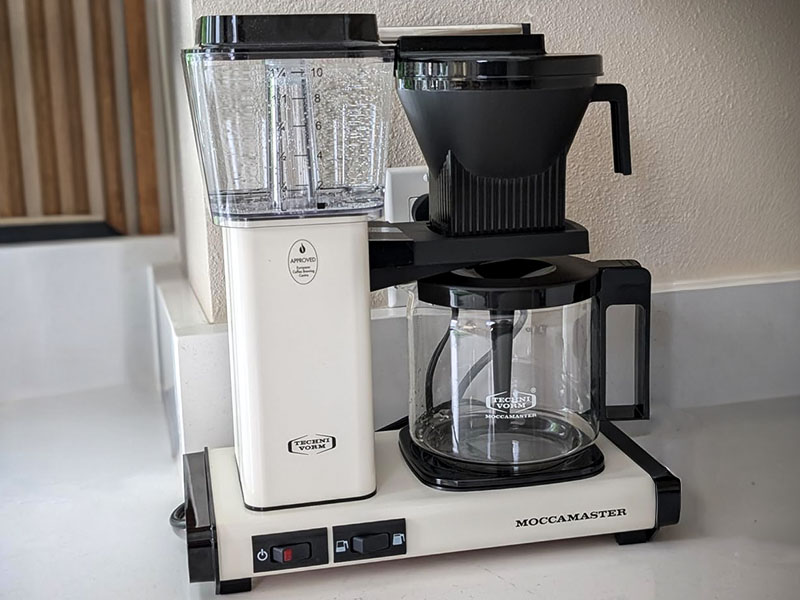
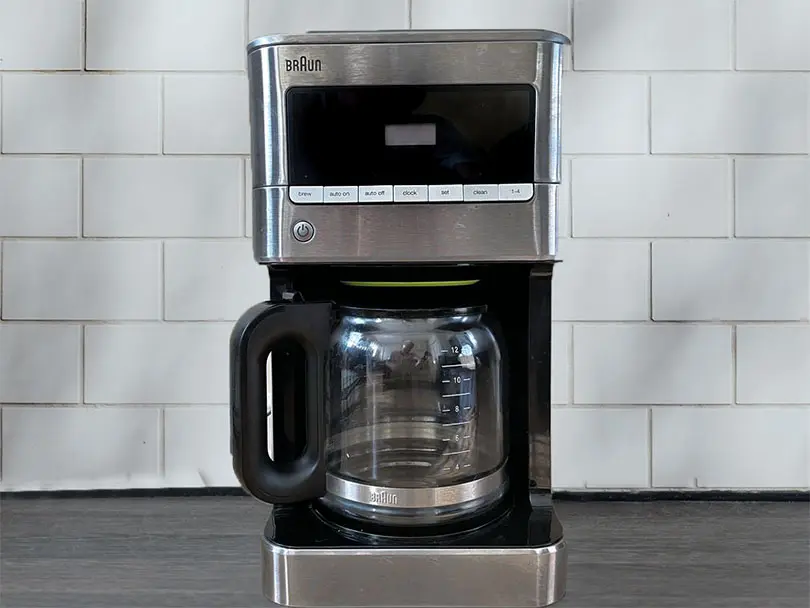
Automatic drip coffee makers are the most popular coffee machines worldwide. Largely because they’re simple, reliable, and capable of brewing multiple cups at once.
They are incredibly easy to use – you just need to add a filter and ground coffee, fill the water reservoir, and turn on the power. The brewer will then heat the water and slowly drip it through the grounds into a waiting carafe.
Most auto drip machines produce larger volumes, around 10-12 cups. Although you can get much smaller versions, including 4-cup coffee makers or ones that are battery-powered. It’s worth noting that “cups” are usually 5oz, not a standard mug, which is closer to 8-12oz.
They’re ideal for households that drink a lot of coffee or need to serve several cups at once. For those needing just a small amount, we’ve reviewed the best 5 cup coffee makers.
Some models include advanced features and functions, but simpler machines often perform just as well. For me, a programmable timer is a useful, non-negotiable feature so your coffee brews automatically in the morning.
In terms of flavor, drip machines tend to produce a bold, hearty, often bitter style of coffee that’s missing the nuanced flavor of other coffee makers. It’s not uncommon for the coffee to suffer from over-extraction or being burned from sitting on the hotplate too long.
Overall, drip coffee brewers are more about convenience and volume than quality.
Best suited for large households that drink lots of coffee. Anyone looking for maximum convenience and are willing to compromise on quality to get it.
Pros and Cons of Auto Drip Machines
✅ Pros
- Easy to use with minimal setup
- Brews multiple cups at once
- Widely available at many price points
- Consistent, hands-off brewing
- Programmable features available on many models
❌ Cons
- Limited to one main coffee style
- Coffee can become bitter if over-extracted or left on the hotplate
- Less flavor nuance than manual brewing methods
- Need to keep a stock of paper filters
Vietnamese Coffee Maker
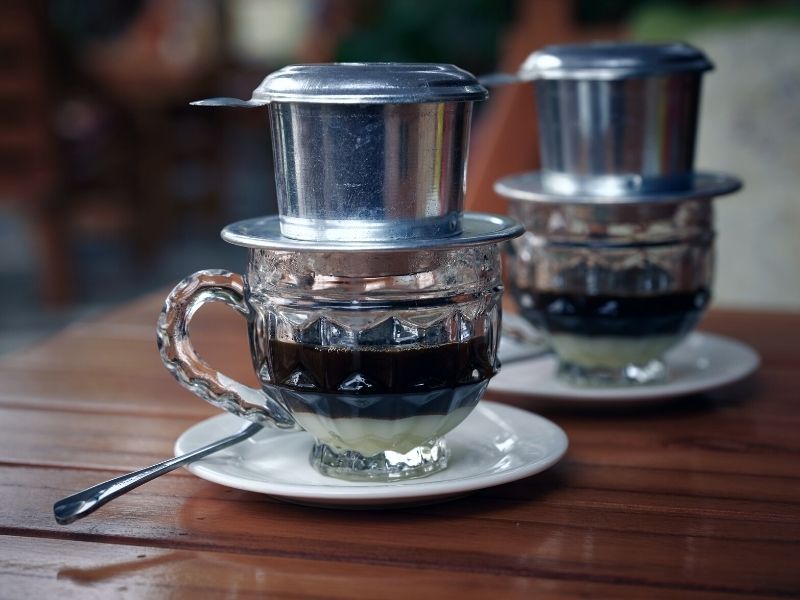
Also known as a “Phin”, the Vietnamese Drip Filter is essentially just a single-cup drip filter placed directly onto your coffee cup. It’s incredibly easy to use with your favorite beans/ground coffee. Plus you control the water temperature (either via a temperature-controlled kettle or thermometer in water on the stove).
This is ideal for single coffee drinkers who want a cheap and easy way to brew their coffee with no wasted effort. It’s a bit of a pain to clean but it’s not overly time-consuming either.
The portability of the Phin is also a huge plus if you want to take it to the office or on vacation.
To really give you a taste of Vietnamese coffee, you should opt for Robusta coffee beans (Nguyen is a great Vietnamese coffee brand in the US) and put condensed milk in the cup first for the coffee to drip into. Before I tried it, I was dubious, but the result is a rich, almost chocolatey coffee that it’s pretty hard not to fall in love with.
Best suited to coffee lovers who have minimal space or are looking for an inexpensive new brewing method to add to their repertoire
Pros and Cons of a Phin
✅ Pros
- Produces strong, rich, full-bodied coffee
- Simple design with no electricity required
- Very affordable
- Compact and durable – great for small kitchens or travel
- Traditional brewing method ideal for Vietnamese-style coffee (once you’ve tried it, you’ll never go back)
❌ Cons
- Slow compared to espresso or pod machines
- Can be inconsistent if the grind size isn’t right
- Makes small servings (usually one cup at a time)
- Less forgiving than automatic brewers
Pour Over Drip Brewer (Manual Drip)
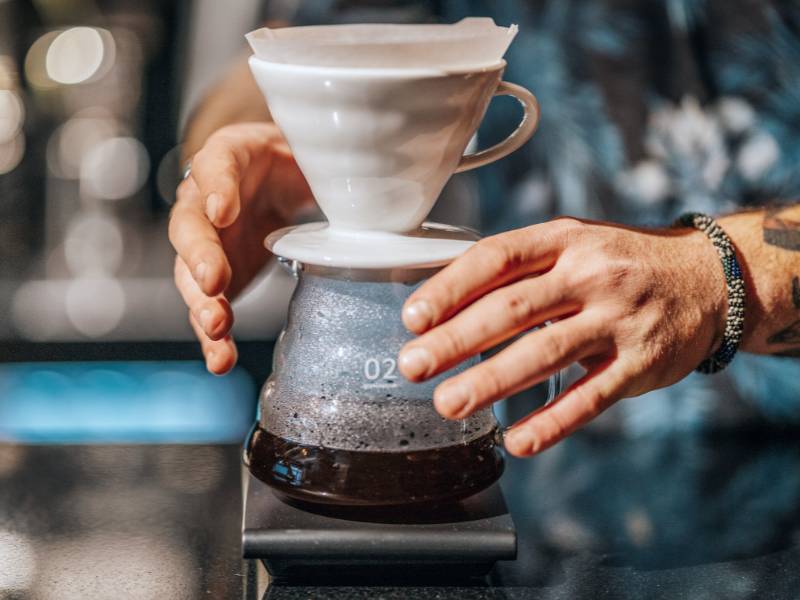
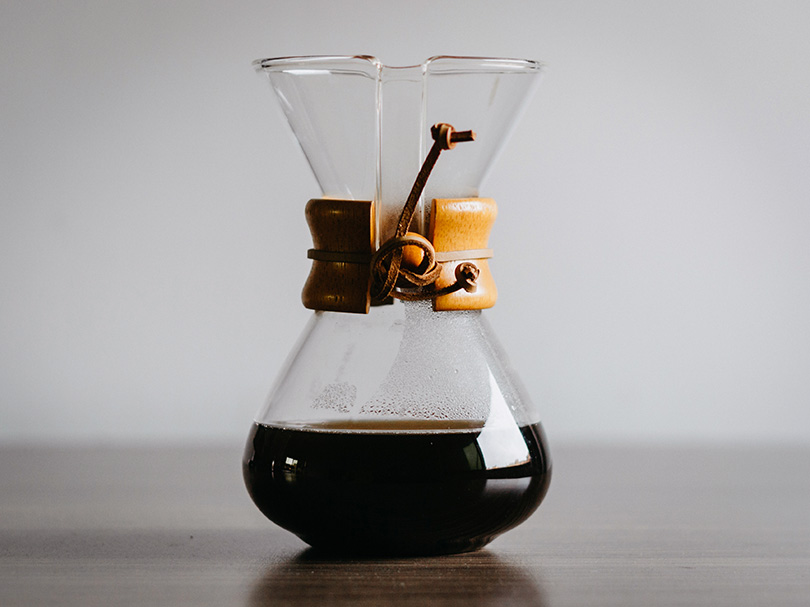
If you’re looking for more control over water temperature and volume, then a manual drip brewer (like a Chemex or Hario V60) is a great place to start.
They work on the same basic principle as automatic drip brewers – hot water is dripped through coffee grounds. The key difference is that you are the water reservoir and pump. So, you manually pour the hot water over the coffee/filter until you have the desired amount.
It’s not particularly difficult, but it is time-consuming. And there’s a technique to it. Pour rate, water temperature, and consistency all affect the final cup, which is why many people pair pour-over brewers with a gooseneck kettle for better control.
You’ll often hear this method referred to as “pour over” coffee. Whilst it’s more expensive than espresso at a cafe, it’s an uncomplicated and inexpensive way to make coffee at home. As you have total control, they’re the best drip coffee makers… once you get the hang of it.
Pour over coffee has a very different flavor profile. It’s typically lighter, fruitier, and more aromatic. So, it’s ideal for exploring different types of coffee beans. It also works extremely well with lighter roasts that are harder to get good espresso from. My wife thought she didn’t like coffee until she had her first pour over, then she realised she just didn’t like bad coffee.
Whether this method is for you all depends on what you value – control and incredible flavor, or what else you could have done in that time!
Best suited for coffee drinkers who enjoy getting hands-on and have time to dedicate to making coffee. This is a great way to taste the nuance of beans, especially if you’re a light roast fan
Pros and Cons of Manual Drip Brewers
✅ Pros
- Excellent control over all the brew variables
- Produces a clean, aromatic cup of coffee
- Simple equipment with no electricity required
- Affordable and widely available
- Easy to clean and maintain
❌ Cons
- More time-consuming than automatic brewers
- Results depend heavily on technique and consistency
- Not ideal for brewing large quantities quickly
- Requires additional equipment for best results (kettle, scale)
To really get to grips with making pour over coffee, check out our complete Brewing Guides (including a coffee to water ratio calculator):
Percolator
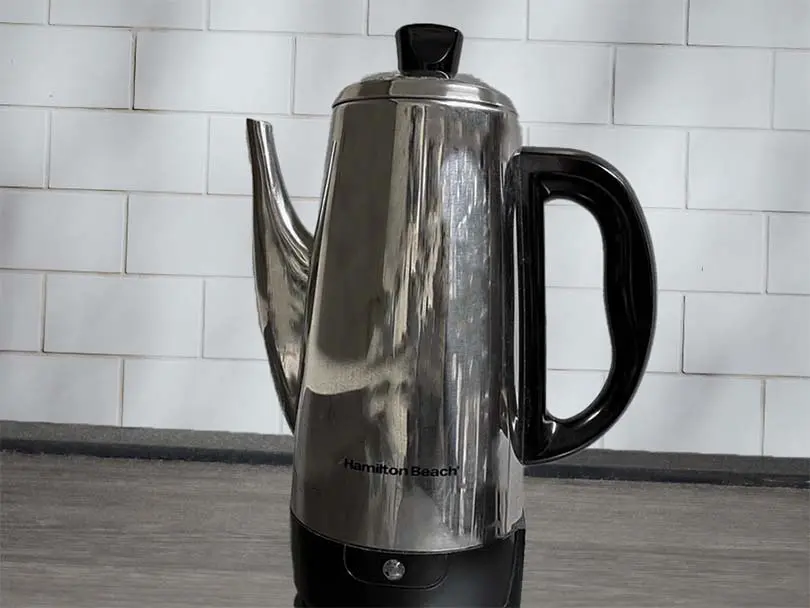
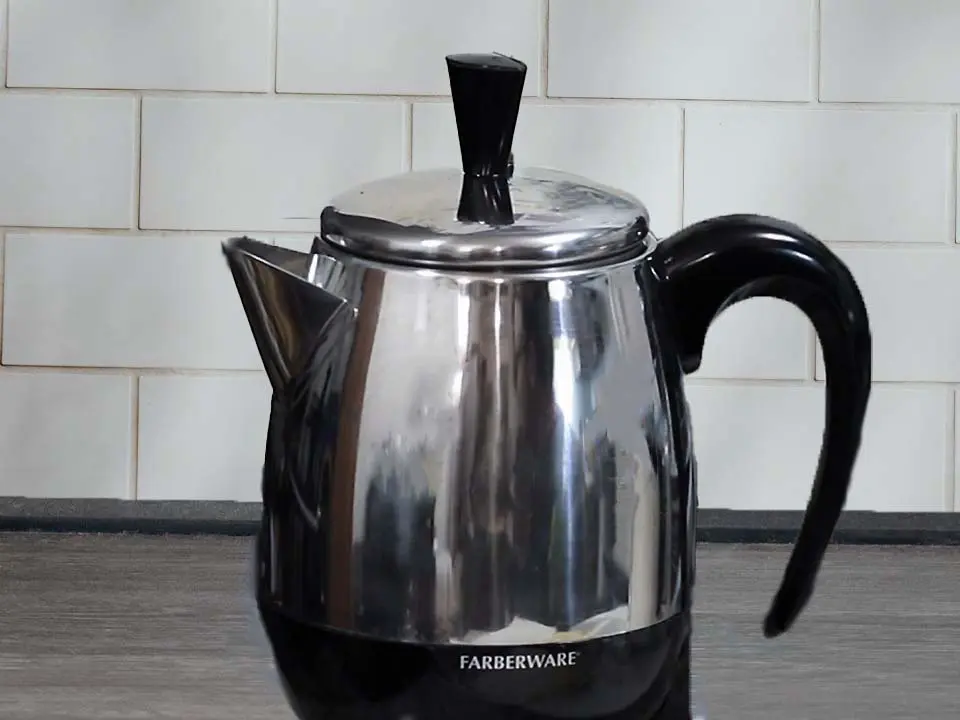
Percolators are kinda like jumbo versions of the Moka pot but without the pressure.
The water boils at the bottom and is then pushed up a tube, pouring out over the filter basket containing the coffee grounds. The entire process is repeated multiple times, so it can result in over-extracted coffee. But, when done right, you get a rich, aromatic, and almost creamy style of coffee.
You can get REALLY big percolators that make 100 cups of coffee. But unless your blood is 90% caffeine or you’re throwing a party then you aren’t going to need one that big.
Some people prefer percolators due to the strong aroma and flavor produced. This is because the water goes through the coffee at boiling point (100°C/212°F) but many coffee experts (myself included) will say that’s too hot and will yield a bitter cup of joe.
If you like the results of a Moka pot and need something that will produce a decent amount of coffee, then a percolator could be the best type of coffee maker for you. Just as long as you like hot coffee.
Best suited to large households that like it hot and bitter.
Pros and Cons of a Percolator
✅ Pros
- Produces strong, bold coffee
- Simple, durable design with few moving parts so it’s unlikely to break
- Available in stovetop or electric versions
- Can brew large volumes of coffee
- No paper filters required (typically uses a metal filter)
❌ Cons
- Can easily become over-extracted and bitter
- Limited control over brew variables
- Less flavour clarity than drip or pour-over methods
- Requires attention while brewing (especially stovetop models)
- It’s now an outdated brewing method
Cold Drip Coffee Makers
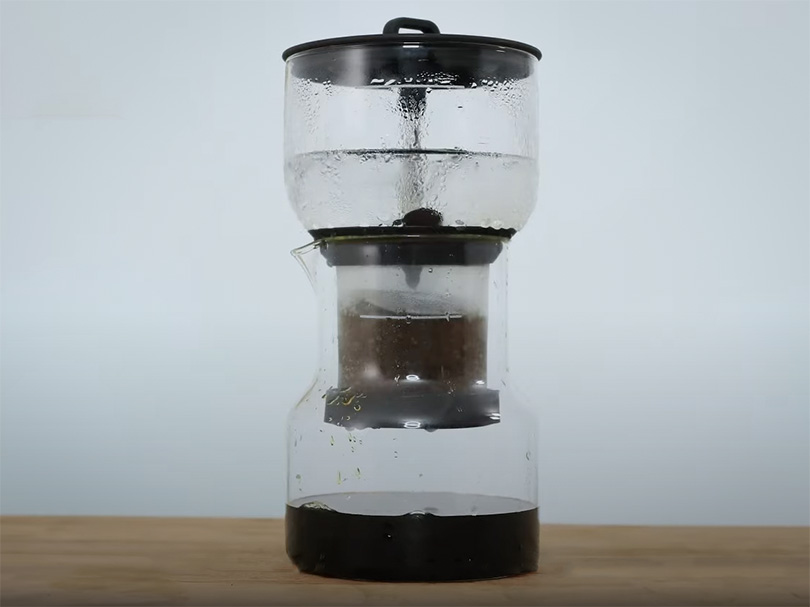
Cold coffee on a hot day is one of the great joys of life. But there’s an important distinction between cold drip and “iced coffee”. The latter is made by adding ice to hot coffee, whereas cold drip is a specific process of slowly brewing coffee with cold water. As a result, you get a sweeter, more mellow flavor.
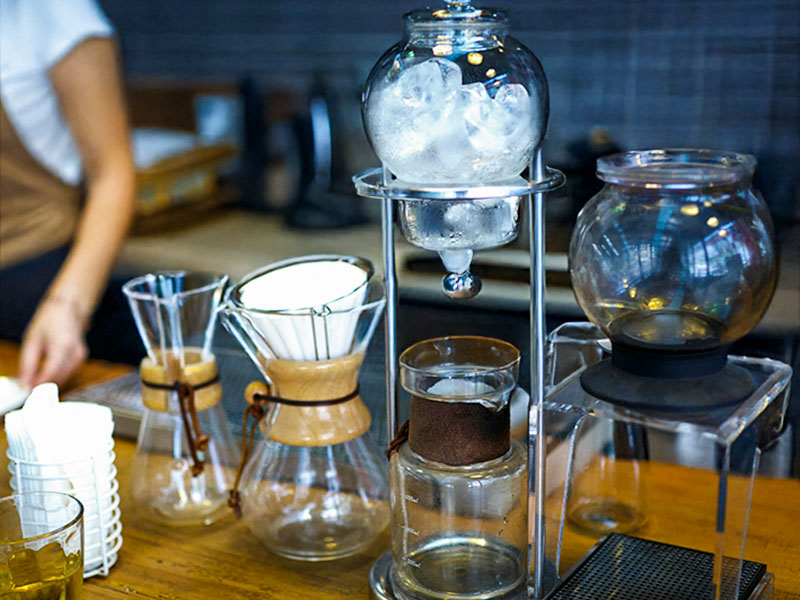
Cold drip coffee makers usually consist of 3 glass vessels arranged in a tower. The cold water drips from the top into the ground coffee, picking up all the oils, flavors, and caffeine needed for your delicious coffee. This then drips into the bottom.
The whole process takes a long time, between 4 and 12 hours. It’s basically using time rather than heat to make your refreshing brew. So if you’re happy to set it going before you go to bed, then a cold drip coffee machine is a nice addition to your home coffee setup.
The result is a much fuller, richer style of coffee than the cold brew method, which uses steeping (more on that here). As it loses complexity when diluted, it’s usually served over ice as an espresso-style shot. Whereas cold brew is more flexible in its uses and can be diluted with water or milk.
Best suited to people who like mellow, iced coffee drinks and are happy to wait several hours to get it.
Pros and Cons of Cold Drip Coffee Makers
✅ Pros
- Produces sweet, mellow, low-acidity coffee that’s refreshing over ice in the summer months
- Fuller and richer flavour than cold brew (steeped) coffee
- Highlights coffee oils and aromatics well
- No heat involved, reducing bitterness
- The glass tower designs look impressive
❌ Cons
- Very slow brew time (typically 4–12 hours), so it requires planning ahead
- Can lose complexity if diluted or used with milk
- Glass towers can be fragile and take up space
Brewing via Steeping
Steeping is an immersive brewing technique. So coffee makers that use this process leave the coffee grounds sitting in hot water for a period of time, allowing all the flavor to infuse into the water. This is then filtered before you drink it so you don’t get a mouthful of coffee grounds.
French Press
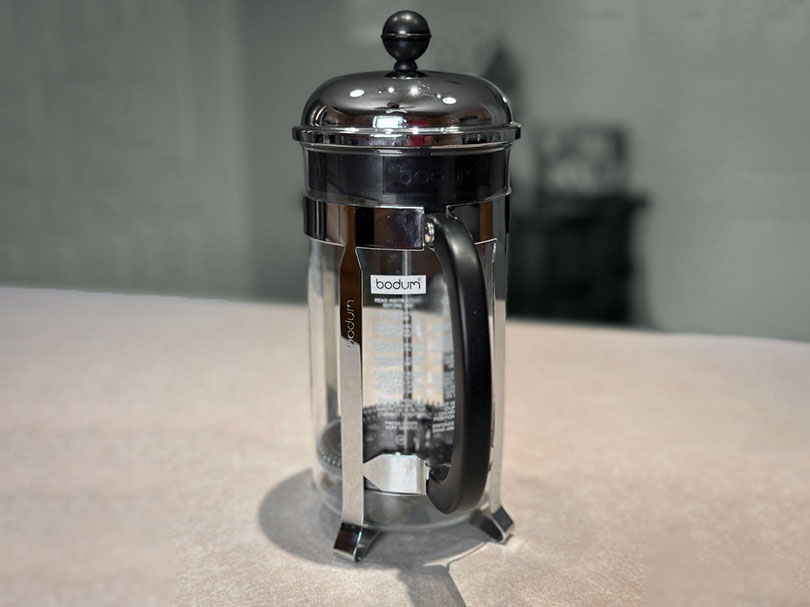

The French Press is one of the most popular types of coffee maker for hotels (including every one I’ve ever worked in). And for good reason. They’re simple to use, look sophisticated despite being really simple, and can produce several cups of coffee quickly.
All you need to do is add coarsely ground coffee and hot water, wait 4 minutes, push down the plunger, and enjoy. The result is a rich, full-bodied, and flavorful cup of coffee with plenty of texture.
That said, French presses aren’t perfect. Depending on the quality of the filter, the coffee can sometimes have a slightly grainy texture. Worse yet, if the plunger seal slips or has a gap, you can end up with an unpleasantly gritty cup. Push too hard and, in rare cases, the whole thing can explode on you – something I’ve learned the hard way. Plus, they’re a pain to clean as coffee grounds tend to stick to the mesh filter.
Negatives aside, the French press is affordable, easy to use, and offers a good amount of control over coffee type, grind size, and water temperature. Plus, they look pretty nice too. Most are made from glass, though stainless steel options are available for added durability.
Best suited to coffee drinkers who enjoy rich, full-bodied coffee – especially whilst lounging around on a slow Sunday morning.
Pros and Cons of the French Press
✅ Pros
- Produces rich, full-flavoured coffee
- Easy to use with minimal setup
- Affordable and widely available
- Can brew several cups at once
- No paper filters required
- Can easily live in your cupboard when not in use
❌ Cons
- Coffee can end up grainy or gritty – the quality of your French press makes a huge difference
- More effort to clean than some other brewers
- Glass models can break, or the mesh can get damaged, rendering it useless
To dive deeper into French press brewing, check out these guides:
Ultimate Guide to French Press Coffee | French Press Ratio Made Easy | French Press vs Moka Pot | French Press vs Espresso | Best Traveling French Press Mugs
Cold Brew Coffee Makers
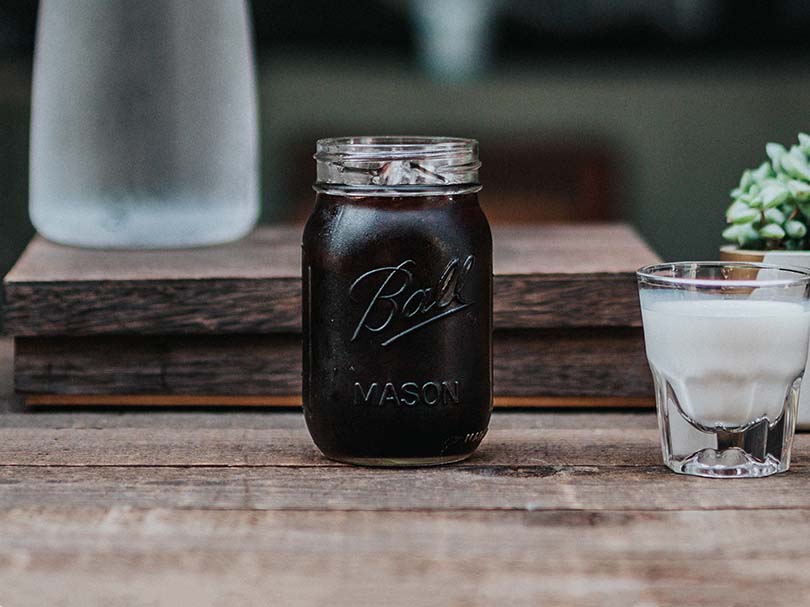
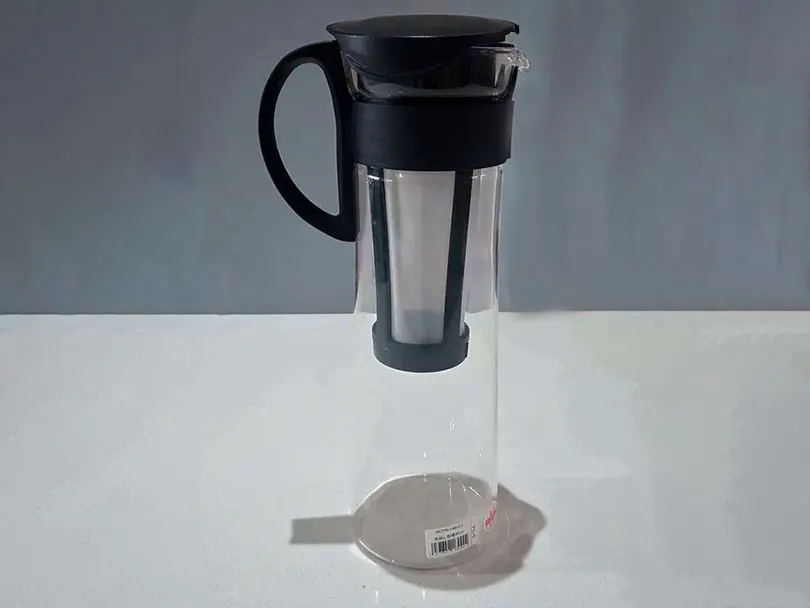
The cold brew coffee maker works by steeping the ground coffee in cold water for an extended period of time. Instead of using to heat to extract flavor, cold brew relies on time to create a sweet, smooth, low-acidity coffee. Especially when made with coffee beans roasted specifically for cold brewing.
Because the flavors are extracted slowly, cold brew requires patience and a generous amount of ground coffee. Brew times are typically between 12 and 24 hours, depending on your recipe and strength. Though it’s a hands-off process.
Many cold brew coffee makers produce “coffee concentrate” rather than a ready-to-drink brew. The exact strength will vary depending on your recipe and brewer. But, as a general rule, you have to dilute one part concentrate to 7-8 parts water, milk, or a combo of those two.
One advantage of this approach is longevity. Cold brew concentrate will keep in the fridge for 2-3 weeks, so you can easily brew in large batches to keep you going.
You don’t really need a dedicated machine – you can get excellent results using a French press or even a mason jar. It will just take a little practice to get your ratio and steeping time right. Alternatively, there are some fancy espresso machines (like the Jura Z10) that will make cold brew at the touch of a button.
If you want to experiment further, you can put your cold brew through a whipped cream dispenser to make a rich, creamy nitro cold brew that has a stout-like texture.
Best suited to meal preppers who are happy to plan ahead and enjoy low-acidity iced coffee
Pros and Cons of Cold Brew Coffee Makers
✅ Pros
- Naturally sweet and smooth flavour
- Low acidity, gentle on the stomach
- Can be brewed in large batches
- Concentrate keeps well in the fridge
- Affordable and easy to setup – you likely already have equipment you can use
- No heat required, just a fridge
❌ Cons
- Takes a while to make (12–24 hours)
- Requires more coffee grounds than hot brewing methods
- Easy to over-extract if steeped too long
- Takes experimentation to get your recipe right
Vacuum/ Siphon Coffee Maker
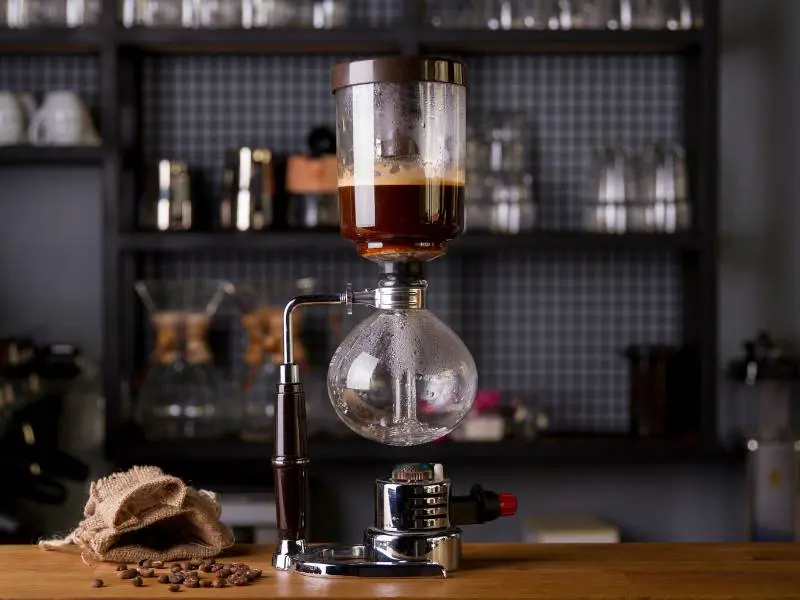
Popular in Japan, siphon coffee makers look really cool – like something out of a mad scientist’s lab.
They have 2 chambers – water goes into the lower chamber and coffee grounds into the upper one. The water is heated (often with a little gas burner), increasing the pressure and forcing the water vapor up a siphon and into the upper chamber.
Once the coffee is brewed, the heat is removed. This causes the pressure to drop and the coffee drips from the upper chamber via gravity and the vacuum concept. Hence the other name for these machines: vacuum coffee maker.
Percolators and Moka Pot coffee makers work on the same principle but differ by having a third chamber.
Now, this might seem like a lot of messing around when there are more straightforward coffee makers available. However, many coffee obsessives claim this produces the best quality brewed coffee if great attention is paid to temperature control.
For me, “best” has to balance effort in to quality out, so I’m not 100% convinced on that claim. Certainly not for everyday use. But they do look amazing.
That said, there are modern vacuum coffee brewers that take some of the skill out of using them. They still deliver amazing quality brewed coffee from an insanely cool-looking device, whilst still giving you a lot of control and ability to play about with variables.
Best suited to a coffee enthusiast with space in their home to dedicate to a show-stopper coffee maker, and who’s willing to take the time to learn a new brewing method
Pros and Cons of Siphons
✅ Pros
- Produces clean, nuanced, high-clarity coffee when brewed well
- They look really cool, even if you hardly ever use it
- Offers a high level of hands-on control for experimentation
- Appeals to coffee enthusiasts who enjoy the process as much as the result
❌ Cons
- Complex and time-consuming compared to most brewing methods
- Steep learning curve to achieve consistently good results
- Requires space and careful handling due to fragile glass parts
- Not well-suited to everyday or rushed brewing
Single Serve Coffee Makers
Single-serve coffee makers (like Nespresso or Keurig) are all the rage at the moment and it’s easy to see why. They’re very simple to use and clean: you just pop a coffee pod or capsule into the machine, press the button, and off it goes.
This type of coffee maker produces an incredibly consistent cup of coffee. Plus, you aren’t left with coffee grounds everywhere or fiddly bits to clean. There’s also a huge range of pods to choose from now, so you’ll almost certainly find one you love.
The downside is that the control is completely gone. These machines decide everything for you. And although the range of pods is extensive, it still doesn’t come close to the available options when buying your own beans. It also usually leaves you locked into one brand.
There is also the question of sustainability. Many of the pods or capsules are not recyclable or access to recycling programs is difficult.
Keurig were one of the first to make capsule machines. Now, there are 3 main brands/ types of Single Serve coffee makers available – Keurig, Tassimo, and Nespresso.
Keurig K-Cup

Read our full K-Classic Review
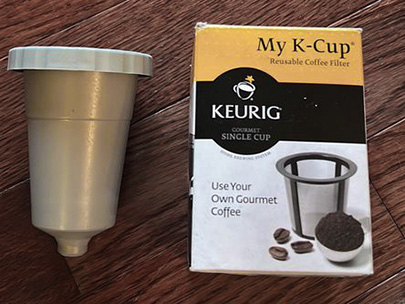
K-Cup coffee makers are still the most popular single-serve coffee machines in the world. There is a range of machines to suit different lifestyles, like the K-Elite – a good all-rounder – and the K-Mini – a tiny machine that’s great for small spaces like a college dorm.
The name K-Cup refers to the pods themselves and is the brand created by Keurig. In 2015, 13.2 billion K-Cup pods were sold worldwide (source).
One of the things we like about the K-cup system is that you’re not locked into their brand. It has the simplest capsule – basically a plastic tub that the machine pierces the top and bottom of in order to force water through. This means you can get a reusable My K-Cup and fill it with any ground coffee of your choice, completely opening up the range of options available to you.
Best suited to anyone short on space, looking for a budget-friendly option that prioritizes convenience over flavor
Pros and Cons of Keurig Machines
✅ Pros
- Extremely convenient – coffee at the push of a button
- Very fast brewing (usually under a minute)
- Huge variety of K-Cup pods, including coffee, tea, and hot chocolate. Or My K-Cup that lets you use any ground coffee
- Consistent results with no measuring or grinding required
- Minimal cleanup compared to manual brewers
- Widely available at many price points
❌ Cons
- Coffee quality is generally lower than you’ll get from an espresso machine or manual brewer
- The cost of pods can become expensive over time
- Environmental impact of single-use pods (though reusable pods exist)
- No control over brew strength and flavor – not great if you like experimenting
Tassimo Disc Coffee Maker
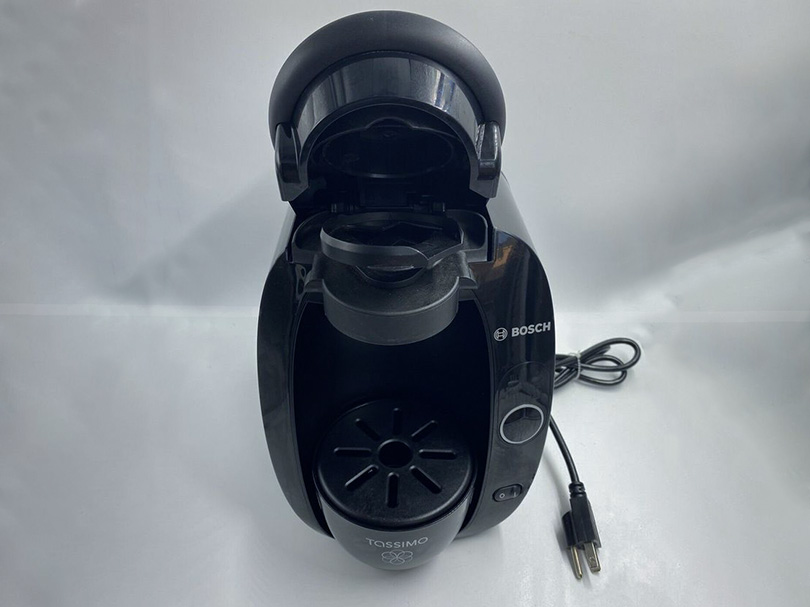
Tassimo is a smaller name in North America, but much larger in Europe.
The Tassimo disc machine is a bit more sophisticated than the K-cup. It tries to work in more of the variables enjoyed by those who prefer the more complex machines, whilst still keeping things simple.
Each capsule – the T-disc – has a bar code on it. This tells the coffee maker how hot the water should be and how much water to push through the disc. The result is a higher quality coffee than the K-cup and a bit more variation for the drinker. It takes less than a minute to have a high-quality, ready-to-go coffee.
Best suited to coffee drinkers looking to break their coffee shop habit with a convenient option at home
Pros and Cons of a Tassimo Disc Machine
✅ Pros
- Very easy to use – one button operation
- Barcode-scanning T-Discs automatically adjust water volume, temperature, and brew time
- Wide range of drinks, including coffee, espresso, lattes, hot chocolate, and branded café-style options
- Consistent results with minimal effort
- Compact designs suit smaller kitchens
- No grinding, tamping, or measuring required
❌ Cons
- Coffee quality is functional rather than exceptional
- Limited control over strength or flavour (the machine makes the decisions for you)
- T-Discs can be expensive compared to ground coffee
- Locked into the Tassimo ecosystem
- Environmental impact of single-use pods
- Not ideal for people who enjoy tweaking brewing variables
Nespresso Coffee Maker

Check Price or Read our Full Review
Check Price or Read our Full Review
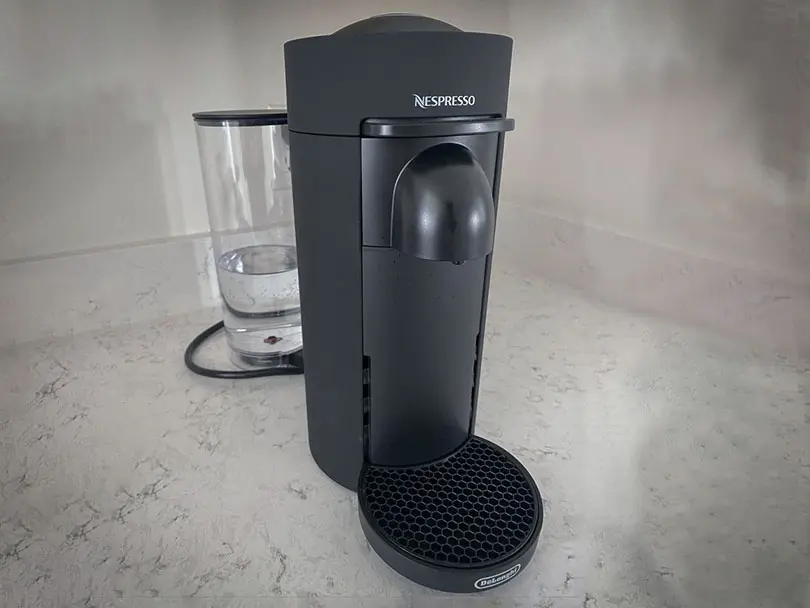
Nespresso machines are a familiar sight almost everywhere now – homes, hotel rooms, Airbnbs, even cafes are using them. And not just because of the George Clooney factor. Their real appeal is consistency:
Nespresso machines reliably produce high-quality, espresso-style coffee with a rich crema, all at the touch of a button.
One thing that often catches people out, though, is that they have 2 different systems – the Original Line and Vertuo Line. And, annoyingly, there are machines with the same name in both lines.
- Original Line machines use small aluminum pods (that look like a thimble) and focus on espresso and espresso-based drinks. There’s a dizzying array of options to choose from, including some third-party pod options.
- Vertuo Line machines use larger, dome-shaped capsules (that look like flying saucers) and use fancier barcode technology to adapt the brewing parameters to suit the capsule. The coffee quality is superior, but pod choice is more limited and usually more expensive.
Nespresso also runs a pod recycling program. While this is a positive step, the mail-back system isn’t available worldwide so you often have to go into a Nespresso store.
The coffee isn’t always as bold or as rich as you get from some other single-serve coffee makers. However, it’s still high-quality and has the wonderful consistency expected from this type of coffee maker.
Best suited to anyone who wants reliable, espresso-style coffee with minimal effort, and without the learning curve of a traditional espresso machine
Pros and Cons of Nespresso Machines
✅ Pros
- Produces decdent quality, espresso-style coffee with crema
- Extremely easy and fast to use
- Consistent results cup after cup
- Wide capsule variety (especially Original Line)
- Compact machines suitable for small kitchens
- Aluminum pods are recyclable
❌ Cons
- The ongoing cost of pods quickly adds up and is more expensive than ground coffee
- Locked into the Nespresso pod ecosystem
- Vertuo Line has limited capsule variety
- Coffee may be less bold than manual espresso methods
- Recycling systems aren’t perfect, depending on where you’re based
“Boil” Based Coffee Makers
This style of coffee maker does exactly what they say on the tin: they “boil” the coffee grounds and hot water together. Usually, the results are an acquired taste as the coffee can taste burnt but, when done right, can be a real treat.
Turkish Coffee Maker (Ibrik)
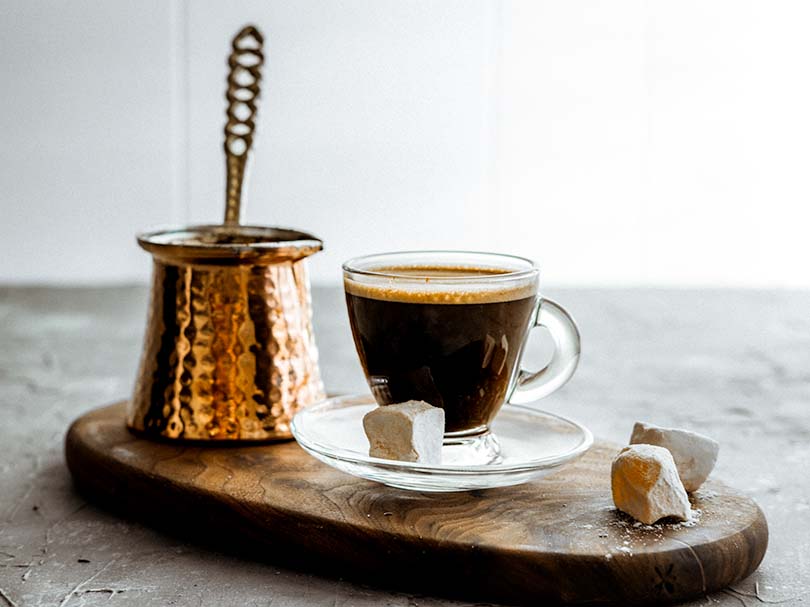
Making Turkish coffee in an ibrik (also known as a cezve) is one of the oldest coffee brewing methods still in use today. It dates back to the 16th century, and is very different from what most people expect when they think of “coffee” (outside of Türkiye/ the Middle East anyway).
The ibrik is not particularly expensive, and usually pretty – it’s a small pot traditionally made from copper, brass, or stainless steel.
Instead of filtering the coffee, very finely ground coffee (almost powder-like) is simmered directly in water, usually with sugar. The mixture is heated slowly, then poured straight into a cup – grounds and all. Nothing is filtered out, so don’t drink right to the bottom unless you want to start chewing.
The result is a thick, intense, and concentrated coffee with a strong body. It’s not designed to be sipped quickly or drunk in large quantities. Instead, it’s all about the slow ritual of enjoying coffee, preferably with friends.
While these are grouped as “boil” based coffee makers, it’s critical that the water doesn’t actually boil. If the water gets too hot, it will cause over-extraction and bitter coffee.
In Turkey, you’ll usually be served Turkish coffee with a small glass of water on the side to cleanse your palate. I don’t normally take sugar with my coffee, but with a Turkish coffee, it’s a non-negotiable for me. If you’re not a black coffee drinker, Turkish coffee is absolutely not the place.
Best suited to lovers of strong, unfiltered coffee who appreciate tradition, and are happy with a small, intense serving rather than a large mug
Pros and Cons of an Ibrik
✅ Pros
- Produces an intense, full-bodied coffee unlike any other method
- Simple equipment with no filters or electricity required
- Very affordable and compact
- Rich cultural tradition and ritual
- You can control the sweetness to suit
❌ Cons
- Not suitable for black coffee drinkers
- Unfiltered grounds settle in the cup
- Small serving size may disappoint some
- Not ideal for quick, on-the-go coffee
Cowboy Coffee
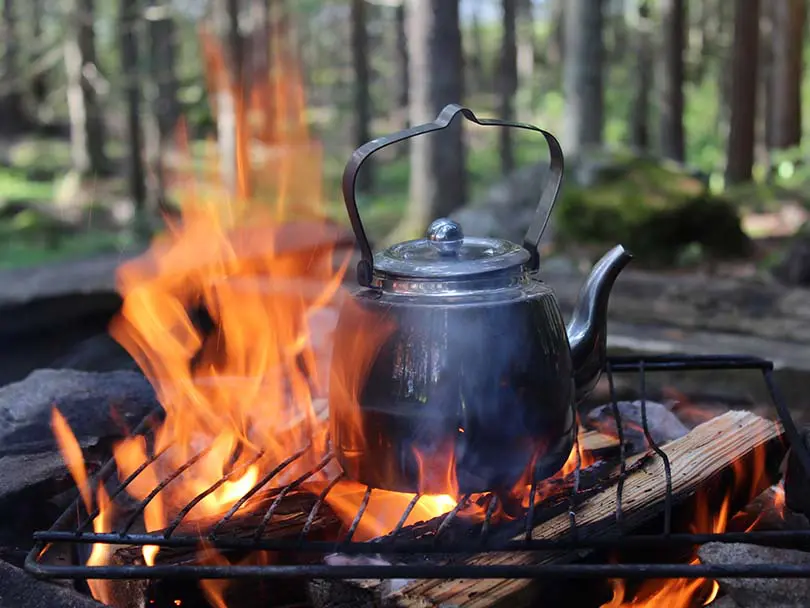
Cowboy coffee is less about a specific coffee maker and more about a brewing method. And arguably the most bare-bones one there is.
It’s probably the easiest method out there as it requires almost no skill. But it also produces some of the lowest-quality coffee. Life’s all about balance, though, right?
The process is simple: bring a pot of water to the boil (usually over a campfire), add coarsely ground coffee directly to the water, and let it brew. There’s no filter, no precision, and very little control. Once the grounds settle, you carefully pour and hope for the best.
This method is favored by campers who need a big quantity of coffee with minimal equipment.
Cowboy coffee is definitely not about quality. It’s not easy to get right and often results in a very strong, bold-tasting (and burnt) coffee. But it can be a simple crowd-pleaser, particularly when combined with a large dose of sugar and/or milk.
Best suited to campers who don’t want to carry a lot of gear, but still need a caffeine fix
Pros and Cons of Cowboy Coffee
✅ Pros
- No special equipment needed
- Can brew large quantities at once
- Works anywhere with heat and water
- Extremely simple and low-effort
- Ideal for camping and outdoor use
❌ Cons
- Low coffee quality
- Unfiltered grounds often end up in the cup
- Easy to over-extract and burn the coffee
- Very little control over flavour

Combo Coffee Makers
Single Serve + Drip Coffee Maker
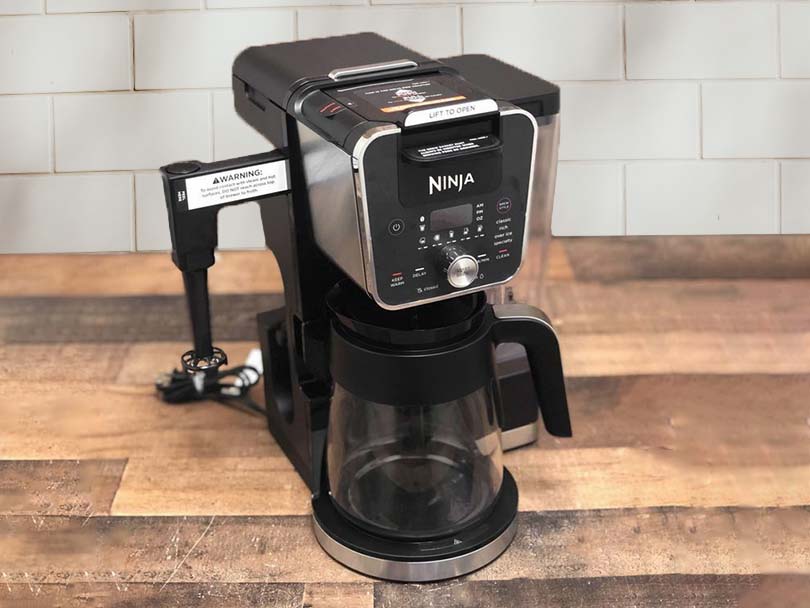
This is the perfect middle ground for those who want it all. They combine a pod-based system (like K-cup) with a traditional drip brewer in one machine.
Models like the Keurig K-Duo and Ninja DualBrew Pro let you brew a single cup of espresso-style coffee in seconds when you’re in a rush, or switch to a full carafe when you’re serving more people. That flexibility makes them especially useful for households where everyone wants different things.
It means you don’t have to commit to just one style of coffee too.
The trade-off is that combo machines rarely do either method perfectly. And they still suffer from the same drawbacks as a dedicated single-serve machine in terms of loss of quality for added convenience. They’re more about speed and functionality than flavor. Still, for many people, the versatility outweighs those compromises.
Best suited to households with multiple coffee drinkers, mixed preferences, or anyone who wants speed during the week and volume on demand.
Pros and Cons of Single Serve/Drip Combo Machines
✅ Pros
- Combines the ease and speed of a pod machine with batch brewing
- Ideal for households with different coffee preferences
- Reduces waste compared to pod-only machines
- Convenient for both everyday use and entertaining
- One machine instead of two on the counter
❌ Cons
- Larger footprint than a single-purpose coffee maker
- Coffee quality is good, not exceptional
- More expensive than basic drip brewers
- More parts mean more potential maintenance
- Not ideal for coffee enthusiasts seeking precision
Espresso & Drip Combo Coffee Maker

Combining drip coffee with another brewing method isn’t limited to the single-serve machines. You can also get combo machines that pair a “proper” espresso maker with a traditional drip brewer.
These machines are built for people who want choice and flexibility throughout the day. A friend of mine who works from home swears by his. It means he can take the time to craft his espresso first thing in the morning, but has a pot of drip on hand to fuel him through the rest of the day. Win-win.
Like most combo machines, there’s a compromise:
Espresso and drip combos rarely match the performance of a dedicated espresso machine and a high-end drip brewer side-by-side. But they do offer convenience, flexibility, and a lot of coffee-making capability without doubling your counter space.
Best suited to people who enjoy espresso-based drinks but also want a steady supply of drip coffee, especially home workers or households with mixed coffee habits.
Pros and Cons of Espresso/Drip Combo Machines
✅ Pros
- Offers both espresso and batch-brewed coffee in one machine
- Ideal for varied routines throughout the day
- Saves counter space compared to owning two machines
- Great for households with different coffee preferences
- More flexibility than pod-based combo machines
❌ Cons
- Espresso quality usually falls short of dedicated machines
- Usually larger and more expensive than standard drip brewers
- More complex to use and maintain
- Not ideal for espresso purists or specialty coffee enthusiasts

Summing Up
Phew, we made it!
So there you have it, a while stop tour of all the different types of coffee maker. As you’ve seen, there’s no single “best” option. Each uses a different brewing method, produces a different style of coffee, and comes with its own trade-offs.
I say that with confidence because I’ve used all of these coffee makers regularly. I’m a former barista with a tendency to get bored easily, which means I’ve spent years switching between methods, tweaking variables, and seeing firsthand how much the way you brew affects the final cup.
The key is matching the method to you: how much time you have, how much effort you enjoy putting in, and what kind of coffee you actually like drinking. Once you understand that, the confusing names and endless options stop being quite so overwhelming.
All that’s left to do is ditch the expensive coffee shop habit and start enjoying better coffee at home – exactly the way you like it.

You Might Also Like
-

Miele CM 6360 Review: Beautiful, Powerful, But Is It Right for You?
In this Miele CM 6360 review, we share our hands-on thoughts on who should buy it, who shouldn’t, and how it compares to Jura and Breville
-
Best Philips Espresso Machine: We Tested the 3300, 4400 vs 5500
Confused by the 3300, 4400, and 5500? We tested all 3 to show the real differences and help you choose the best Philips espresso machine