
We’ve tested dozens of machines over the years, made thousands of coffees, and drank an amount of caffeine that isn’t worth thinking about. But this means we can put together the definitive list of the best super automatic espresso machines, no matter your budget or needs.
PS. We update this article regularly so it reflects what’s great *right now*.
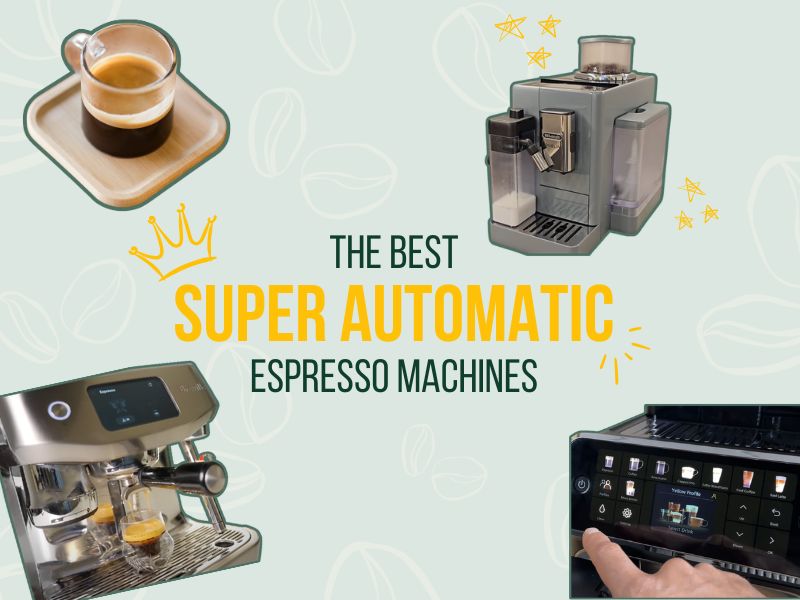
Short on time? You can’t go wrong with the DeLonghi Rivelia. As a top performer and all-around incredible espresso maker, it’s our top pick for good reason (more on that later). Especially with the cold milk foam add-on. If you want the best value for money, then look at the Gaggia Magenta Prestige. You’ll also love the Breville Oracle Jet if you don’t want to compromise on perfecting your espresso shots (but still want the ease of a super-automatic).
That said, great espresso machines come and go over time. That’s why we’re constantly testing and sharing our unbiased feedback with you. And it’s why we’ve revamped this list with all the top models for 2026. Read on as we break down our favorites, why they made our list of the top fully automatic espresso machines, and who they’re best suited to.
This article may contain affiliate/ compensated links. As an Amazon Associate, we earn from qualifying purchases at no additional cost to you. For more information please see our disclaimer here.

Find Your Machine in 10 seconds
Decide which one sounds most like a bit of you, click/tap on its name, and jump to all our juicy thoughts about it:
 I want the best balance of features to cost → De’Longhi Rivelia with cold LatteCrema add-on
 Budget isn’t a concern, I just want the absolute best tasting espresso → Breville Oracle Jet (needs a teensy bit more effort) or Jura Z10
 I want great coffee without breaking the bank → Gaggia Magenta Prestige
 I drink mostly milk-based coffees → De’Longhi Eletta Explore or Philips 5500
 It’s my first machine, and I want to keep costs down → De’Longhi Magnifica Start or Gaggia Brera

Our Top 3 Picks
Best Overall: DeLonghi Rivelia
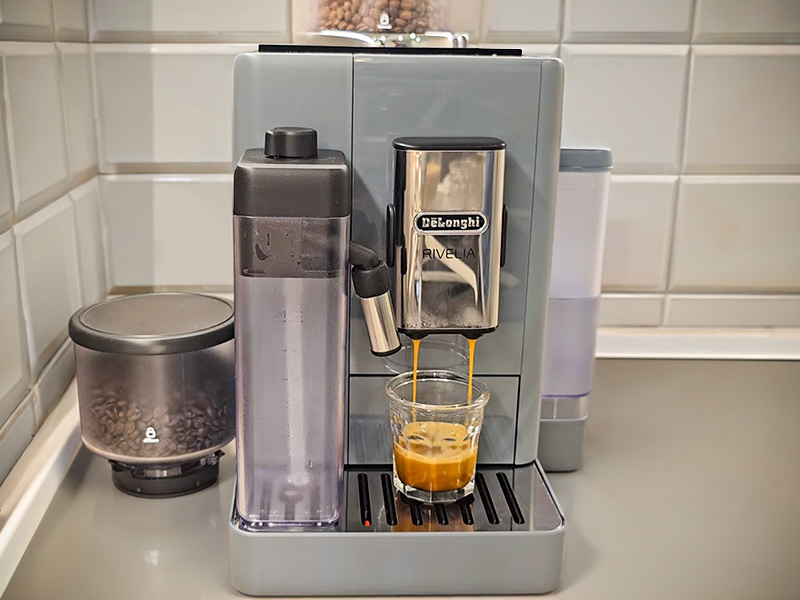
This is for you if you want the full bean-to-cup experience – great espresso, beautiful milk drinks, cold coffee options – without spending Jura money.
Espresso Quality: 4.5/5
Milk Quality: 4.5/5
Ease of Use: 4/5
Value for Money: 4.5/5
 Or read our hands-on review
Best Value for Money: Gaggia Magenta Prestige
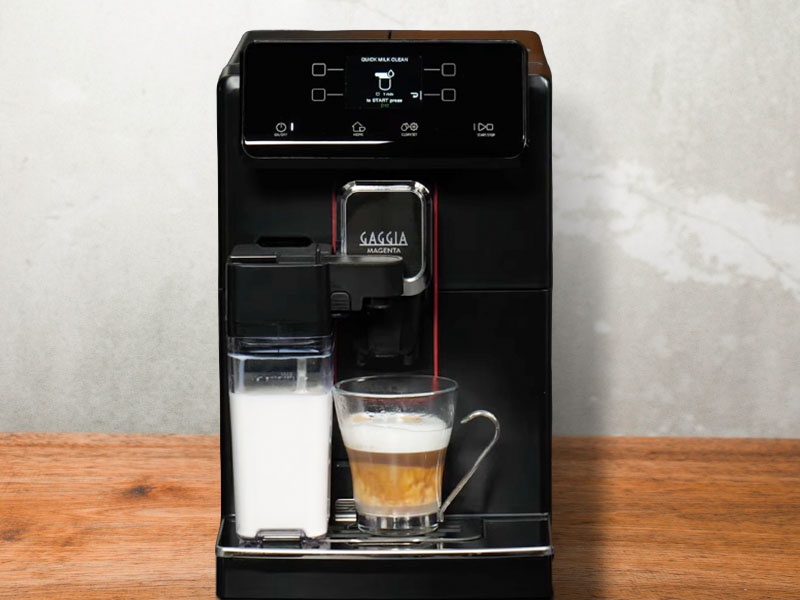
This is for you if you want genuinely great espresso and don’t want to pay for features you’ll never use.
Espresso Quality: 4.5/5
Milk Quality: 4/5
Ease of Use: 4/5
Value for Money: 5/5
Or read our full review
Best Espresso Quality: Breville Oracle Jet
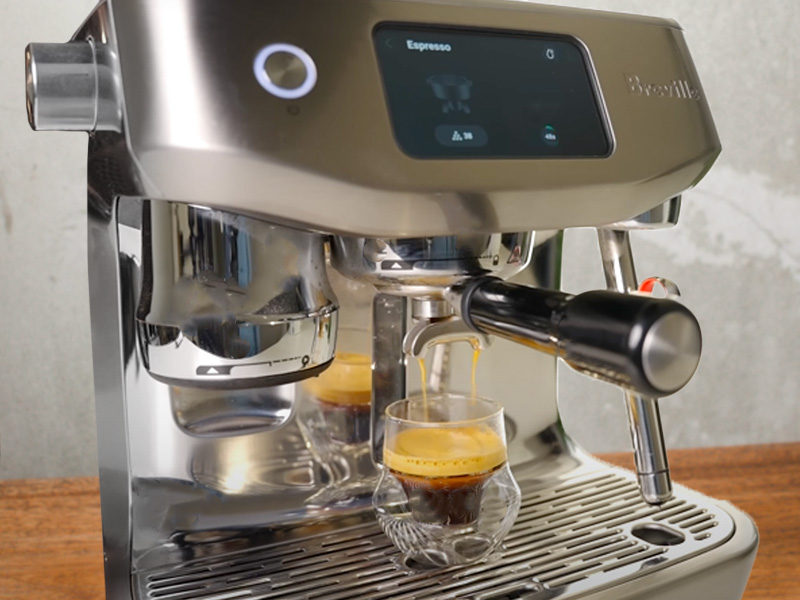
This is for you if you want café-quality espresso above everything else and don’t mind doing a tiny bit more than pressing a button.
Espresso Quality: 5/5
Milk Quality: 5/5
Ease of Use: 4/5
Value for Money: 4/5
Or read our in-depth review

How to Pick the Right Super-Automatic Espresso Machine
There are so many options and features on bean-to-cup espresso machines that it can be a bit overwhelming. What are the important bits and what is just for show?
Well, that all depends on what you’re looking for. Just answer these 4 questions to find your machine:
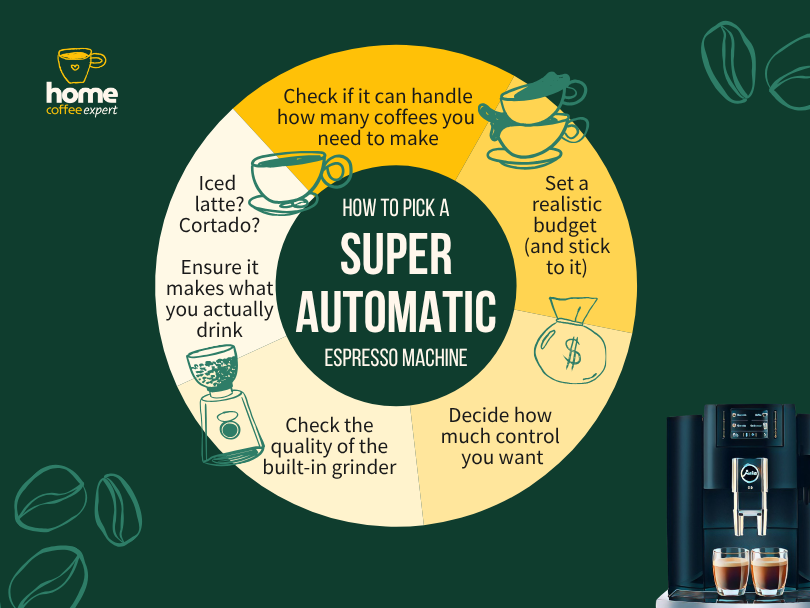
What Type of Coffee do you Drink?
Flat white? Espresso? Latte?
Depending on your usual coffee order, the first thing you need to do is ensure that the machine you buy makes the type of coffee you want. Especially if you like something a little more niche like a cortado.
And, maybe it goes without saying, but if you don’t drink espresso-based drinks, an espresso machine isn’t right for you!
If you’re a black coffee drinker, don’t pay for an automatic milk system – save your money and put it towards better espresso quality.
If you love milky coffee, make sure you can adjust the milk foam levels so it’s just right. Most super-automatics have a built-in automatic milk frother, but some have a separate milk wand. For total ease, you want one that’s built-in – it’s the difference between pressing a button and actually having to do something.
And if you’re a sucker for an iced coffee (who isn’t?!), look for a machine that has a “cold brew” or “iced coffee” function.
How Many People Will Use It?
Will you be making coffee just for you? Every machine on this list will handle that comfortably.
For two or three people in the morning: check whether the machine has a dual boiler. Otherwise, there will be a wait between coffee and milk that gets real boring, real fast. Single-boiler machines are also more likely to struggle with lots of milk-based drinks in a row, frustrating if you want to make a cortado or cappuccino.
Whole household or small office: you need a super-automatic from our premium tier. And pay attention to the water tank size, or you’ll be refilling it constantly.
How Much Control do you Want?
Honestly? Most people reading this just want to press a button and get great coffee. If that’s you, any machine on this list will do that (except the Oracle Jet).
But if you’re an amateur barista and want control over your shots – dialing in grind size, water temperature, and flow rate – your choice of super-automatics is more limited. You’ll need to look towards the premium end – that level of control costs money. Check the machine’s programmability and available customization options if this is you.
What’s your Budget?
We’ve broken down our top super-automatic espresso machines into three price tiers to make this easier.
One thing worth knowing: spending more generally does mean better coffee. Not always, but usually. The sweet spot for most people is the mid-range – here you’ll get genuinely great espresso without paying for technology you’ll never use.
Check the Quality of the Grinder
Every machine on this list has a built-in grinder. What varies is the quality. The grinder quality (and consistency) matters more than you think; it’s the single biggest factor in whether your espresso tastes great or just okay. And it’s why two machines at the same price can taste very different.
There are many different types of coffee grinders, but on super-automatics, you‘ll mostly see stainless steel conical burr grinders (though there’s a growing number with ceramic burr grinders). Stainless steel can get hot and damage the flavor of the beans. Ceramic avoids this, but the burrs are brittle and can chip.
We recommend prioritizing a stainless steel burr grinder as they generally don’t grind fast enough to damage the beans with heat.
Also, check how many grind settings the machine has, and what setting the manufacturer recommends you start on. We find you almost always have to grind finer than the standard setting, so there needs to be room for adjustment.


Are Super-Automatic Espresso Machines Worth the Money?
The right one definitely is.
Quick bit of math: a $4 coffee, 5 days a week, 50 weeks a year is $1,000 a year. Over the 5 to 10 years a good super-automatic lasts, that adds up fast. Even an expensive machine pays for itself.
You also skip the queue, you’re not stuck with your local café’s beans, and you’re not at the mercy of whichever barista happened to turn up that morning. Or how hungover they turned up, but maybe Baristas now are more professional than I was.
So yes, the price tags are steep, but a good one makes it well worth it. Want to soften the blow? Look for a refurbished model from our list.

Top 11 Super-Automatic Espresso Machines in Detail
Which fully automatic machine is right for you depends massively on your needs, space, and budget. Ultimately, the best super automatic espresso machine for you, won’t be the best for someone else.
So to help you make the decision, we’ve tested all the top options on the market right now and whittled it down to this list of the 11 best machines currently available. Take an in-depth look at each option using our unfiltered, unbiased reviews, the pros and cons, and information as to who each model is best suited to. Let’s get to the good stuff:
Best of the Best
DeLonghi Rivelia: Our Top Pick
Pros
- Very nice user interface
- Dual bean hoppers so you can easily switch out your beans
- Bean Adapt mode is genuinely useful
- Multiple user profiles – ideal for families
- Adjustable milk texture

Cons
- Have to pay extra for the Cold LatteCrema system
- Bean hoppers aren’t airtight

Our Ratings
- ☕️ Espresso Quality: 9/10
- 🥛 Milk Quality: 9.5/10
- 👍🏼 Drinks Options: 8.5/10
- 🫶🏼 Value for Money: 9/10
- 🏆 Overall Rating: 9.5/10
Prefer to shop direct? Check DeLonghi’s website
The Rivelia gets more right than any other machine around the $1500 price point.
The espresso is rich and full-bodied, and the milk system is genuinely impressive (three foam settings means your flat white is actually silky and your cappuccino is actually airy, not the same mediocre foam for both). My favorite feature, however, is the dual bean hoppers and Bean Adapt system that makes switching between beans genuinely effortless, rather than a faff. I just wish the hoppers were airtight so you could use them as storage.
Being able to make both hot and cold milk foam is what seals the Rivelia as our best overall pick.
The cold milk foam is impressively good, and (as long as you follow the on-screen instructions) the over-ice drinks are great. My biggest gripe is: at this price, the cold LatteCrema system should come in the box. It doesn’t. You’re looking at around $130 extra for it, which stings when you’re already paying this much. So if you’re an iced coffee lover, budget for it from the start and think of the Rivelia as a bundle deal.
✅ Buy the Rivelia if:
- You want the full package: great espresso, great milk, and cold coffee options… without crossing into Jura territory on price
- You regularly switch between different beans or between regular and decaf
- You want something beginner-friendly that grows with you as your coffee knowledge does
❌ Skip it if:
- Iced coffee doesn’t interest you – in that case, the Magenta Prestige gives you better value
- You’d rather tinker and dial in every variable yourself – the Breville Oracle Jet is your machine
Read next: Our full DeLonghi Rivelia review
Gaggia Magenta Prestige: Best Value for Money
Pros
- Premium quality flat burr ceramic grinder
- Easy-to-use interface
- High quality espresso – far beyond its price tag
- Detachable milk carafe
Cons
- Loud grinder and brew unit
Our Ratings
- ☕️ Espresso Quality: 9/10
- 🥛 Milk Quality: 8/10
- 👍🏼 Drinks Options: 7/10
- 🫶🏼 Value for Money: 10/10
- 🏆 Overall Rating: 9/10
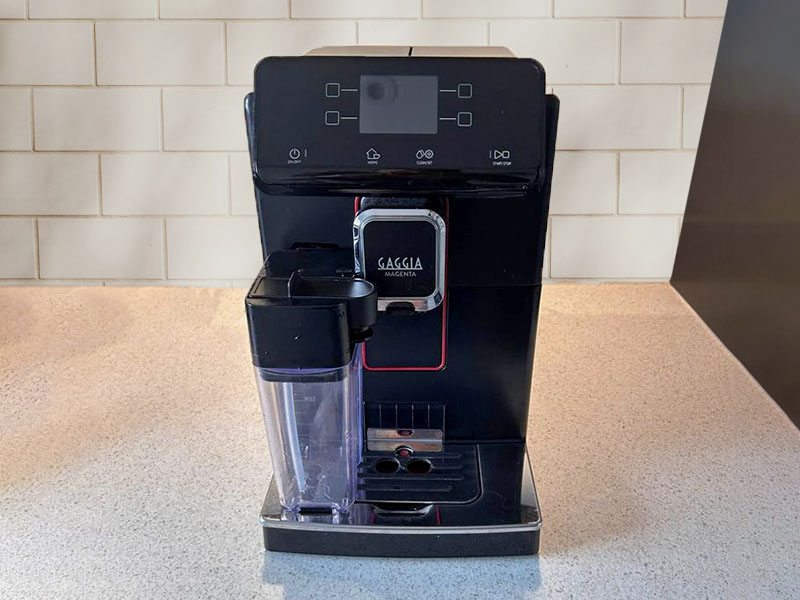
For such a reasonable price, the Magenta Prestige packs a lot in. Great espresso, a genuinely impressive ceramic flat burr grinder (which is a rarity at this price point), good milk foam, and an interface that’s easy to use without feeling dumbed down. It looks great on a countertop too, which matters when it’s going to be sitting there every day.
The only real downsides are that grinding and brewing are quite loud. Fair warning if you’re planning to surprise your husband with coffee in bed (just leaving hints for my wife here…), you might wake them up in the process! There are also no user profiles, so you can save only one version of each drink. For many people, neither of these things matters. But they’re worth knowing before you buy.
You’ll not find a better value super-automatic under $1,000. We’ve looked.
✅ Buy the Magenta Prestige if:
- You want great-tasting espresso that outperforms its price tag, without paying for features you’ll never use
- You’re the only coffee drinker in the house, or everyone drinks the same thing the same way
- Noise isn’t a concern (early mornings, open-plan living, sleeping partners, etc.)
❌ Skip it if:
- You want iced coffees at the touch of a button (there’s no option for this on the Magenta Prestige)
- Multiple people in your house want different drink settings saved – look at the Rivelia instead
- You’re share walls with a light sleeper
Read next: Our hands-on Gaggia Magenta Prestige review
Breville Oracle Jet: Best Quality for a Teensy Bit of Effort
Pros
- Exceptional espresso, cold brew, and milk quality are easily achievable
- Lots of customization option
- WiFi chip installs updates
- Superb touchscreen
- Barista Guidance works very well
Cons
- You need to move the portafilter and place the milk jug under the wand
- Hot water spout splashes
- One boiler means making lots of drinks is slow
Our Ratings
- ☕️ Espresso Quality: 10/10
- 🥛 Milk Quality: 10/10
- 👍🏼 Drinks Options: 8/10
- 🫶🏼 Value for Money: 8/10
- 🏆 Overall Rating: 9/10
Prefer to shop direct? Check Breville’s website
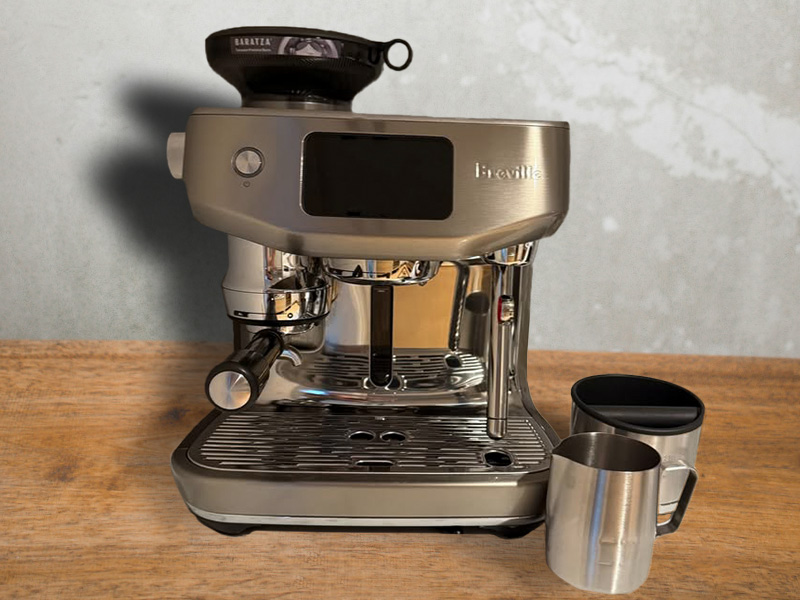
Time for a confession: the Oracle Jet isn’t technically a super-automatic. There, we said it.
A true bean-to-cup machine does everything at the press of a button. The Oracle Jet comes close – it grinds, doses, and tamps for you – but you have to move the portafilter and pop the milk jug under the wand. Two extra steps. Truly a Herculean effort.
We include it because the coffee and milk quality are too good to leave off this list.
Straight out of the box, the shots are rich and full of depth. We usually moan about watery espresso from automatic machines, but Breville is the outlier. With our light roast Yirgacheffe beans at grind setting 22, highest temperature, a 22g dose, and a 45g output, the result was some of the best we’ve tested from a home espresso machine. Better than many trained baristas.
The milk is nearly as impressive. The MilQ system has a thermometer in the steam wand and textures milk to a near-professional level, on both dairy and our barista oat milk.
One of the most impressive features is the Barista Guidance: after each shot, the Oracle Jet tells you whether to grind finer or coarser to fix your extraction. So every time you switch beans, you’re dialled back in within a couple of goes. No coffee knowledge required.
There’s also a WiFi chip that adds new drinks and settings over time. So the machine keeps getting better while it sits on your counter. The espresso martini button arrived post-launch. We’re not complaining.
The one real limitation is that the single boiler means it takes a while to make four or more drinks in a row. Not a machine for hosting a dinner party.
✅ Buy the Oracle Jet if:
- You want cafe quality drinks, and don’t mind doing a tiny bit more than pressing a button
- You’re making coffee for one or two people, not a crowd
❌ Skip it if:
- You want true one-touch automation – the Rivelia or Magenta Prestige will serve you better
- You regularly need to make four or more drinks back to back
Read next: Our complete Breville Oracle Jet review
Premium Tier ($3k and up)
Jura Z10: Best Luxury Machine

Pros
- 28 pre-programmed coffees including 8 cold brew drinks
- Smartphone app (J.O.E)
- Superb quality coffee and milk
- Stunning design
- Exceptional build quality
Cons
- Very expensive
- Milk container is sold separately
Our Ratings
- ☕️ Espresso Quality: 10/10
- 🥛 Milk Quality: 10/10
- 👍🏼 Drinks Options: 9/10
- 🫶🏼 Value for Money: 7/10
- 🏆 Overall Rating: 9/10
Prefer 1st in Coffee? Check availability
Jura espresso machines live in their own pricing universe and make no apology for it. The Z10 makes it clear why:
Everything about it is exceptional: the espresso is full-bodied, rich, and syrupy across every setting we tried. The milk customization goes deep (10 temperature settings, adjustable milk-to-foam ratio), meaning your flat white is actually a flat white, and your cappuccino is actually a cappuccino. The Product Recognizing Grinder automatically adjusts grind size depending on which drink you’re making, which I honestly thought was just marketing until I tasted it.
But the Z10’s standout feature is the cold extraction process. It grinds coarser and extracts slowly to produce a creamy, slightly sweet result. It’s not technically cold brew (nothing made in two minutes is), but it’s the closest to real cold brew we’ve tasted from any automatic espresso machine. The result is cool, not cold, so we’d recommend dropping in some ice or reusable whiskey stones first.
We found that the max dose, strength 8/10, 2nd finest grind setting, default temperature, and 35ml volume produced the best espresso with our medium-dark roast espresso blend. The factory defaults ran too long for our taste, but dialing in took all of five minutes.
Our big gripe with the Z10 is: at this price, it should come with a milk container. It doesn’t. It uses a hose so you can technically put it in any container, even an old mug. But we’d budget an extra $40ish for the Jura milk jug and consider it part of the purchase.
If you want the ultimate “do-it-all” super automatic espresso machine and are happy to splash the cash, the Jura Z10 is the best option out there.
✅ Buy the Z10 if:
- Budget isn’t the primary concern and you want the best fully automatic espresso machine you can buy
- Cold coffee is a regular part of your routine, not just a summer novelty
- You want a machine that will still be going strong in ten years
❌ Skip it if:
- Cold coffee doesn’t interest you – the Rivelia gives you exceptional hot espresso and milk at a fraction of the price
- You want one-touch simplicity without any learning curve – the Z10 rewards a little setup time
- The price makes you wince – there are great machines at a more affordable price lower down this list
Read next: Our hands-on Jura Z10 review

PS. If you don’t drink milk, won’t touch the cold drinks, and still want Jura’s exceptional espresso quality, we’d recommend checking out the E8 instead. It didn’t make this list as the price-to-features ratio isn’t quite as high as the others on this list, but it’s still an exceptional machine.
Miele CM 6360: Best for Modern Kitchens
Pros
- Large 15g max dose
- Extra shot and 2x functions
- Very quiet grinder
- Outstanding build quality and design
- Fantastic customization options
- App connectivity
- 8 user profiles
Cons
- Not as easy to use as similarly priced competitors
- No iced coffee drinks
Our Ratings
- ☕️ Espresso Quality: 9/10
- 🥛 Milk Quality: 9/10
- 👍🏼 Drinks Options: 8/10
- 🫶🏼 Value for Money: 8.5/10
- 🏆 Overall Rating: 8.5/10
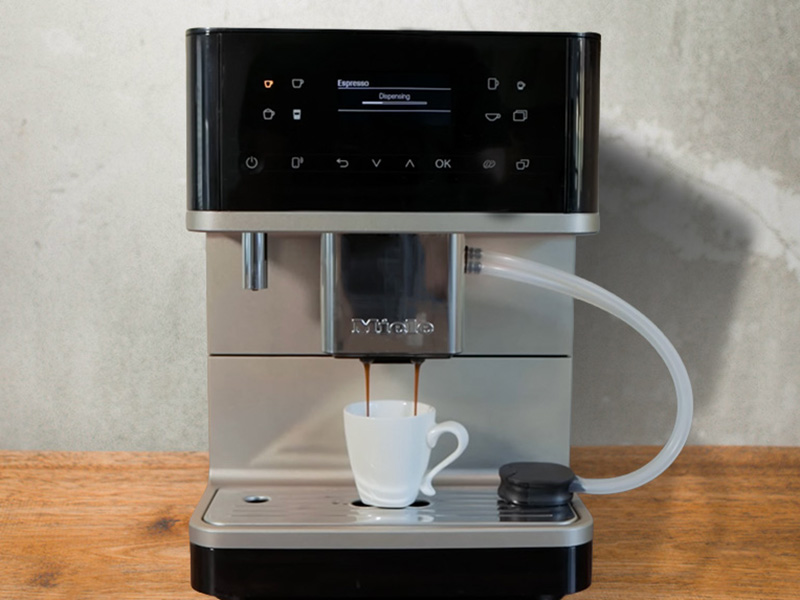
As a function-over-form person, I’m not one to prioritize aesthetics, but I understand the importance of having something that looks nice. And the Miele CM 6360 looks really nice. It perfectly complements any modern minimalist kitchen. Whilst this isn’t a brand that often comes up in coffee conversations, Miele is one of the most trusted luxury kitchen brands in the world.
The coffee is good (though not quite Jura good). The maximum 15g dose, combined with the ability to add a second dose midway through longer drinks, means you get rich, powerful espresso without the watery finish that cheaper machines can’t avoid.
We found the factory default settings were closer to being right out of the box than most other machines. But we did still adjust to the second finest grind, high temperature, max dose, and 1oz output for espresso.
The milk system is a step above too. Adjusting hot milk and foam amounts separately means you can fine-tune your milk drinks (we tried with both dairy and oat milk).
What really sets it apart from every other machine on this list is the looks. If the machine sitting on your counter matters to you, nothing comes close. The Gaggia Accademia gives it a run aesthetically, but the Miele edges it on build quality.
✅ Buy the Miele CM 6360 if:
- How the machine on your counter looks matters as much as what comes out of it
- You want premium build quality from a brand with a long track record of making appliances that last
- Someone in your household drinks tea – it also has six tea brewing modes with customized temperatures
❌ Skip it if:
- You want the best pure coffee quality – the Jura Z10 makes better espresso at this price
- You drink iced coffee regularly
- Ease of use is the priority – it’s not the most intuitive
Read next: Our complete Miele CM 6360 review
Mid-Range Workhorses ($1200 – 2000)
DeLonghi Eletta Explore: Best Drinks Choice

Pros
- Makes hot and cold milk
- Large “over ice” drinks selection
- Touchscreen display
- Simple to use for casual or serious users
- XL coffees for travel mugs
- Easy cleaning
Cons
- Not all models have app connectivity
- Loud grinder
Our Ratings
- ☕️ Espresso Quality: 8.5/10
- 🥛 Milk Quality: 8.5/10
- 👍🏼 Drinks Options: 10/10
- 🫶🏼 Value for Money: 9/10
- 🏆 Overall Rating: 8.5/10
Prefer to shop direct? Check availability on DeLonghi’s website
The Eletta Explore’s pitch is simple: more drinks than any other machine at this price. You have over 50 options to choose from, including two separate milk carafes – one for hot and one for cold milk foam.
It sounds overwhelming until you realize there aren’t actually 50+ different coffees (which would be nuts), it’s that most coffees have 3 options. The menu is split into hot, cold, and XL (for travel mugs) to make navigating this huge array easier. Giving you as many options as possible for a bargain price is sort of DeLonghi’s thing. We looked at how DeLonghi’s strategy compares to Breville’s more stripped-back and quality-driven approach.
The touchscreen has a personality, talking you through what it’s doing and nudging you with tips as you go. It’s a little gimmicky but it grows on you.
Whilst the espresso quality isn’t at the level of some others on this list, it’s still really good. We landed on aroma setting 4/5 and the 5th finest grind with our medium roast beans. The hot milk system is excellent, but the cold foam is a notch below it in terms of texture. The iced drinks work best when you follow the ice cube guidance to the letter rather than winging it.
If you’re buying in the US, you need to check the model number carefully. App connectivity (which unlocks over 100 extra recipes) is available on the newer ECAM45086 but not on the ECAM45055.
✅ Buy the Eletta Explore if:
- Cold coffee is a regular habit, it’s not just an occasional summer thing
- You want the widest possible drinks selection without crossing into Jura Z10 territory on price
- You want travel mug-sized drinks (8, 12, and 16oz)
❌ Skip it if:
- You mainly drink hot coffee and won’t realistically use the cold features – the Rivelia gives you a better machine for less
- Noise is a concern; the grinder is one of the loudest ones on this list
Read next: Our complete DeLonghi Eletta Explore review
Gaggia Accademia: Best Looking Super Automatic Espresso Machine
Pros
- Stunning design
- Lots of drinks options
- Espresso flow rate control
- Manual or automatic milk
- Dual boiler
- Ceramic grinder
Cons
- Small drip tray
- Espresso is too long in our opinion
- Milk dispenser splashes
Our Ratings
- ☕️ Espresso Quality: 9/10
- 🥛 Milk Quality: 9/10
- 👍🏼 Drinks Options: 9/10
- 🫶🏼 Value for Money: 8/10
- 🏆 Overall Rating: 8.5/10
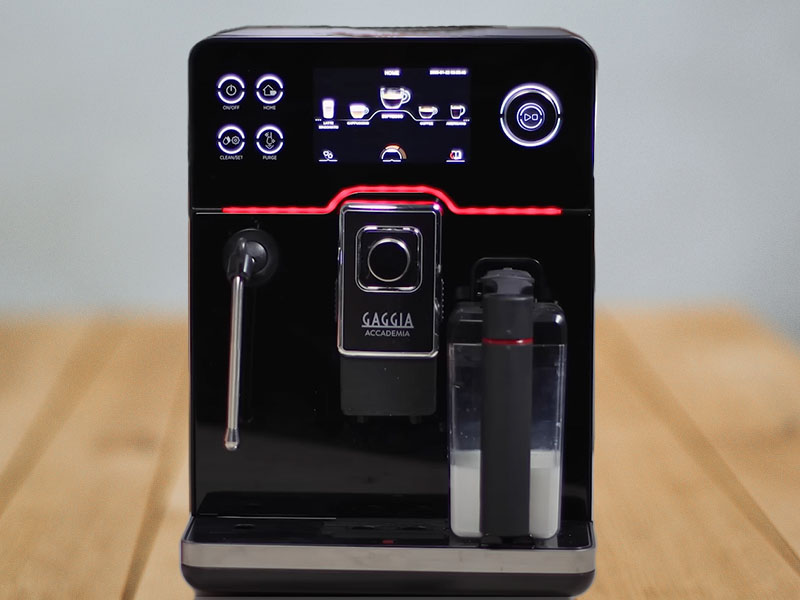
The Gaggia Accademia has had a serious glow-up over the previous model. The black glass with the LCD screen and red accent is absolutely stunning, making it comfortably the best-looking machine available right now and the best Gaggia espresso maker. This will get people talking when they see your kitchen.
But this isn’t a beauty pageant.
Luckily, the coffee and milk quality back up the price tag.
You get 15 coffee options, including some niche Italian drinks like melange, with lots of customization options. The Espresso Plus flow control dial is the standout feature: slow the water flow for a rich, intense espresso, speed it up for a balanced lungo, all without touching the grind size.
The dual boilers mean no waiting between coffee and milk. And you can choose between the automatic carafe or the manual steam wand if you fancy practicing your latte art. Both are genuinely good.
We have slight niggles like the max dose being 11.5g and the minimum espresso volume is 1oz, so you can’t hit a true 1:2 ratio that we want on espresso. For a machine at this price, that’s a frustration. The drip tray is also small and needs to be emptied annoyingly often.
The Gaggia Accademia is gorgeous, makes great coffee, and is built to last. Okay, it might not excel at any one thing like some of the others, but it’s a good all-rounder in the prettiest package.
✅ Buy the Accademia if:
- The machine on your counter matters to you and you want something that turns heads
- You want the flexibility of both automatic milk and a proper steam wand
- You like dialing in your shots with real flow rate control
❌ Skip it if:
- Espresso ratio precision is important to you – the 11.5g max dose is a low ceiling
- You want iced coffees at home
- You’re making lots of drinks in a row – that small drip tray will test your patience
Read next: Our in-depth Gaggia Accademia review
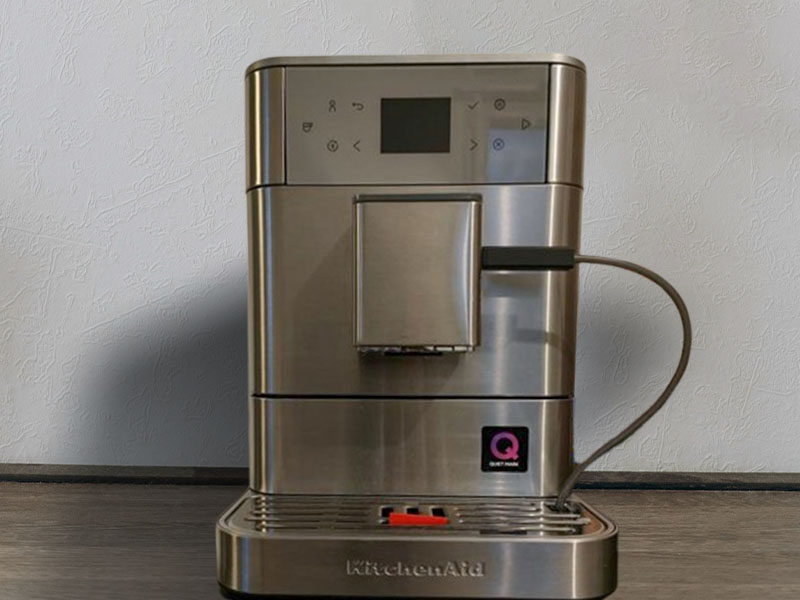
KitchenAid KF6: Best for Upgrading your Pod Espresso Machine
Pros
- Adjustable flow rate (“body” setting”)
- 7 coffee recipes
- Double shot is “true” double (two cycles)
- Easy to clean
- 4 user profiles
Cons
- No milk container
- Not as many drinks options as some competitors
Our Ratings
- ☕️ Espresso Quality: 9/10
- 🥛 Milk Quality: 7.5/10
- 👍🏼 Drinks Options: 8/10
- 🫶🏼 Value for Money: 8/10
- 🏆 Overall Rating: 8/10
KitchenAid wasn’t a name anyone expected to take seriously in the super-automatic market, least of all me. Turns out we should have.
If you’re stepping up from a pod machine, the jump in coffee quality to a bean-to-cup machine is enormous. It can also work out cheaper in the long run as you’re no longer tied to buying branded pods.
The KF6’s espresso punches well above its price. The 15g max dose and adjustable flow rate (“body” setting) give you enough control to get genuinely rich, full-flavoured shots. With our medium roast Yirgacheffe beans on the second finest grind, 30ml, max strength, and body on strong, the result was full-bodied and nicely balanced. Better than several machines that cost considerably more.
The swappable bean hoppers with airtight lids are also the best execution of this feature. Switching between regular and decaf is genuinely seamless.
It’s not perfect though – there’s only 7 pre-programmed drinks, no iced coffee options, and the milk foam for cappuccino is too loose (it’s fine for lattes but doesn’t deliver that dense, creamy cap). There’s also no milk container in the box, which stings at this price – especially when the more expensive KitchenAid models include one.
✅ Buy the KF6 if:
- You want great espresso quality and your budget is under $1,200
- You regularly switch between different beans or regular and decaf
- You drink mainly black coffee or lattes – the milk works well for both
❌ Skip it if:
- Old-school cappuccino is your go-to – the milk foam won’t satisfy you here
- You want iced coffee options
- A touchscreen matters to you; the soft-touch buttons work fine but look dated
Read next: Our complete KitchenAid KF6 review
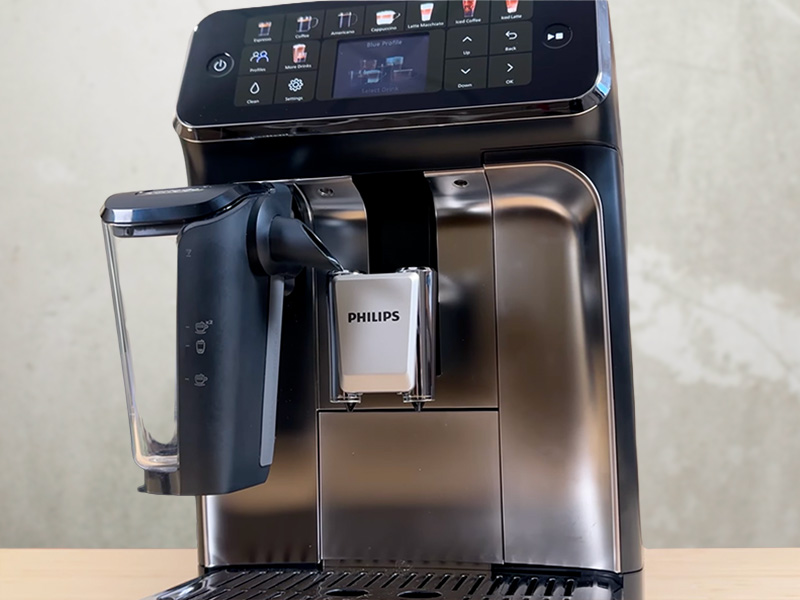
Philips 5500: Best for Families
Pros
- High-quality ceramic grinder
- Very easy to use and keep clean
- 19 hot and iced coffees
- “Extra shot” button
- Quieter than many others
Cons
- Coffee isn’t as good as others at this price
- You have to make 20-30 coffees before you get good ones
- Milk is too foamy for flat whites
- Expensive for what you get at full price
Our Ratings
- ☕️ Espresso Quality: 8/10
- 🥛 Milk Quality: 8/10
- 👍🏼 Drinks Options: 8.5/10
- 🫶🏼 Value for Money: 7/10
- 🏆 Overall Rating: 8/10
The 5500 does what Philips does best: keeps things simple.
The interface is one of the easiest on this list to navigate, the LatteGo milk system is the easiest to clean of any machine we’ve tested, and you get 19 drinks (including iced options), which covers most households’ needs comfortably. Five user profiles saves any arguments too.
One thing Philips doesn’t tell you upfront: expect to run 20-30 coffees through this machine before you get good results. We recommend buying a cheap bag of beans just for this. Once it’s settled in, the Extra Shot feature makes a real difference – every drink tastes richer and fuller with it on.
Honestly? We wouldn’t pay full price for it. At $1300 RRP, the coffee and milk don’t quite match the competition. But it goes on sale regularly, with hefty discounts, and then it becomes a genuinely strong family machine.
✅ Buy the Philips 5500 if:
- Multiple people drink coffee at home and you want a simple, low-fuss machine everyone can use
- Iced coffee is a regular order in your house
- Easy cleaning is a priority – the LatteGo system is in a different league on this front
❌ Skip it if:
- You’re a flat white purist; the milk foam runs too airy to nail that texture
- You’re paying full price – check the Rivelia at the same budget first
- Coffee quality is your main driver, there are better machines at this price point
Read next: Our complete Philips 5500 review
Entry-Level Machines (under $1000)
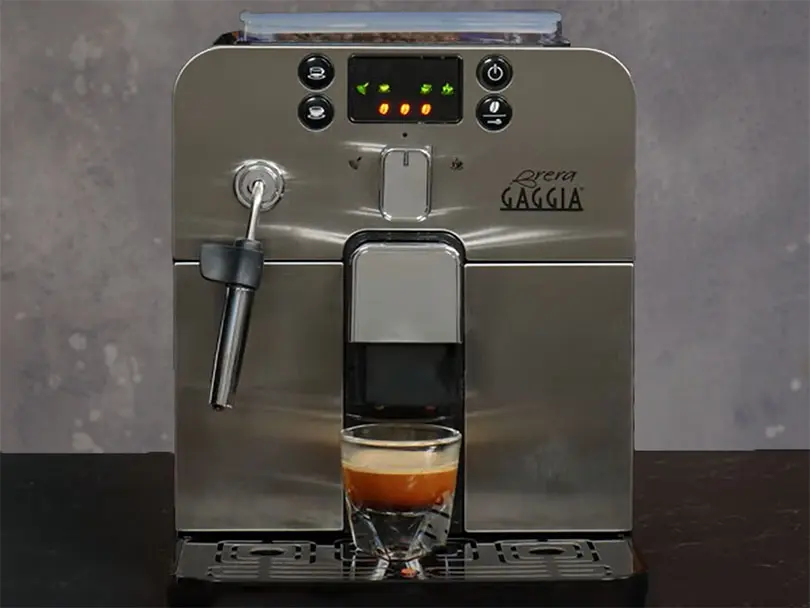
Gaggia Brera: Best on a Shoestring Budget
Pros
- Great value for money
- Simple user interface makes it easy to use
- Compact
- Heats up quickly
- Beginner-friendly
- Excellent ceramic grinder
Cons
- Milk frother isn’t automatic
- Limited customization
- Dated looks
Our Ratings
- ☕️ Espresso Quality: 7/10
- 🥛 Milk Quality: 8/10
- 👍🏼 Drinks Options: 5/10
- 🫶🏼 Value for Money: 10/10
- 🏆 Overall Rating: 7/10
If the price of the other super-automatic espresso machines is getting you down, Gaggia has the answer. The Brera is the most no-frills machine on this list. And it’s frequently sold under $500, which is an absolute bargain for this kind of espresso machine.
The espresso is solid: honest, drinkable, does the job. But it lacks the depth and complexity you get from most other machines here, including the Magnifica Start. That’s the price you pay for paying less.
You can play with the strength and grind size, though there aren’t many options for either. But you’ll definitely get an enjoyable espresso or lungo from the Brera with the option to add nicely foamed milk if you wish.
The Panarello milk wand is designed to be beginner-friendly, which it is, but it’ll never match the automatic systems on the other entry-level machines. Expect a learning curve if you’ve never manually steamed milk before.
It can feel a little more hands-on than a true super-automatic at first, but once you’re used to it, it’s actually a simple machine. Just not the most impressive one.
For this price, the Gaggia Brera really delivers. If you currently use a single-serve machine or are just starting out on your espresso making journey, this is a great upgrade.
✅ Buy the Brera if:
- Budget is the main constraint and you still want a bean-to-cup espresso machine
- You’re happy to learn basic milk steaming rather than paying for automation
- You want something compact and unfussy as a first machine
❌ Skip it if:
- You drink mainly milk-based coffees – save up for the Magnifica Start with LatteCrema instead
- The look of your machine is important
- You want espresso with real depth and complexity; it’s worth spending a little more
- You’re a complete beginner who wants zero learning curve
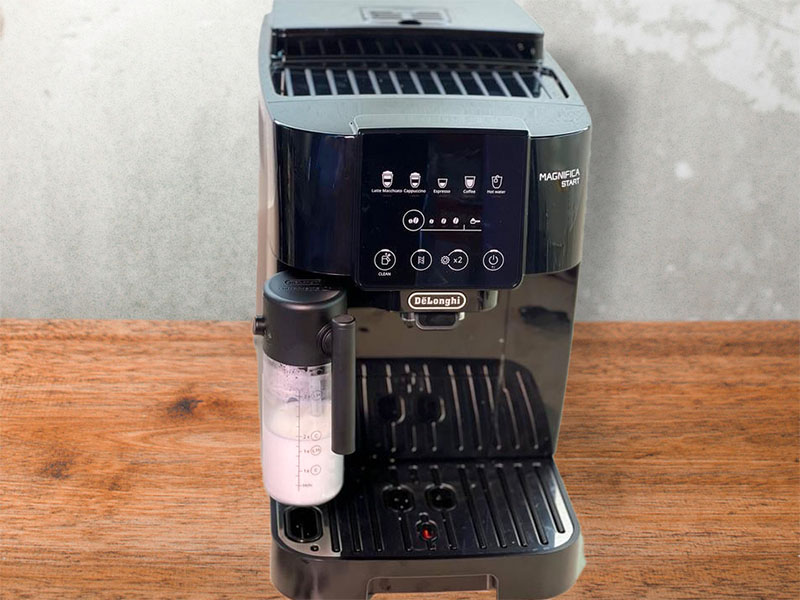
DeLonghi Magnifica Start: Best Budget Machine with Auto Milk
Pros
- Simple interface
- Compact and easy to clean
- Great value for money
- Good quality auto milk foam
Cons
- Very loud grinder
- Only 3 strength options
- Double shot isn’t a true double
- Only a 1-year warranty
Our Ratings
- ☕️ Espresso Quality: 8/10
- 🥛 Milk Quality: 9/10
- 👍🏼 Drinks Options: 6/10
- 🫶🏼 Value for Money: 9/10
- 🏆 Overall Rating: 7.5/10
Prefer to shop direct? Check DeLonghi’s availability
The Magnifica Start with LatteCrema is a simple machine that does three things well: brews a solid espresso, froths milk automatically, and doesn’t cost a fortune.
The drinks list is short (essentially cappuccino, latte macchiato, espresso, and coffee), and customization is limited. So don’t expect the drinks to knock your socks off. We got the best results on max strength setting, 3rd finest grind, and a 30g output.
It’s also worth noting that the grinder is very loud, and the 1-year warranty is shorter than we’d like. But for a machine under $1000, none of that is surprising or disqualifying.
I do like that the LatteCrema carafe is dishwasher safe – it’s the small things that matter most when you’re cleaning it every day.
If you want a step up on coffee quality and more drink options, save a bit more for the Gaggia Magenta Prestige. But if budget is the priority and you drink milky coffees, the Magnifica Start is the one.
✅ Buy the Magnifica Start if:
- You want automatic milk frothing without spending mid-range money
- Your order is usually a latte or cappuccino and you don’t need much more than that
- Counter space is limited (it’s one of the most compact machines on this list)
❌ Skip it if:
- You’re a strong black coffee drinker – the Gaggia Brera is a better fit and similar price
- You need more than a handful of drink options
- Light sleepers share your home (the grinder is loud)
Read next: Our hands-on DeLonghi Magnifica Start review
Best Super Automatic Espresso Machine Brands
The market’s flooded with brands. At the top end, a few names consistently deliver – these are the ones worth knowing:
Jura
A Swiss company that only makes super-automatics. Top-of-the-range machines, dead easy to use, packed with tech.
The range starts around $1,000 and climbs well past $5,000. They’re for you if you want beautiful, effortless, high-quality coffee… and can stomach the price.
De’Longhi
From Italy, making coffee machines since 1993. They’ve shifted upmarket into high-end super-automatics, and the result is great coffee at fair prices.
They lean towards function over form and use more plastic than we’d like, but their cheapest super-automatics start around $700, which is real value.
Saeco/Philips
Same company: Philips bought Saeco in 2009 and put the Saeco name exclusively on its high-end machines. Expect quality engineering, genuinely easy cleaning, and a sleeker look than De’Longhi. Just know you’ll have to pay for it.
Philips-branded machines are more affordable, but the coffee doesn’t always live up to the price tag. They can be amazing value when discounted.
Gaggia
Another Italian company, around since 1947, and big on stainless steel. Less interested in touchscreens and gimmicks, more focused on easy machines that pull a quality shot.
The interface can look a bit dated, especially on the older models, but they’re good where it counts, and the value’s there.
Breville
From Australia and newer to the game. They mostly skip true super-automatics in favour of classic portafilter designs that hand you the control, so they’re a favourite with people who like to tinker. You’ll find machines that leave everything to you and others that do everything except move the portafilter.
Not cheap, but great if you want to be hands-on.
KitchenAid
Not the first name you’d think of, and we were sceptical at first too. But the machines are sleek, and the coffee’s really good for the price, especially the KF6.
Psst… Want to take a closer look at the top super-automatic espresso machine manufacturers? We’ve put together the following head-to-head comparisons to help you decide which machine deserves a spot in your home:
🏆 Jura vs Breville: Which of the coffee giants comes out on top?
⚡️ Breville vs DeLonghi: Who makes the best espresso machines?
🤑 DeLonghi vs Jura: A spend or splurge showdown
☕️ Gaggia vs DeLonghi: Do you want more choice or better coffee?
👀 Gaggia vs Jura: Looks or Skills?
💸 Philips vs DeLonghi: Best espresso machine for every budget

FAQs
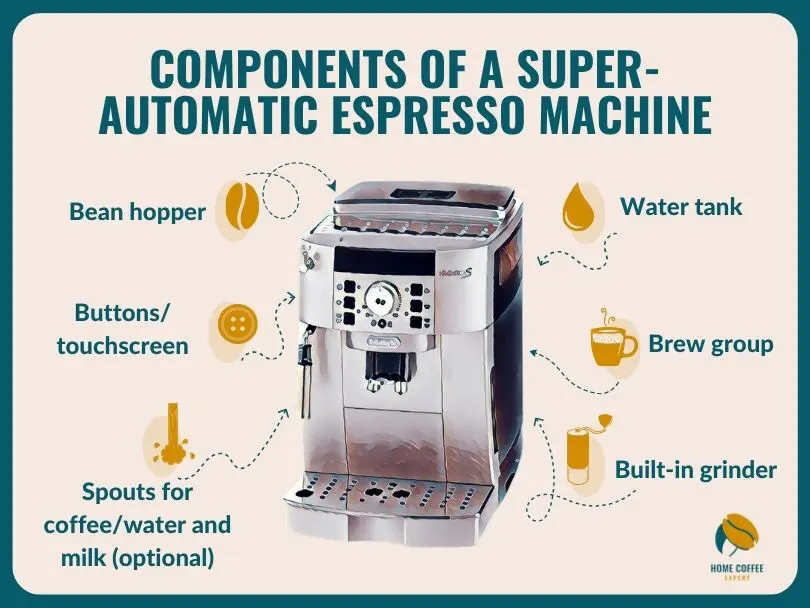
With most espresso machines, you have to do some work – usually to quite a precise standard. Super-automatics (also called bean-to-cup machines) take all of the complex work out of your hands.
At the touch of a button, the machine grinds, tamps, and pours the right amount of coffee at the right temperature. Every single time. All you have to do is pick your drink and keep it topped up with beans, water, and milk. Most will give you the option to change different brew settings and save them to the machine.
That’s the appeal, and it’s also why they cost what they cost. They’re your own plug-in barista. Feel free to spell your name wrong on the cup, too.
An automatic espresso machine leaves some of the work to you. They look like traditional espresso machines with the portafilter, which you’ll need to use when grinding and tamping yourself. Some will have auto milk frothing, some will leave that to you. So, there’s a lot more room for your input and the potential for better-tasting espresso drinks… but also more room for error.
Having said all that, lots of brands and retailers use the terms interchangeably, making them next to useless. We recommend always checking how to use a machine before hitting buy.
Still confused about the difference between manual, semi-automatic, automatic, and super-automatic espresso machines? We wrote a complete guide on it.
Better than most people expect… but not quite as good as the best manual machines.
A well-dialed super-automatic like the Jura Z10 or Breville Oracle Jet can make espresso that beats most high street coffee shops. What you give up is the very top end of what’s possible with a skilled barista, premium equipment, and manually controlling all the variables. For 95% of people drinking coffee at home, that trade-off is absolutely worth it.
Most super-automatic machines are built for home use and comfortably handle 5–10 cups a day without any issues. If you’re regularly pushing beyond that (a busy household, a small office, that one friend who comes over and drinks four coffees), look for a machine with a larger water tank (60oz+) and a dual boiler, so there’s no waiting between drinks.
The machines on this list that can handle higher volume are the Jura Z10 and Gaggia Accademia. If you’re making 20+ cups a day consistently, you’re probably looking at a commercial or semi-commercial machine rather than anything here.
A well-maintained machine from a reputable brand should comfortably last 5–10 years with “normal” home use. Gaggia engineered the Accademia to last around 15,000 brewing cycles – that’s roughly 10 years at four coffees a day. Jura machines have a similar reputation for longevity. The key word is well-maintained: descale regularly, clean the brew group, and don’t ignore the on-screen maintenance prompts, and your machine will look after you.
Always start with fresh, whole beans from a reputable roaster. (Not ground coffee since super-automatics have in-built grinders.)
Medium to medium-dark roasts tend to work best across the widest range of machines, giving you good body and depth of flavor. Most super-automatics can’t grind fine enough to handle light roasts. And it’s best to avoid super dark roasted, oily beans – they can leave a residue that gums up the grinder over time and is a pain to clean.
They can be… with caveats.
A certified refurbished machine direct from the manufacturer is generally a safe bet and can save you a meaningful amount of money. Third-party refurbs are more of a gamble: the quality of the refurbishment can vary wildly, and you’re often buying without a warranty on a machine that could have years of wear on the brew group and grinder. If you’re considering it, stick to manufacturer-certified or check what warranty is included, and factor in the cost of a descale and full clean before you start using it.

Our Verdict
The super-automatic market has never been better… and never been more confusing to navigate. That’s exactly why we put this list of all the best super automatic espresso machines together, and why we update it regularly rather than letting it gather dust.
Our biggest recommendation is: buy the machine that fits your actual life, not your aspirational one. The Jura Z10 is phenomenal, but if you mainly drink one latte a morning and occasionally have friends over, the Magenta Prestige will make you just as happy at a fraction of the price. s
Here’s where most people end up:
The Rivelia if you want the full package and never want to think about upgrading. The Magenta Prestige if you want great coffee without paying for features you’ll never touch. The Oracle Jet if coffee quality is everything, and you don’t mind two extra steps.
Everything else on this list exists because coffee drinkers aren’t all the same. And neither are kitchens, budgets, or morning routines.
Psst… one last thing. Whatever machine you choose, buy better beans than you think you need to. The machine gets you 60% of the way there. The beans are what you actually taste.