Getting started with making espresso at home can feel intimidating – especially when you see machines costing $500, $1000, or more. And, honestly, our search for the best espresso machines under $100 is getting harder each year as prices rise and manufacturers don’t focus on budget-friendly models.
But that doesn’t mean affordable espresso at home is impossible. We’ve tested hundreds of espresso machines over the years, and there are still a handful of budget-friendly options that can produce surprisingly good coffee. Especially for beginners starting their home barista journey.
In this guide, we’ll walk you through the best espresso makers under (or around) $100, whether you want a simple morning espresso maker, a budget setup for cappuccinos and lattes, or a portable espresso device for travel.
That said, budget espresso machines do come with compromises. So setting the right expectations is important (as in, not café quality or espresso at the push of a button). But if your goal is good espresso at home without spending a fortune, there are still some great options worth considering.
Below are our top picks and honest reviews, along with a quick comparison and a beginner-friendly buying guide to help you choose the right machine. Let’s get to it:
This article may contain affiliate/ compensated links. As an Amazon Associate, we earn from qualifying purchases at no additional cost to you. For more information please see our disclaimer here.

TL;DR – Our Top Picks
In a hurry? Here are our top picks:
🥇 Best Overall: DeLonghi Stilosa
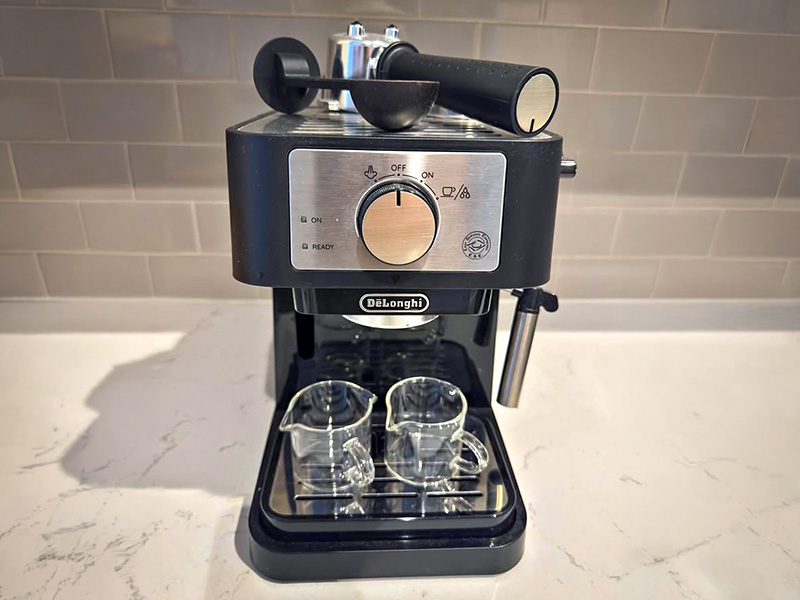
It’s a solid beginner espresso machine under $100 that’s reliable, beginner-friendly, and capable of producing surprisingly good espresso for the price. Just wait for the sales to come around, as the RRP is $149, but we frequently see it at $80-90.
☕️ Best Espresso Quality: Flair Neo Flex
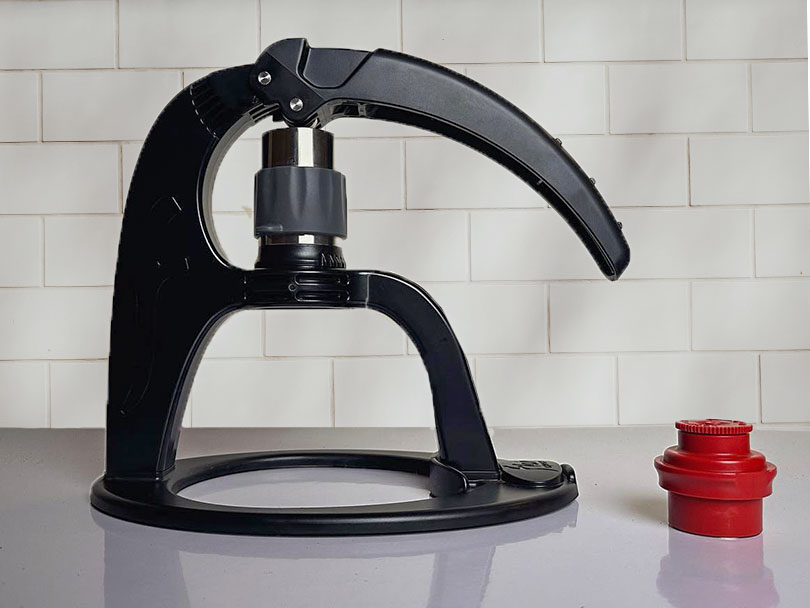
It’s a great option if you want to get into manual espresso brewing. The learning curve is steeper than most others on this list, but the payoff is worth it.
Or read our Flair comparison
✈️ Best Handheld: Wacaco Nanopresso
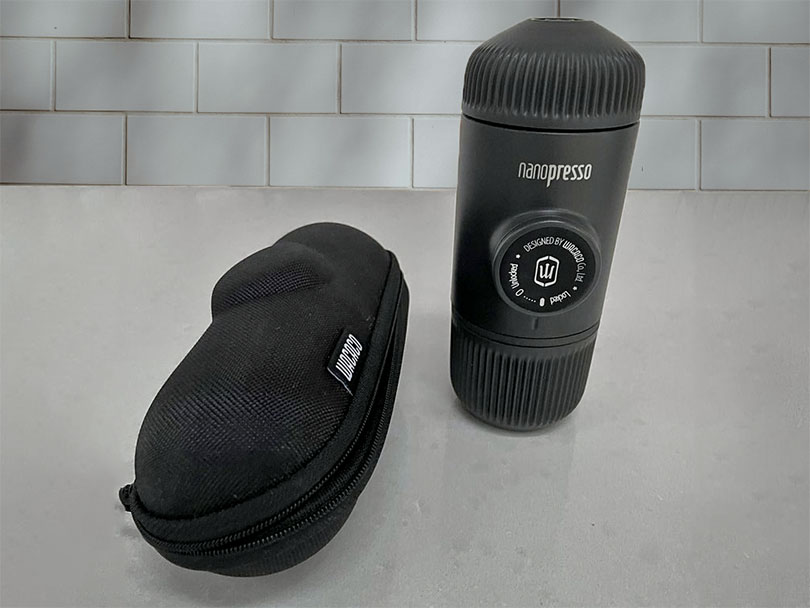
As it doesn’t need electricity or batteries, this is a great option if you travel a lot. You just need a way to heat water separately. It takes ground coffee or you can buy an adapter to use Nespresso pods if that’s more your style.
Or read our full review
But if you want to compare more options and take a deeper dive into our full, unfiltered thoughts on them, keep reading for our full list.

Who This Guide Is For
In the interest of setting expectations from the off, we’ve put this list together for:
- ☕️ Espresso beginners setting up their first home coffee station
- 🧋 Coffee lovers trying to save money on an occasional café habit
- 💸 Anyone looking for a simple, affordable espresso maker
- ✈️ Travelers who want portable espresso on the go
If you’re looking for professional-level espresso with precise temperature control and café-quality steam power, you’ll need to spend more than $100.
But if your goal is good espresso at home without breaking the bank, the machines below are a great place to start.

How We Tested These Machines
Every espresso machine in this guide was tested hands-on by me, a former Barista that started in the industry in 2006, and my wife. Between us, we’ve tested hundreds of coffee and espresso machines over the years to see how they perform in real-life situations.
Because some of the machines in this list have been on the market for many years, they weren’t all tested at the same time. However, we use the same testing process for every espresso machine we review, so results remain as consistent and comparable as possible.
For every test, we used the same medium-roast Ethiopian coffee beans that we freshly ground using our 1Zpresso J-Ultra hand grinder. This helps us compare extraction, crema, and flavor across different machines.
When testing budget machines in particular, we focus on the things most important to beginners:
- Ease of use and setup
- Shot consistency and crema
- Espresso flavor and balance
- Steam wand performance for milk drinks, where applicable
- Build quality and reliability
Our goal is simple: find espresso machines under $100 that genuinely help beginners start making good espresso at home. We don’t ever accept payment for favorable reviews – we only recommend machines we believe offer genuine value.

Compare the Best Machines
Quick comparison: If you want to see the key differences at a glance, here’s how the best espresso machines under $100 compare.
| Machine | Best For | Milk Frother | Portable | Easy to Use | |
|---|---|---|---|---|---|
|
DeLonghi Stilosa
|
All-rounder for beginners | ✅ Steam wand | ❌ Not portable | Easy to use | |
|
Flair Neo Flex 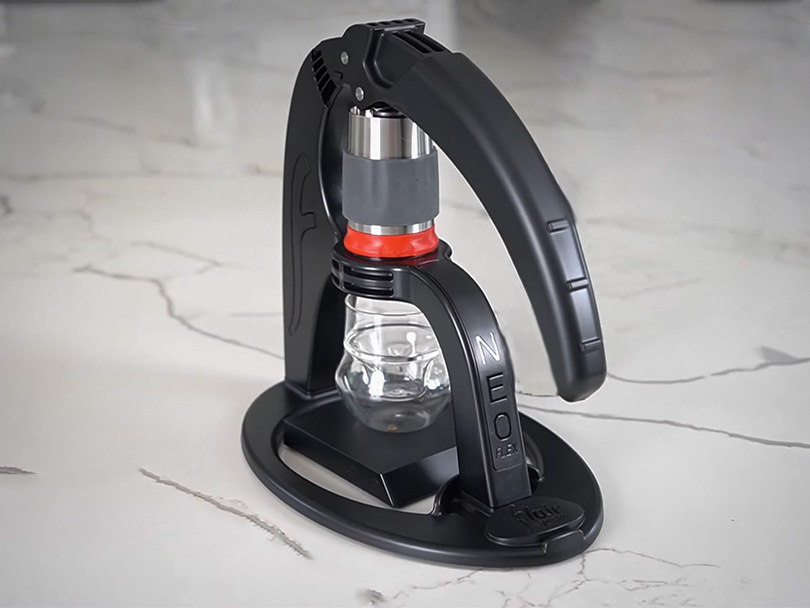
|
Advancing your skills into manual espresso brewing | ❌ No milk wand | ✅ Portable but not for everyday travel | Moderate to hard to use | |
|
Wacaco Nanopresso 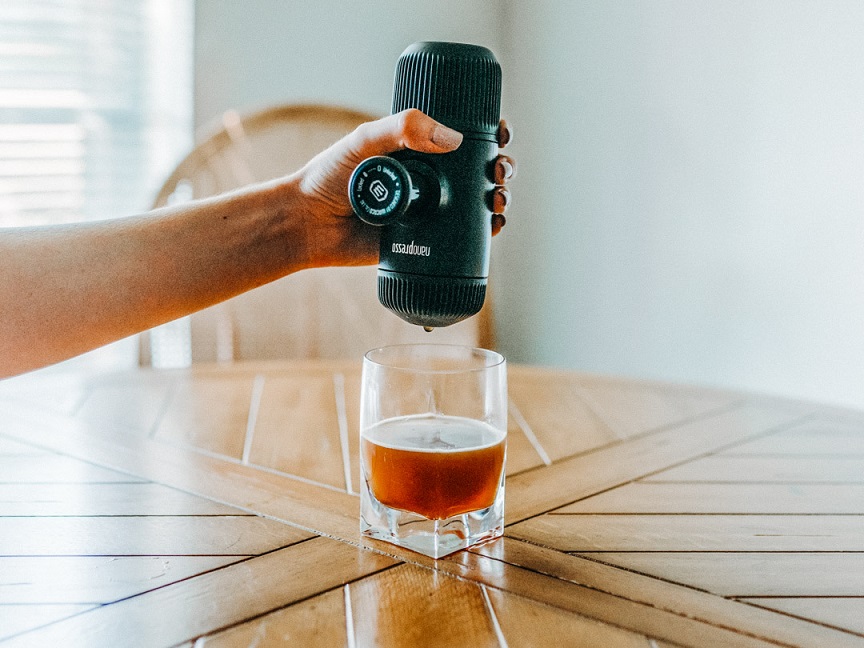
|
Portable option for travelers | ❌ No milk wand | ✅ Very portable | Moderately easy to use | |
|
Hamilton Beach 40715 
|
Budget cappuccinos | ✅ Steam wand | ❌ Not portable | Easy to use | |
|
Capresso 305.01 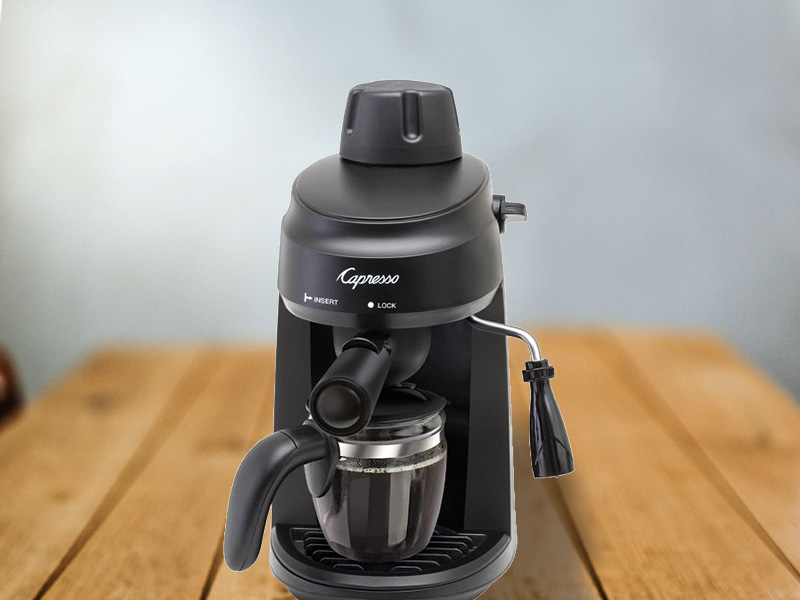
|
Simple beginner espresso | ✅ Steam wand | ❌ Not portable | Easy to use | |
|
Cafflano Kompresso 
|
Ultra-compact espresso maker | ❌ No milk wand | ✅ Very portable | Moderately easy to use | |
|
Starresso 
|
Portable espresso and milk | ✅ Manual milk frother | ✅ Very portable | Moderately easy to use | |
|
Leverpresso V4 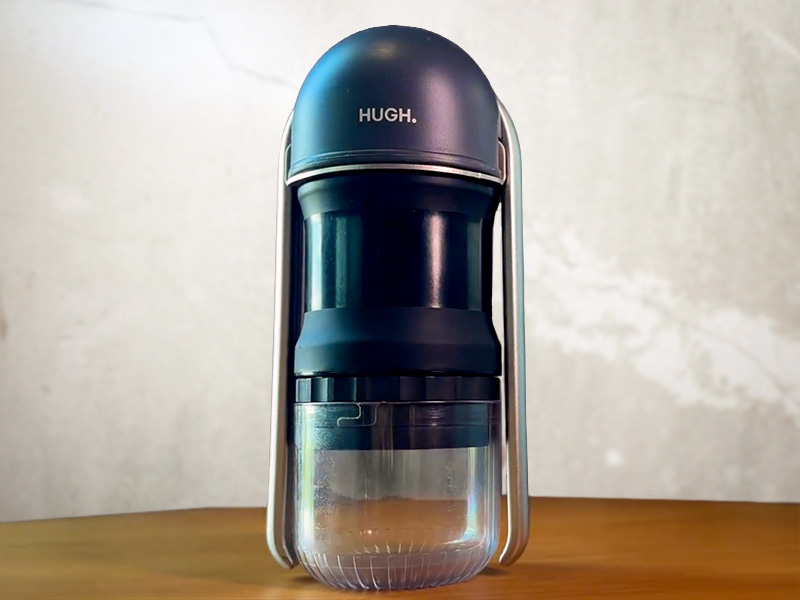
|
Travel espresso enthusiasts | ❌ No milk wand | ✅ Very portable | Moderately easy to use | |
|
Casabrews 3700 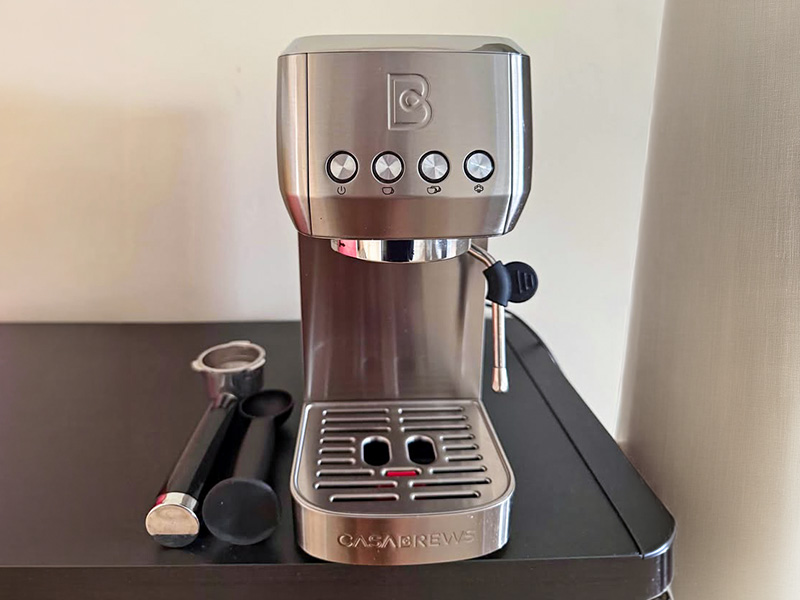
|
Stylish budget espresso maker | ✅ Steam wand | ❌ Not portable | Easy to use |
9 Best Espresso Machines Under (or Around) $100
1. De’Longhi Stilosa: Overall Best Budget Espresso Machine
Pros
- 15 bar pressure pump
- Single or double espresso portafilters
- Beginner-friendly pressurized basket
- Easy to use manual milk wand
- Compact and affordable
Cons
- Plastic-heavy build
- Can’t accommodate travel cups
- Milk wand performance is limited
Best for: Beginners who want a real espresso machine under $100 that can make a latte or cappuccino too, and are willing to wait until the sale periods.
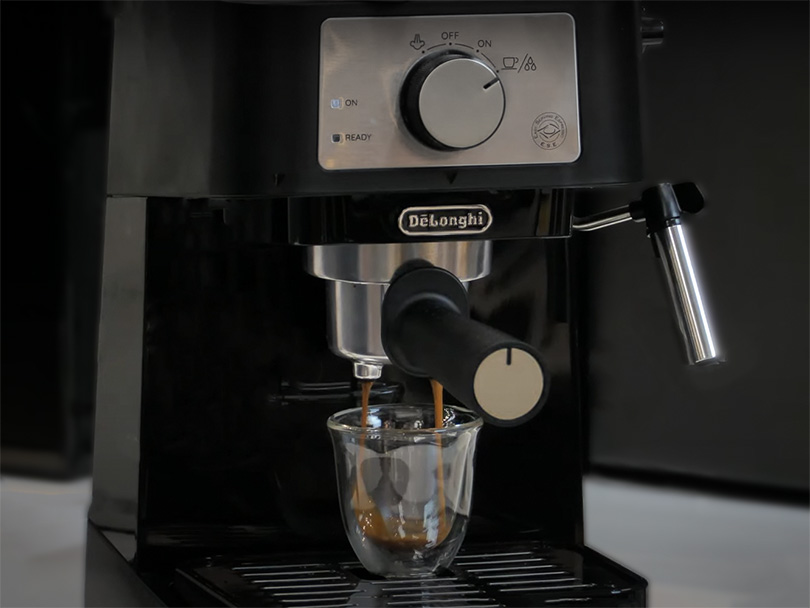
The DeLonghi Stilosa is one of the best beginner espresso machines you can buy on a tight budget. Whilst its RRP is $149, we regularly see it very heavily discounted throughout the year. So it’s well worth holding off if it’s at full price when you first look.
Unlike many ultra-cheap machines, it uses a 15-bar pump and traditional portafilter, giving you a more authentic “I’m a barista” experience at home.
In our testing, it produced consistently good espresso shots with decent crema. The pressurized basket also helps beginners get good results. Although, as you get more experienced, I’d recommend picking up a bottomless portafilter to really up your game.
It also includes a manual steam wand, making it a great option if you want to experiment with cappuccinos and lattes. For simply adding steamed milk to your drinks, it’s good. But it’s not capable of producing a good microfoam, which you need if you want to try your hand at latte art.
2. Flair Neo Flex – Best Quality Espresso
Pros
- Excellent espresso quality for the price
- Manual extraction gives you more control
- Compact and easy to store
- Great learning tool for espresso technique
- Comes with 2 portafilters – one for beginners, one for intermediate
Cons
- Steep learning curve
- For best results, you need to buy the pressure gauge add-on
- Need to heat water separately
- No milk frothing
Best for: Patient espresso enthusiasts who want to get best espresso quality possible on a budget, and are willing to put in the effort to get it.
If your priority is espresso quality rather than convenience, the Flair Neo Flex is one of the most impressive options in this price range.
Unlike electric espresso machines, the Neo Flex is a manual lever brewer. This means you generate pressure yourself by pulling down the handle. But it also allows the machine to produce genuinely excellent espresso when paired with good beans and the right grind.
When we tested it straight out of the box, we were impressed with the rich, well-extracted shots and excellent crema. However, it really started to shine when we got the additional pressure gauge. This does take it closer to a $200 espresso machine, but it gave us much better control and put the espresso quality head and shoulders above all the other budget machines.
It’s important to know that this machine requires a lot more effort and learning. There’s also no steam wand, and you’ll need to heat the water separately. So it’s best suited to coffee lovers who enjoy the hands-on side of espresso making or want to learn more.
3. Wacaco Nanopresso: Best Beginner-Friendly Portable Espresso Maker
Pros
- Capable of high-pressure extraction & great tasting coffee
- Weighs just 0.74 lb, making it very compact and light
- Excellent portabiltiy including a built-in cup
- Can use ground coffee or Nespresso pods (with an add-on)
- Durable and well-designed
Cons
- Requires manual pumping
- Time-consuming, especially for more than one shot
- Water needs to be boiled separately
- No milk frothing
- Not the easiest to clean when traveling
Best for: Travelers and outdoor enthusiasts who want real espresso anywhere.
We couldn’t be more impressed with this portable espresso maker by Wacaco.
If you want to make espresso while travelling, camping, or at the office, the Wacaco Nanopresso is one of the best portable espresso makers available for beginners. (It’s big brother, the Picopresso, can produce higher quality espresso, but it costs more and has a much steeper learning curve.)
The Nanopresso is a compact, hand-powered espresso maker that uses a manual pump system capable of generating the highest amount of pressure on this list. This allows it to produce surprisingly good espresso without electricity. The downside is you need relatively large hands and good grip strength – my wife has very small hands and really struggles to use it.
For a travel-sized device, we were really impressed with the results. The main trade-off is convenience – you need to supply hot water, manually pump, and find somewhere to dispose of the coffee grounds.
For easier clean-up, you can get the Nespresso pod add-on. I also think it’s worth splurging on the hard shell case to keep it safe in your suitcase or backpack.
Still, if portability matters, it’s hard to beat.
4. Hamilton Beach Espresso Machine 40715
Pros
- 15-bar pump system
- Easy to use and clean for beginners
- Can use either generic coffee pods or ground coffee
- No-fuss frothing wand for milky drinks
- 5-year warranty
Cons
- Espresso and milk consistency can vary
- Confusing user interface
- Steamer can produce too many big bubbles
Best for: Beginners who want an affordable no-frills machine for the occasional cappuccinos and lattes, but not for multiple cups per day.
The Hamilton Beach 40715 is a stripped-back, simple, and affordable espresso machine designed for beginners who want to make basic espresso drinks at home without any bells or whistles.
It uses a 15-bar pump system and includes a built-in steam wand, making it possible to prepare cappuccinos and lattes without additional equipment. During testing, we found it produced decent beginner-level espresso when paired with freshly ground coffee. You can also use generic coffee pods if you want something even easier, though we stuck to testing with the fresh stuff.
However, the milk wand left a lot to be desired. It produced lots of large bubbles and was very inconsistent. So you definitely couldn’t use it to perfect your latte art.
While it doesn’t have the refinement of higher-end machines, it’s a straightforward option for casual home use.
5. Capresso 305.01
Pros
- Powerful
- Can make 4 espressos at the same time
- Steam wand for milk drinks
- Compact, space-saving machine
Cons
- Can burn your coffee
- Pressure build-up
- There is a learning curve to perfect the brewing technique
- Small drip tray
Best for: Beginners who want a simple, compact espresso machine.
The Capresso 305.01 is a compact and beginner-friendly espresso maker designed for quick, simple home brewing.
It’s a steam-powered espresso machine – something that’s becoming less common as people’s tastes move away from the more bitter style of espresso they produce. However, they need less complicated parts, meaning a cheaper espresso machine for you.
The espresso quality didn’t blow us away – it definitely tends towards the more burnt style. And that’s with a lot of experience under our belts to avoid it. So, I’d only recommend this machine if you like to drink your coffee with creamer or sugar, to hide some of the less pleasant notes.
The included steam wand allows you to experiment with milk drinks, although the frothing power is fairly basic.
It will take a little getting used to the steam. But once you do, it’s a reasonable machine for a very low price.
6. Casabrews 3700 Essential
Pros
- Attractive modern design
- 20 bar pump system
- Steam wand for milk drinks
- Compact design for small kitchens
- Beginner-friendly controls
Cons
- Requires additional accessories to make it really good
- Takes a little practice
- Milk wand is awkward to use
Best for: Beginners who want a stylish, affordable espresso setup.
The Casabrews 3700 Essential is a compact, beginner-friendly espresso machine that offers surprisingly strong performance for its price.
It uses a 20-bar pump system and thermoblock heating, which helps produce espresso with good crema when paired with freshly ground coffee. With no alterations, we thought it produced some solid beginner-level shots. However, like many budget machines, the espresso extraction can be a little inconsistent, and the pressurized portafilter limits how much control you have.
We did give it a go with a bottomless portafilter – an upgrade we’d recommend for any budget espresso machine. And the shots were seriously good. Like, well beyond what we’d expect for a sub-$100 machine.
The included steam wand can produce good microfoam with a bit of practice, making it capable of cappuccinos and lattes. It’s just a little awkward to turn off.
Still, for beginners who want a compact and affordable espresso setup, it offers good value.
7. Cafflano Kompresso
Pros
- Extremely compact and lightweight (less than 0.5 lbs)
- Durable and travel-friendly
- No filters to replace
- No electricity needed
- Capable of making espresso comparable to much more expensive machines
Cons
- Need to pre-heat the water separately (small capacity)
- Learning curve
- Slow (up to 8 minutes) & need to pre-heat
- No milk frothing
Best for: Travelers who want an ultra-compact manual espresso maker.
The Cafflano Kompresso is one of the smallest espresso makers available, making it a great option for travel or minimalist setups.
Unlike most portable brewers, the Kompresso uses a hydraulic compression system rather than a pump. This makes it easier for the small-handed among us to generate enough pressure to pull a genuine espresso shot.
You do need to separately grind your beans and heat your water, but we were impressed with the surprisingly rich shots and good crema from such a small device.
However, it requires a bit more technique than pump-style portable machines, so there’s a small learning curve. But, overall, this is one of the best cheap espresso machines that is also portable.
8. Staresso Basic
Pros
- Portable and travel-friendly
- Can froth milk for cappuccinos or lattes
- Hand pump generates good pressure
- Comes with an espresso glass to drink from
- Consistent extraction
Cons
- The pump can get difficult to use over time
- Tamper is way too small
- Not the best at frothing milk
- Requires separate hot water
Best for: Travelers who want portable espresso AND milk drinks.
The Staresso is a versatile portable espresso maker designed for travel, camping, and small kitchens.
It uses a hand-powered pump system that can generate enough pressure to produce espresso with crema. It took me a little while to perfect the pumping action whilst also keeping the device flat. But the espresso quality was solid, but not as good as the other portable options listed here.
One feature that sets the Staresso apart is its ability to froth milk, making it possible to create simple milk-based espresso drinks on the go – something most portable espresso makers can’t do. Though obviously, the milk will be cold unless you heat it separately.
So if you’re not specifically looking to use the milk frothing feature, the other portable coffee makers available are a better option.
9. Leverpresso V4
Pros
- Lever system capable of excellent espresso
- Portable but sturdy design
- No electricity required
- Great for espresso enthusiasts
Cons
- Larger than most portable brewers
- Requires practice to master
- No milk frothing
- Need to heat water separately
Best for: Espresso enthusiasts who want a portable manual espresso setup.
The Leverpresso V4 is a portable manual espresso maker designed for coffee enthusiasts who enjoy a more hands-on brewing experience.
Instead of a pump, it uses a dual-lever system to generate pressure, similar to traditional lever espresso machines. You do need a fair bit of strength in you, though, to pull the levers down. After the workout, we thought the espresso was impressively rich for a portable, affordable espresso maker.
However, it requires more setup and technique than most portable brewers, so it’s best suited to coffee lovers who enjoy experimenting with manual espresso.

What to Expect from an Espresso Machine Under $100
Before choosing a budget espresso machine, it’s important to set realistic expectations.
At this price point, manufacturers have to keep costs down, which usually means simpler components, fewer controls, and lighter materials compared to more expensive machines. That doesn’t mean they’re bad – but they do work a little differently.
Here are the main things beginners should know:
Espresso Quality Will Be Good, Not Great
Many espresso machines under $100 can produce good espresso, especially when paired with freshly ground beans (which means spending more to get a grinder too).
However, they typically use pressurized portafilters or simpler pressure systems that make it easier to produce an artificial crema. This helps beginners pull drinkable shots more consistently, even if the flavor complexity isn’t quite the same as high-end machines.
If you drink your coffee with a lot of sugar or syrups, you likely won’t really notice. But it does put a ceiling on the quality you can get.
The easiest way to take this up a notch is to buy a bottomless portafilter (we really rate Normcore ones) – you just need to double-check you get the right size.
Build Quality is Simpler
Budget espresso machines are usually made with more plastic parts and smaller boilers than higher-end machines.
This can affect:
- Long-term durability
- Temperature stability
- Steam power for milk frothing
That said, many models from trusted brands like De’Longhi or Hamilton Beach can still last for years with proper care and come with good warranties.
Manual and Portable Machines Can Produce Better Espresso
Interestingly, some of the best espresso quality under $100 actually comes from manual machines like the Flair Neo Flex or portable brewers such as the Wacaco Nanopresso.
Because they rely on manual pressure instead of small electric pumps, they can sometimes produce richer shots. But they also require more effort and technique so the quality is directly tied to your skills.
A Good Grinder Matters More Than the Machine
One of the biggest factors affecting espresso quality isn’t the machine – it’s the consistency of your grind size.
Using freshly ground coffee makes a huge difference. During our testing, we used a 1Zpresso J-Ultra to grind our beans just before brewing, which significantly improved the results from every machine.
If you’re serious about improving your espresso, investing in a good grinder is often more important than upgrading the machine itself. You just need to make sure the one you use or buy can grind fine enough for espresso, as a lot of budget-friendly grinders will be too coarse.
💡 Bottom line: Espresso machines around $100 won’t match professional café equipment, but they can still make enjoyable coffee at home. Especially for beginners starting their home barista journey.

Espresso Alternatives Under $100
If your goal is strong, rich coffee at home, you don’t necessarily need a traditional espresso machine.
Several popular coffee makers can produce espresso-style coffee at a much lower cost (and higher quality). While they don’t technically brew true espresso (which requires a minimum pressure), they can still deliver a bold, concentrated cup that works well black or for drinks like lattes, cappuccinos, or Americanos.
These options are often simpler, cheaper, and easier to maintain than a budget espresso machine, making them a great choice for beginners.
Here are three of our favorite espresso-style alternatives under $100.
AeroPress
Pros
- Extremely affordable
- Very versatile – great for experimenting with different recipes
- Highly portable/ compact for easy storing
- Very easy to use and clean
Cons
- Not “true” espresso
- Small brew size
- Takes practice to master the brewing technique
- Requires paper filters
Best for: Coffee lovers who want maximum versatility on a budget.
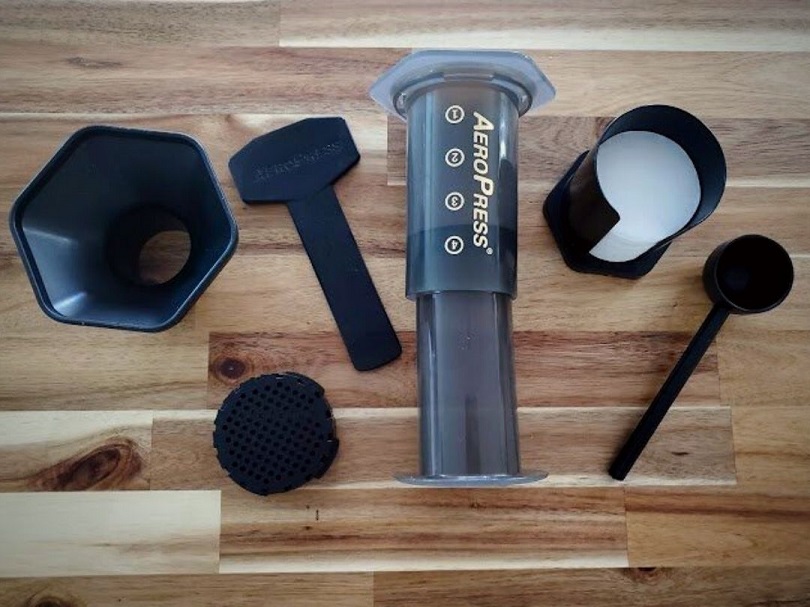
We would be lost without our AeroPress coffee maker, and it’s the first thing we reach for when we travel (though we use the more portable AeroPress Go Plus). It has a cult following among coffee enthusiasts thanks to its simplicity and versatility.
It uses a combo of manual pressure and immersion brewing to create a concentrated coffee that is somewhere between espresso, French press, and drip. For something closer to espresso-style, we love using James Hoffmann’s recipe.
We’ve tried countless AeroPress recipes and have yet to come across a dud. The coffee is always smooth and flavorful – plus it’s one of the most forgiving brewers for beginners.
Bialetti Moka Express
Pros
- Very affordable
- Built to last
- No electricity needed, just access to a heat source
- Produces strong, rich coffee
- Available in a huge range of colors and sizes
Cons
- Not “true” espresso by today’s standards
- You can’t turn it on, then walk away
- Takes practice to master
Best for: Strong stovetop coffee with an Italian espresso-style flavor.
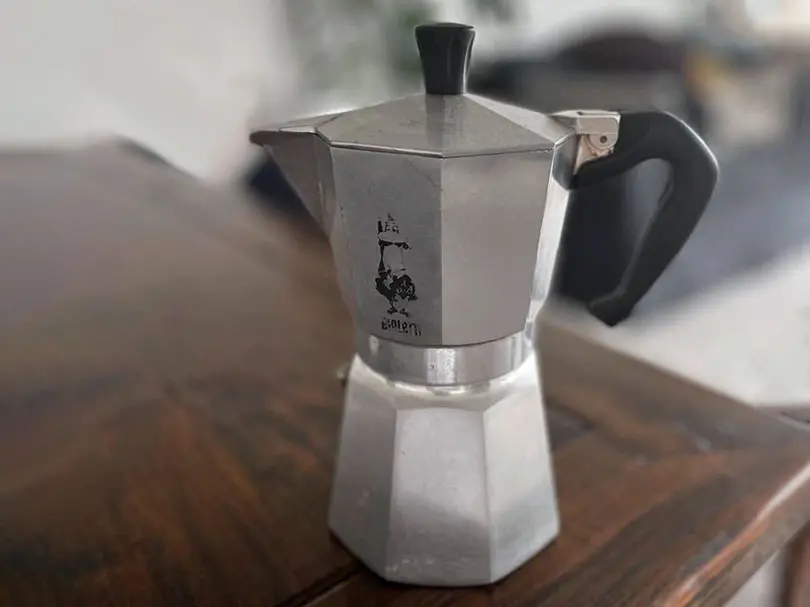
The Bialetti Moka Express is one of the most iconic coffee makers ever created. First introduced in 1933, it remains a staple in kitchens around the world.
Instead of using a pump, the Moka pot uses steam pressure from the stovetop to push water through coffee grounds. As one of the first attempts to brew under pressure, it was billed as Italian espresso. But, by today’s standards, it’s not espresso at all.
Instead, it produces a strong, concentrated brew that sits somewhere between espresso and drip coffee. It’s a lot bolder than espresso with a thicker texture. So you have to really like the style of coffee it produces to get the most out of this coffee maker.
We’ve used ours since our student days, and it’s still going strong. For us, it’s a little too intense for our everyday drinking, but if you like rich, bold coffee, then it’s an excellent low-cost alternative to an espresso machine.
Keurig K-Classic

Pros
- Extremely easy to use
- Can brew 3 cup sizes – 6 oz, 8 oz, and 10 oz
- Huge range of coffee pods available
- Fast brewing
- Large, removable water tank
- Can fit a travel mug
Cons
- Less control over brewing
- The cup sizes are relatively small
- Noisy
- Coffee pods add ongoing costs
- Can get clogged easily despite the descaling feature
Best for: People who want quick, hassle-free coffee at home.
If convenience is your priority, the Keurig K‑Classic is one of the easiest ways to make coffee at home.
This single-serve machine uses K-Cup pods (or ground coffee in a My K-Cup) to brew coffee at the press of a button. While it doesn’t produce real espresso, it can create a stronger, smaller cup that works well as a quick base for milk drinks.
The main advantage is speed and simplicity – you can have coffee ready in under a minute with almost no cleanup.
💡 Tip: If you’re deciding between a budget espresso machine and one of these alternatives, it usually comes down to how much effort you want to put into brewing. Espresso machines give you a more authentic experience, while brewers like the Moka pot or AeroPress offer simpler ways to make strong coffee for less money.

What to Look for in a Budget-Friendly Espresso Machine
Buying your first espresso machine can feel confusing. Especially when every product promises “barista-quality espresso”.
At the $100 price point, there are always compromises. The key is understanding which features actually matter for your needs and which ones are mostly marketing.
Here are the most important things to look for when choosing a budget espresso machine:
1. Pump vs Steam
The first thing to understand is the difference between pump machines and steam machines.
Pump machines use a mechanical pump to push hot water through coffee at high pressure, which is how traditional espresso is made.
Steam machines rely on steam pressure from boiling water, which is simpler and cheaper but often produces slightly more bitter or burnt coffee.
If possible, we recommend looking for a pump espresso machine with around 15 bars of pressure, which is common at this price point.
2. Manual vs Electric
⚡️ Electric machines are:
- Easier for beginners
- Faster and more convenient
- Often include a milk frother
💪🏼 Manual machines:
- Require more effort and technique
- Often produce better espresso quality
- Are more portable and compact
Manual options like the Flair Neo Flex or Wacaco Nanopresso can produce excellent espresso, but they require more practice than electric machines.
3. Milk Frothing Capability
If you enjoy drinks like cappuccinos or lattes, you’ll likely want a machine with a steam wand or milk frother.
Many entry-level espresso machines include a simple steam wand, but the quality can vary. They usually work well enough for basic milk drinks, but won’t match the power of higher-end machines.
If milk drinks are important to you, look for a machine that includes a dedicated frothing wand. But remember, you can always buy one separately if you’ve found your perfect espresso machine but it doesn’t have one.
4. Portafilter and Basket Options
The portafilter is the handle and basket that holds the coffee grounds during brewing.
Most beginner machines under $100 use pressurized portafilters, which are designed to make it easier to pull decent shots even if your grind size isn’t perfect.
This is actually helpful for beginners because it makes the machine more forgiving while you learn. As you up your skills, it’s worth investing in a bottomless filter – a much cheaper mod to your machine than replacing it.
5. Water Tank Size
Budget espresso machines tend to have smaller water reservoirs, which means more frequent refilling.
For a single coffee drinker this usually isn’t a problem. But if you’re making multiple drinks every morning, you may want a machine with a larger removable water tank for convenience.
6. Ease of Cleaning
Regular cleaning is essential for keeping an espresso machine working properly.
Look for machines with:
- Removable drip trays
- Detachable water tanks
- Simple portafilter designs
These features make daily cleaning much easier, especially for beginners.
7. Portability (If You Travel)
If you travel frequently or want espresso while camping, a portable manual espresso maker can be a great option.
Devices like the Wacaco Nanopresso or Cafflano Kompresso are small enough to fit in a bag and can produce surprisingly good espresso anywhere.
Just keep in mind you’ll need hot water and freshly ground coffee.
💡 Final Tip for Beginners
When buying an espresso machine under $100, it’s best to focus on simplicity and reliability rather than extra features.
A well-built entry-level machine paired with fresh coffee and a good grinder will almost always produce better results than a complicated machine with lots of budget components.
Start simple, learn the basics of espresso brewing, and you can always upgrade your setup later.


7 Beginner Mistakes to Avoid
Many beginners struggle with espresso at first. Not because their machine is bad, but because a few common mistakes can ruin an otherwise good shot.
- Using pre-ground coffee
Espresso needs a fine grind size and, unless ground with espresso in mind, pre-ground coffee is usually too coarse. Plus it goes stale really quickly after grilling. So, freshly grinding beans with a grinder like the 1Zpresso J-Ultra or OXO Brew Conical Burr Grinder will dramatically improve your results. - Expecting café-quality espresso from a $100 machine
Budget machines can make good espresso, but they won’t match the precision or consistency of professional café equipment. - Using stale coffee beans
Coffee loses flavor quickly after roasting. For the best results, try to use beans roasted within the last 10 days to 4 weeks. - Not preheating the machine
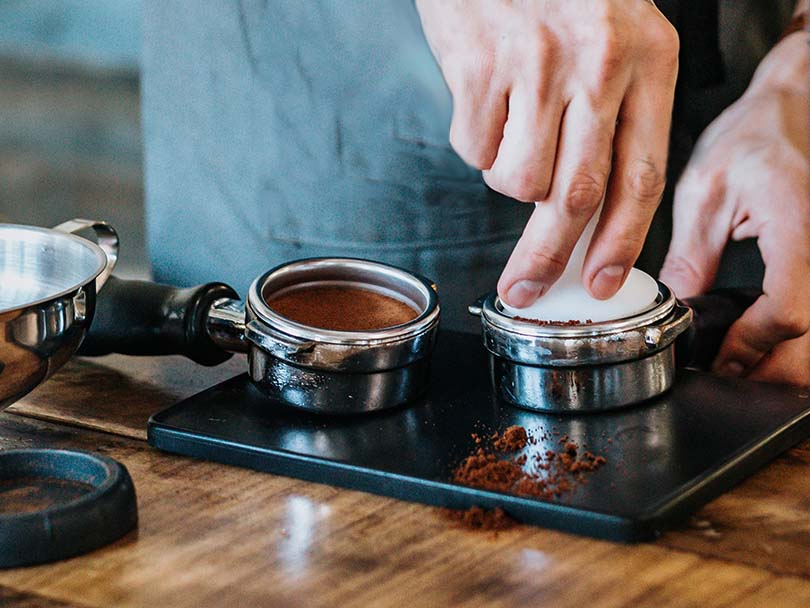
Pulling a shot too soon can lead to sour or weak espresso. Let the machine heat fully and run a quick blank shot first. - Incorrect tamping pressure
A level, firm tamp helps water flow evenly through the coffee. Too loose or uneven tamping can cause poor extraction. - Skipping regular cleaning
Coffee oils build up quickly in espresso machines. Cleaning the portafilter, group head, and steam wand regularly keeps flavors fresh. - Blaming the machine instead of the technique
Espresso is a labor of love, and the quality comes down to grind size, coffee freshness, and technique. Even simple machines like the Flair Neo Flex or Wacaco Nanopresso can produce excellent results with the right setup.

FAQ’s
Yes! While entry-level machines won’t match café-level equipment, many budget espresso makers can pull surprisingly good espresso. Especially when used with freshly ground coffee and the right technique.
That depends on whether you want to drink espresso, as it’s a very different style compared to other coffee makers.
In short, espresso is a short, rich, full-bodied 1oz shot of coffee. And espresso is the building block for many other drinks, for example, cappuccino, latte, or mocha.
So, if that sounds like what you want to drink then yes, an espresso machine is right for you.
You can use any regular coffee beans in your espresso machine. But you might not always be happy with the results. Depending on what you buy, your espresso may be bitter or sour.
There are, however, specific styles that will work best as espresso beans. Some coffee roasters will sell a specific espresso blend. But, if not, you want to go for a medium to dark roast and preferably something that has been ethically sourced.
Regardless of what coffee beans you choose, you need to buy finely ground coffee. Or, even better, grind it freshly yourself. If it’s too coarse, you will under-extract and get a really weak coffee.
When you’re buying an espresso machine, you are looking for something of quality. A machine that will extract the very best from your coffee beans and give you a great-tasting cup of coffee. Doing this involves a lot of parts, which have to be well-made. And well-made usually carries a higher price tag.
As pressure is one of the key components of making coffee, a mechanism has to be in place for this to build. On manual espresso machines, this is done by hand-pumping. And electric machines use steam or a motor. And this is dangerous. In times of lesser quality control standards than we have today, it was not uncommon for espresso machines to explode, causing significant damage to anything or anyone in the vicinity.
So, you pay for safety in a well-made espresso machine.
Of course, there are huge price variations in the market depending on what bells and whistles come with your home espresso machine. That all comes down to what you are looking for. And, usually, how much of the task you want it to take over for you.
If budget-friendly is what you’re after, you can still pick up one of the best espresso machines under $100 and be happy with the end result.
For the best flavor, yes. Freshly ground coffee makes a huge difference in taste and crema. Even a manual grinder like the 1Zpresso J-Ultra can dramatically improve your results.
Manual and portable machines are capable of producing richer espresso than their cheap electric counterparts. But they require more skill and effort. Electric machines are easier for beginners and often include milk frothers.
Only if the machine supports them. Machines like the Keurig K-Classic are pod-based, but most budget machines use ground coffee.
Machines with pressurized portafilters and simple controls, like the DeLonghi Stilosa, are very beginner-friendly.

The Final Word
So, what is the best espresso machine under $100 for home use?
Starting your home espresso journey doesn’t have to break the bank. While machines under $100 won’t match professional café equipment, they can produce surprisingly good espresso. Especially if you use fresh beans, a consistent grind, and follow basic technique.
For beginners looking for an all-rounder, the DeLonghi Stilosa is our top pick. It’s simple to use, reliable, and includes features like a pressurized portafilter and milk frother to help you make espresso, lattes, and cappuccinos at home.
If you’re after portability or manual control, options like the Wacaco Nanopresso, Cafflano Kompresso, or the Flair Neo Flex let you make strong, concentrated coffee anywhere. This makes them perfect for travel, small kitchens, or experimenting with espresso technique.
No matter which machine you choose, start simple and enjoy the process. Your home espresso skills will improve quickly… without spending a fortune.
☕ Tip: Pair your budget machine with freshly roasted beans and a small grinder for the best results — even the simplest machines can produce a café-worthy shot this way.
Read Next: Best Espresso Machines Under $200

You Might Also Like
-

Miele CM 6360 Review: Beautiful, Powerful, But Is It Right for You?
In this Miele CM 6360 review, we share our hands-on thoughts on who should buy it, who shouldn’t, and how it compares to Jura and Breville
-
Best Philips Espresso Machine: We Tested the 3300, 4400 vs 5500
Confused by the 3300, 4400, and 5500? We tested all 3 to show the real differences and help you choose the best Philips espresso machine