Philips espresso machines have always focused on one thing above everything else: making espresso as easy and affordable as possible. After spending several weeks using the Philips 3300 as our daily machine, pulling countless espressos, milk drinks, and iced coffees, it’s clear that philosophy hasn’t changed.
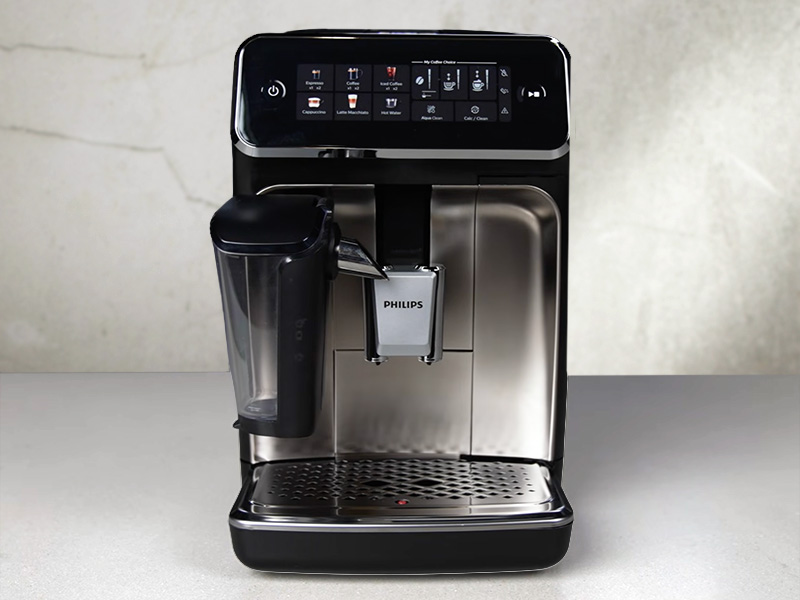
The Philips 3300 replaces the hugely popular 3200 as the brand’s mid-range super-automatic, and, on paper, it’s a solid upgrade. It’s quieter, easier to use, and the LatteGo milk system is still one of the simpler automatic milk setups we’ve ever tested. Once the machine has been properly broken in (more on that later), it can make genuinely good espresso and excellent milk foam with very little effort.
That said, our Philips 3300 review comes down to one important question: is it good value for money? And at full price, the answer is no. For the money, there is stiff competition making better (or just as good) coffee. But when the 3300 is heavily discounted (as it often is), it becomes a very tasty upgrade for anyone moving on from a pod machine and wanting great convenience without getting technical.
Below, we break down exactly where the Philips 3300 shines, where it falls short, and who should (and shouldn’t) buy it.
This article may contain affiliate/ compensated links. As an Amazon Associate, we earn from qualifying purchases at no additional cost to you. For more information please see our disclaimer here.
Weekends are made for little treats and big savings
Especially with Amazon’s Big Spring Sale knocking out savings of up to 40% on coffee gear
We’ve combed through the sale to find the genuinely good deals on espresso machines, grinders, and coffee gadgets (not the fake “discounts” 👀). If you’re thinking about upgrading your setup, this is where to start:
At a Glance: Philips 3300 Review
Verdict:The Philips 3300 is a very easy-to-use, quiet super-automatic espresso machine that makes good coffee and excellent milk drinks. But only at the right price. And after initially making 20 coffees that are destined for the bin.
At full retail price ($900 for the LatteGo version), the competition makes better espresso for the money. When discounted, however, it becomes one of the best-value upgrades from a pod machine.
It’s ideal for coffee drinkers who want convenience above all else and don’t want to tinker with settings. If espresso quality is your top priority, or you’re paying close to full price, there are better options out there.
Pros
- Ceramic grinder with good longevity
- Incredibly easy to use and clean
- Good espresso
- Very good milk quality with LatteGo
- Quiet operation (one of the quietest we’ve tested)
Cons
- Espresso quality lags behind competitors at full price
- You need to run 10-20 cycles before you get good results
- Limited drink selection
- No user profiles

Who It’s For (And Who It’s Not)
✅ Buy the Philips 3300 if:
- You’re looking to upgrade from a pod machine. The 3300 is a significant step up in quality over Nespresso or Keurig machines.
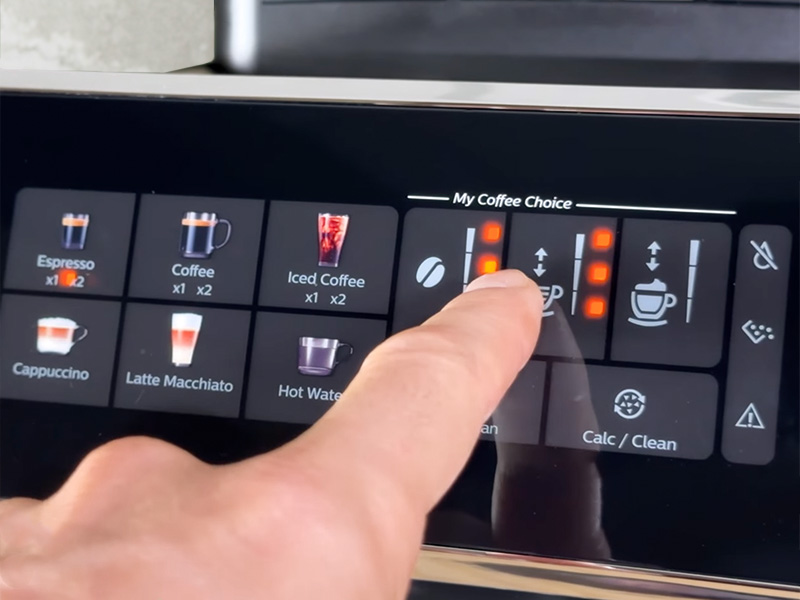
- You want everything as simple as possible. Choosing your coffee and settings is incredibly easy and always displayed. No digging through menus.
- You prefer hands-off milk steaming. The LatteGo system is superb for foaming and simple to clean.
- You want a quiet espresso machine. The 3300 uses SilentBrew technology, which (according to Philips) makes it 40% quieter than previous models and very quiet compared to the competition.
❌ Skip it if:
- Espresso quality really matters. The espresso is good, but not great. Plus, you have to wait for the machine to get into its stride to the tune of 10-20 pretty terrible initial coffees.
- You like lots of choice. With only 5 drinks to choose from, this isn’t for those who love to experience variety.
- You’re a latte, flat white, or cortado drinker. The automatic milk system is good but it produces milk too foamy for fans of these drinks.
- You love minimalist design. All the buttons on the front make it amazingly easy to use, but don’t look fantastic.

Key Features Review
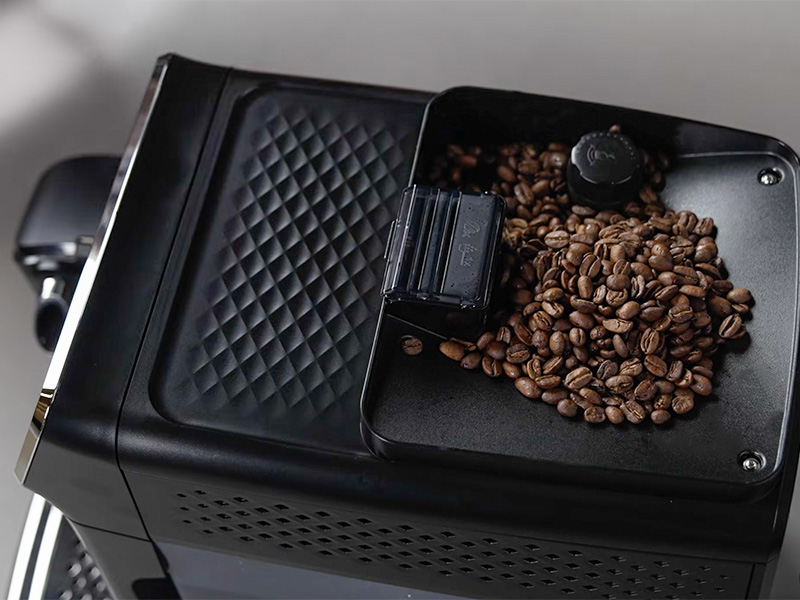
1. Ceramic Burr Grinder
Ceramic grinders are less common in automatic espresso machines than stainless steel ones. They have two important advantages:
- The ceramic burrs stay cooler while grinding, ensuring all those flavor oils stay in the grounds where you want them, and
- Ceramic burrs stay sharper for longer than stainless steel, adding to the longevity of your grinder, and machine.
2. SilentBrew Technology
The new 3300 is 40% quieter than previous Philips espresso machine models like the now-discontinued 3200. Espresso machines can be loud, so anyone who needs coffee without waking up the whole house will appreciate the difference.
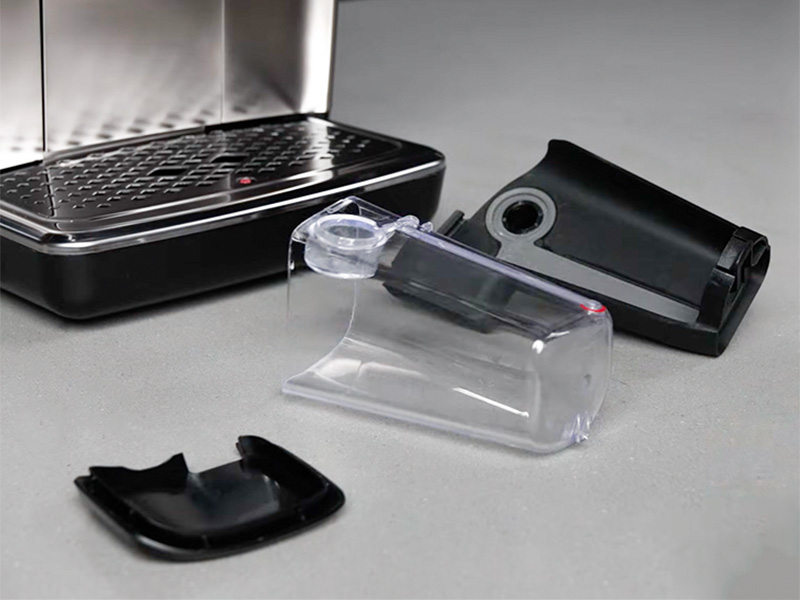
3. Easy Clean Milk System
With only 2 parts, the LatteGo milk frothing system on the Philips 3300 not only works great, but can be cleaned in less than 30 seconds.
4. AquaClean Filter
Using the branded filters for your water can mean up to 5000 coffees before you have to descale your machine. Filtered water also means better-tasting coffee, and less cleaning is always a good thing.
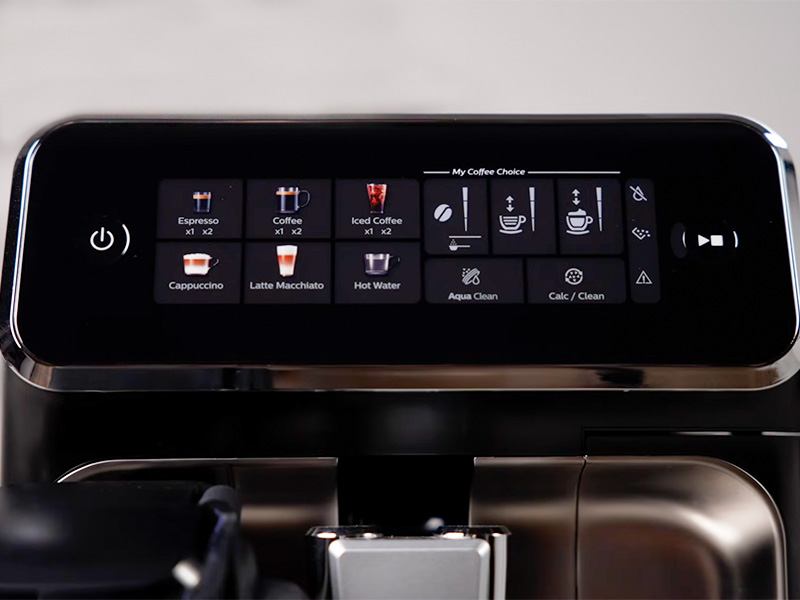
5. 5 Coffee Recipes, Including Iced Coffee
At the touch of a button you can make:
- Espresso
- Coffee
- Cappuccino
- Latte macchiato
- Iced coffee
- Hot water for tea
They’re also all customizable using the icons on the display.
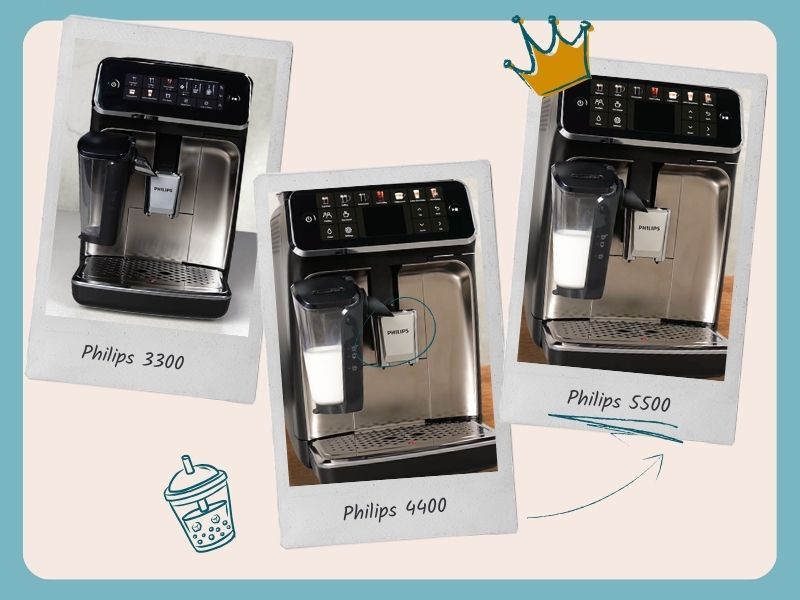
If 5 drinks is too limiting, the next model up – the Philips 4400 – has 12. You can read our full 4400 review here.

How Easy to Use is the Philips 3300?
The big plus for buttons over a phone-style touchscreen display is how easy it makes the 3300 to use.
A big reason Philips continues to do so well is that you really don’t need to read instructions to use it. Touch the button of the coffee you want, and the machine does the rest (just remember to put a cup under the spout…)
Don’t get us wrong, we love minimalist design, phone-style touchscreens of some of the top super-automatic machines. They look and feel far more premium than this more “90s fax machine” display, but they’re generally harder to use, even if only a little.
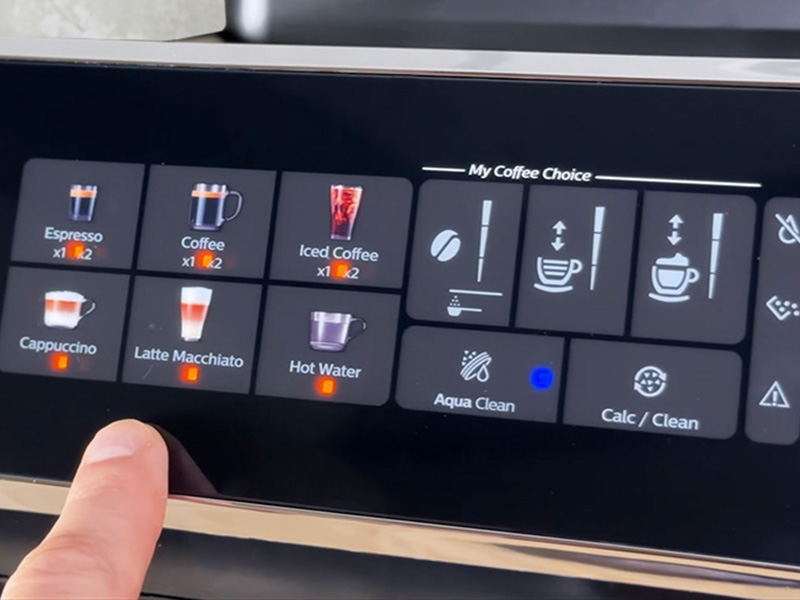
Adjusting your coffee on the 3300 is also extremely simple.
There are 3 levels for “aroma” (strength), 3 levels for coffee volume, and 3 for milk volume. With the lights indicating the level you’ve selected, it really could not be simpler to use.
Unfortunately, there aren’t any user profiles. So if you share the machine and have different preferences to your co-owner, you’ll need to look at the more expensive Philips 5500 or 4400.
The big thing to know about all Philips espresso machines is that they take time to “calibrate”. This means that you have to brew 10-20 coffees before the machine settles in and makes its best coffee.
I’ve read that it’s something to do with the springs that compress the puck but honestly, I don’t know. It seems weird that it needs to do this – and even weirder that Philips doesn’t factor this into their manufacturing process. But if your coffee is weak and watery straight away, keep brewing coffee for a while, and it should get better.
Maybe buy some “breaking in” beans so you don’t waste your favorites while the machine sorts itself out, though.

Grounds or Whole Beans?
Fresh roasted beans are the best option; they’re not called “bean to cup” machines for no reason.
The ceramic grinder on the Philips 3300 has 12 settings, though it’s very unlikely you’ll want to grind coarser than the 6th finest or so. We found that the 2nd finest setting worked best for our medium roast beans. Yours may, and probably will, be different, but that’s a good starting spot to try.
As is customary with these types of espresso machines, there’s a chute to bypass the grinder with pre-ground coffee if you need it. Most people use this for decaf, but an important thing to remember is that if you, or anyone else, enjoys flavored coffee, then you need to use pre-ground. The sugars in flavored coffee beans are not good for your grinder.

Design & Build Quality Review
The Looks
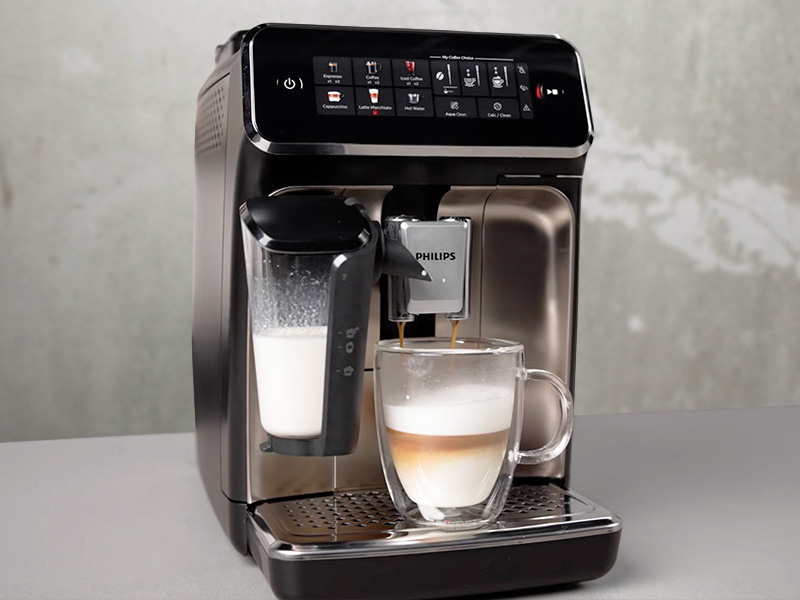
In the modern world of sleek and beautiful machines, the Philips range is a little out of place. I would never be so harsh as to say they look bad, but looks aren’t their strongest feature.
The new color display on the 3300 is definitely an upgrade over the 3200 and many people probably like having everything just sat there in front of them rather than an ambiguous black coffee box.
The 3300 is quite slim at only 9.6″ wide – very important for those of us with limited counter space. You do need to be careful if you have overhead cabinets, but at 14.6″ tall, you should still have clearance to refill your beans.
The Build
One of the reasons we tend to stick to the “big” coffee machine manufacturers is that build quality is incredibly important. A company with a strong track record for quality, like Philips, would always be our preference over one we’ve never heard of.
This is a mid-range machine, so there are a lot of plastic components to it. That’s true of just about every super-automatic espresso machine you will buy now, except for the Breville range.
Overall, the build quality seems good. Everything clicks together very nicely, the drip tray, water tank, and so on all feel like they’ve been made as well as you would expect. We’ve certainly not come across an issue with these machines breaking prematurely.
Of course, anything can break, but Philips generally offers a 2-year warranty on new espresso machines. Sometimes longer if registered with them, so it’s best to check! Anything over 1-year is very good for an espresso machine.

How Good is the Coffee from the Philips 3300?
The coffee from the Philips 3300 is decent, but not great.
This is the frustrating part for us – it’s good, but not as good as it probably should be for the price.
Once you get through the initial phase of the 3300 finding its feet, you can pull good-quality espresso shots. But if you’re paying around $900 for an espresso machine, you should get really good espresso shots.
The problem Philips has isn’t that its coffee is bad, it’s just that the competition’s coffee is much better. DeLonghi, Gaggia, and Breville all offer machines at this price point, and all 3 produce better espresso than the Philips. There are, of course, other considerations than just pure coffee quality, but if that is what matters to you, then the other options are better for sure.
Milk System
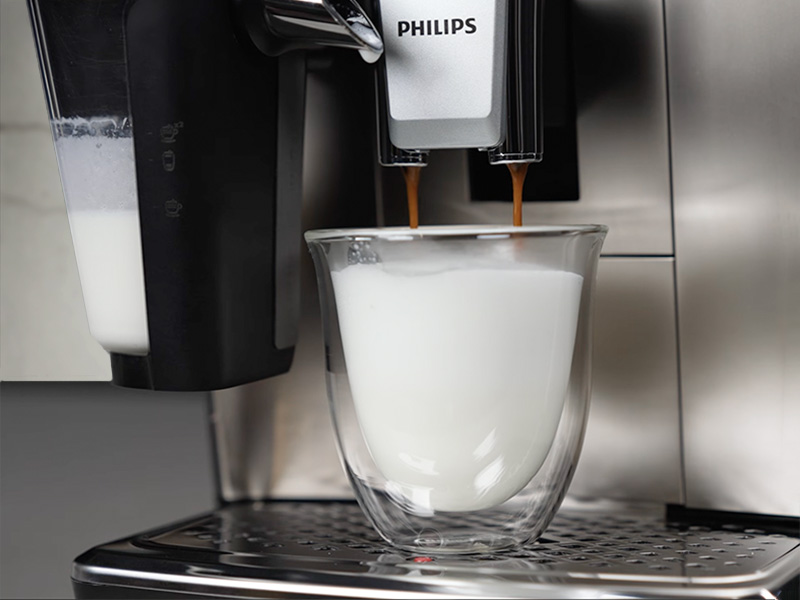
The LatteGo system on the 3300 is very good and well worth paying the extra for if you like coffees with milk. It clips on easily, the milk foam is superb, it can be stored in the fridge when not needed, and it cleans super super easily.
It only does one style of milk foam.
Both the cappuccino and latte macchiato are very foam-heavy drinks, unlike a regular latte or a flat white. So this is more basic than milk systems that have to do different milk types. But it should still be appreciated for how good it is.

Ease of Cleaning
Cleaning coffee machines isn’t fun, but the Philips 3300 minimizes this.
You’ll need to empty the drip tray, the puck bin (where the used coffee grounds go), and LatteGo system frequently, probably daily. None of these jobs takes more than 30 seconds, which in the milk system’s case is really impressive.
If you use Philips AquaClean filters, they claim that you may not need to descale the machine until after you’ve made 5000 coffees. At 4 coffees a day, that is over 3 years! But, and it’s a big but, it depends on the water in your area. If you have very hard water, full of minerals, then you won’t manage that long. Soft water areas may well not need to descale for years, though.
You will still need to replace the filters, not a hard task, but annoying. But I’d rather pay to replace a filter every so often than descale an espresso machine.
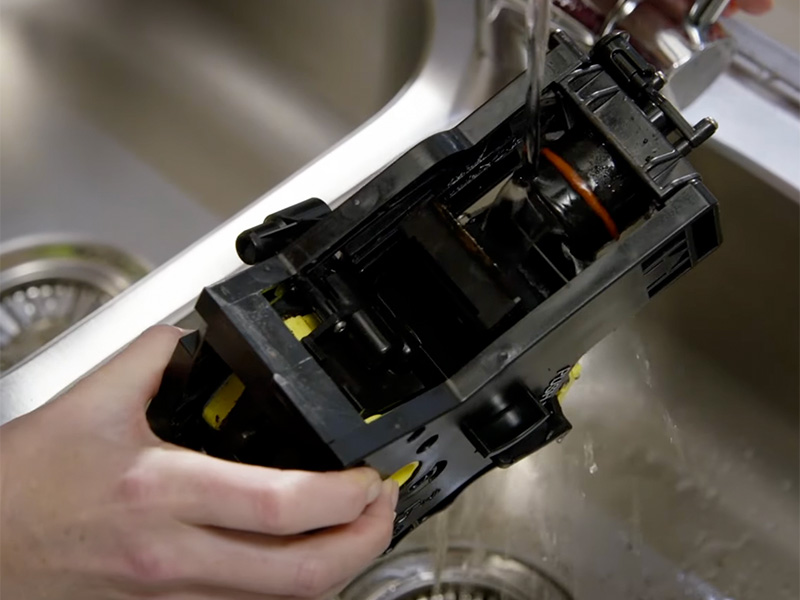
It is good practice to remove the brew group (the bit where the coffee is made) and rinse it out once a week. It needs to be completely dry before you put it back in the machine, but it’s best to let it dry naturally as fibers from a cloth or towel can damage it.

Competition
OK, so we’ve said the coffee isn’t as good as the competition at the price, so who is that competition?
De’Longhi Magnifica Evo with Latte Crema
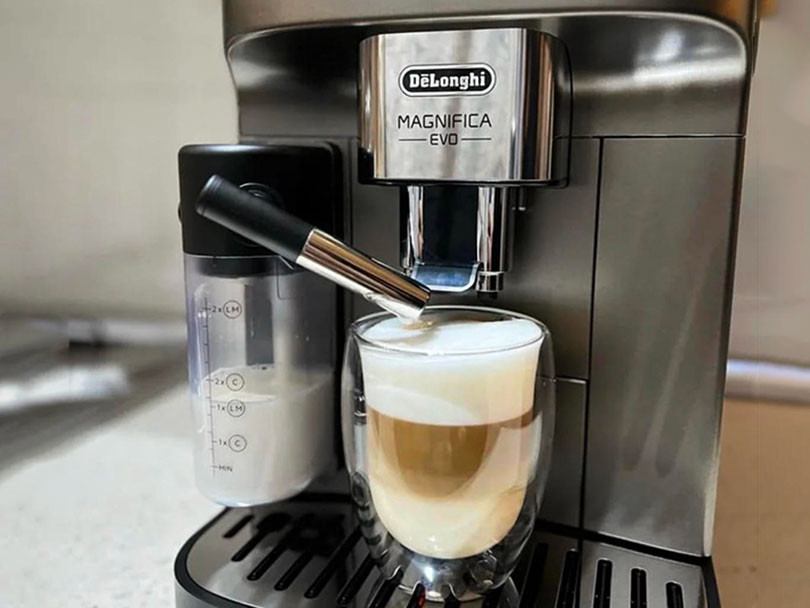
The De’Longhi Magnifica Evo with Latte Crema is the same RRP as the Philips 3300 ($900), though both are frequently heavily discounted in sales. (We always keep our eyes out for them in events like Prime Day and Black Friday 👀).
In terms of drink options, they’re basically the same, though there is an extra “My Latte” button on the DeLonghi that you can program to do whatever you want. The looks are also very similar, as is the ease of use and how easy it is to clean.
What clinches it for us is that the DeLonghi just makes coffee that is a little better than the Philips. Not a lot better, but definitely noticeably better.
It also doesn’t suffer as badly from the “calibration” phase, though all these machines need a few espressos to get it right.
This one really comes down to price:
With both machines frequently reduced, I’d pick the cheaper one. If you can get the DeLonghi for $650 or something, perfect. If the Philips is down under $600, which it sometimes is, then go for that.
Read next: Our in-depth De’Longhi Magnifica Evo Review
Breville Barista Touch
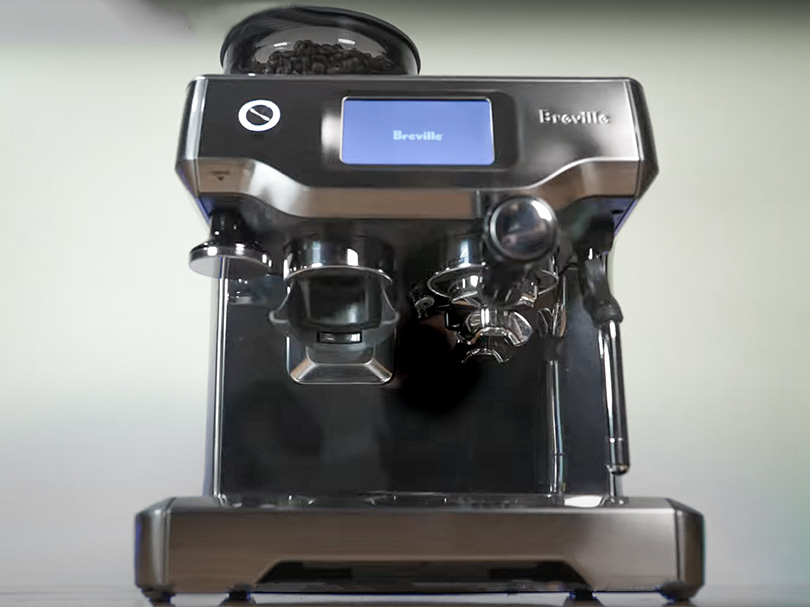
If you’re willing to put in some work (tamping and moving the portafilter), and you have an extra $100, you can get incredible coffee from the Barista Touch.
For us, it’s worth it. We’ll always choose working a little harder to get great coffee.
It’s not going to be everyone’s cup of tea; ease is what so many people want, and the Barista Touch is a little more complex.
But if you’re willing to part with a little more money and put a bit of effort in, you’ll be rewarded with far, far superior coffee. Worth it every time for us.
Read next: Our in-depth Breville Barista Touch Review
Gaggia Magenta Prestige
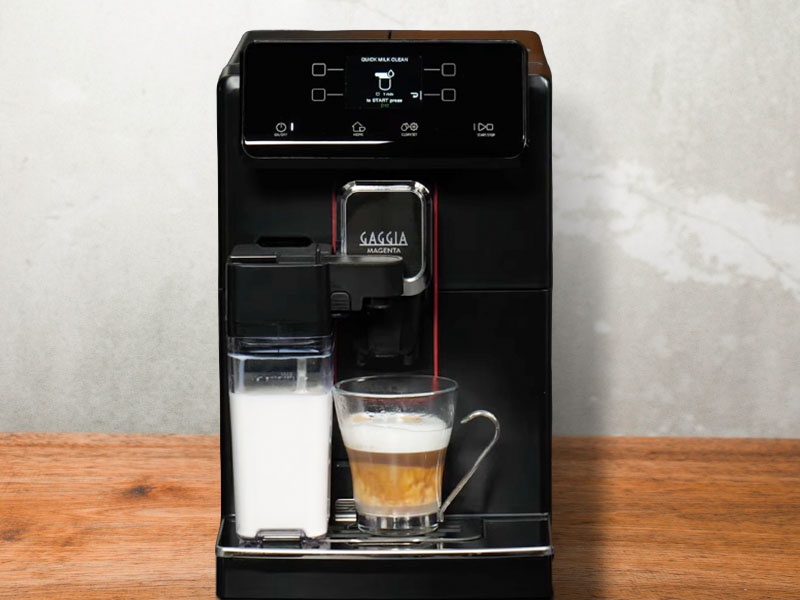
We think this is the best value for money super automatic espresso machine out there. Great coffee, great milk, good drink selection, looks great, easy to use, and simple to clean. If we were looking at spending $800-900 on a machine, then we would get the Gaggia Magenta Prestige. Hands down.
But we aren’t buying one, you are, and maybe you don’t think the Magenta Prestige is better looking. While it is easy to clean, the Philips 3300 is definitely easier. Same with ease of use, it’s very simple, but not as simple as the Philips.
It also has a bigger drinks selection with extra choices like cortado and flat white, which will make a big difference for most people. Maybe even just the fact it does a regular latte (little foam) and a latte macchiato (lots of foam) is a good enough reason to pick this machine over the 3300.
Unless the Philips is A LOT cheaper than the Magenta Prestige when you’re buying (which is always possible), we’d take the Magenta Prestige every single time.
Read next: Our in-depth Gaggia Magenta Prestige Review
Philips 3300 vs 3200
On the surface, there appears to be very few differences between the two machines.
Whilst the 3200 has been discontinued, many retailers continue to sell off their old stock. Often at really good prices. So is it worth grabbing one if the price is right?
On the surface, both the 3200 and 3300 are extremely similar. The drink options, customization options, grinder, and interface are nearly identical. Visibly, the biggest difference is the color buttons on the 3300 vs the black and white of the 3200, and you get better height adjustment too. But then the 3200 came in more colors.
So is it even worth paying for the 3300 over the 3200? Yes, absolutely. The internal workings are much improved on the Philips 3300 compared to its predecessor. Coffee and milk are both of better quality, and it is a lot quieter.

Final Thoughts
It might be the right machine for you… but only in the sales.
Don’t get us wrong, the takeaway from this Philips 3300 review isn’t negative. It’s a really good espresso machine. The problem is that at RRP, all the competition is better. Then there’s the whole issue of needing to run 20 coffees through it to “dial in” before its really usable.
That said, the Philips 3300 is frequently not at RRP; it is very often discounted and appears in basically any sales event you can think of. When it has a few hundred dollars off, it’s sensational value for money.
But if you’re looking at around $900 for a super-automatic espresso machine, we think you should buy the Gaggia Magenta Prestige or DeLonghi Magnifica Evo with LatteCrema instead.

You Might Also Like
-

Miele CM 6360 Review: Beautiful, Powerful, But Is It Right for You?
In this Miele CM 6360 review, we share our hands-on thoughts on who should buy it, who shouldn’t, and how it compares to Jura and Breville
-
Best Philips Espresso Machine: We Tested the 3300, 4400 vs 5500
Confused by the 3300, 4400, and 5500? We tested all 3 to show the real differences and help you choose the best Philips espresso machine