
We’ll be completely honest with you: when Ninja announced they were getting into espresso machines, we weren’t exactly queuing up with excitement. Ninja makes great air fryers. They make blenders, ice cream machines, and all manner of kitchen equipment. Espresso? We were skeptical. But were we right to be?

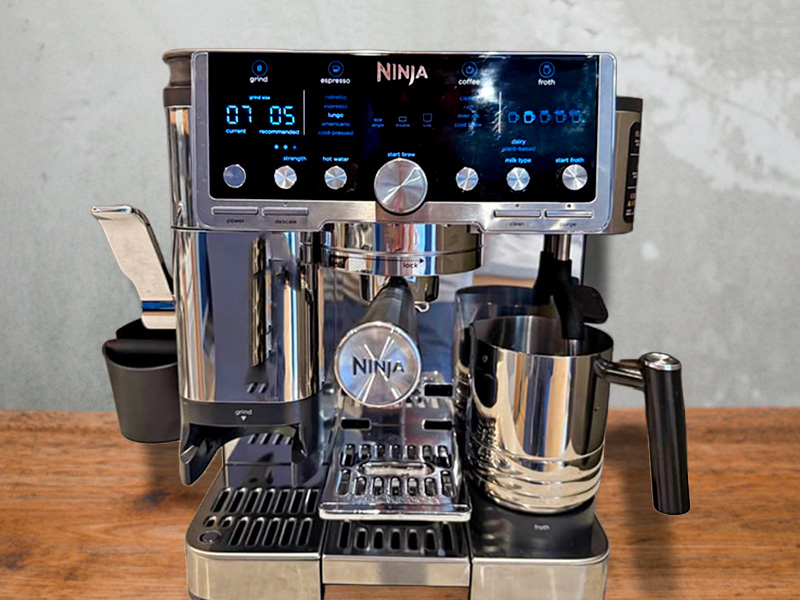
We spent a few weeks testing this machine, playing with the settings, and drinking so so much coffee, and honestly? For the price, the Ninja Luxe Cafe Pro (ES701) is an impressive machine that’s ideal for beginners. The variety of options from espresso to cold brew to drip coffee is fantastic, with automated hot and cold milk. It does all of these things well enough, though it’s a little more “jack of all trades, master of none”. But if you’re stepping up from a pod machine or looking to please a diverse crowd on a tight budget, it’s a fantastic coffee machine.
It sits at $750 RRP and aims squarely at Breville’s Barista range. After testing it with medium-dark roast beans across all its espresso and milk-based drinks, our verdict is more positive than we expected – with some real caveats you need to know about before buying. All the juicy details below:
This article may contain affiliate/ compensated links. As an Amazon Associate, we earn from qualifying purchases at no additional cost to you. For more information please see our disclaimer here.

At a Glance: Ninja Luxe Cafe Pro Review
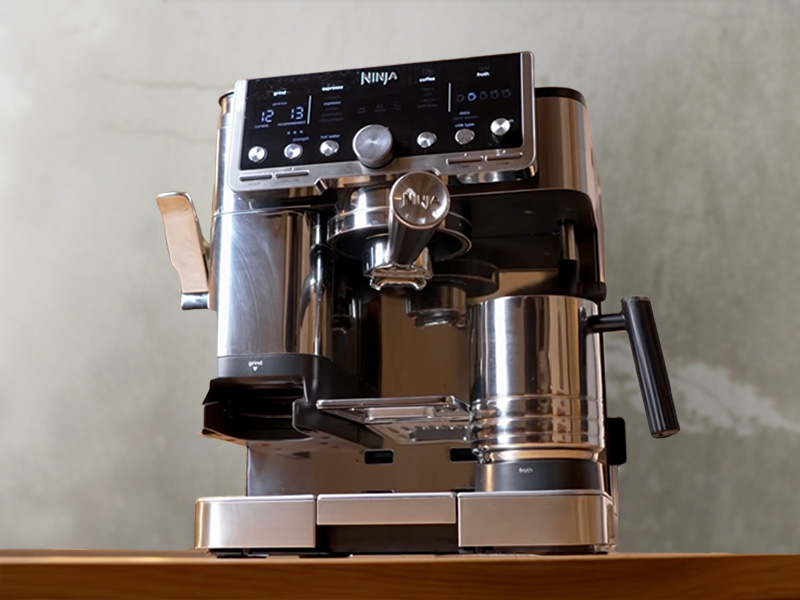
Verdict: The Ninja Luxe Cafe Pro makes real, proper espresso. Not “we used a pressurized basket to fake the crema” espresso; actual espresso from non-pressurized baskets with a proper portafilter and real extraction.
Considering the lack of experience Ninja has in making espresso machines and the price, this is impressive.
The real selling point is the variety, though. It’s billed as ‘4-in-1 brewing’: espresso, drip coffee, cold brew, and hot water from one machine. With a built-in scale, grind guidance, and auto milk frothing. All for $750. There’s nothing else at this price that does all of that well.
The caveats: It’s a medium-to-dark roast machine, full stop. Lighter beans expose inconsistencies in both the grinder and the extraction. The automatic milk temperature sometimes ran warmer than we expected, and automatic shots occasionally ran long. It’s not aimed at coffee purists.
The bottom line: This is a surprisingly capable machine at a price that makes it very hard to argue with, as long as you go in with the right beans and the right expectations.
Pros
- Outstanding value for money
- Excellent espresso from non-pressurized baskets
- Cold brew, iced coffee, and drip coffee options
- Built-in scale for dosing
- Barista Assist guidance for beginners
- Good automated milk

Cons
- Struggles with lighter roast beans
- A little inconsistent
- Drip tray needs emptied often
- Only 1 year warranty in the US

Our Ratings

Who It’s For (And Who It’s Not!)
✅ Buy the Ninja Luxe Cafe Pro if:
- You want espresso and filter coffee from one machine. If you drink both styles and don’t want two machines on your counter, the ES701 is one of the very few machines that handles both properly.
- Budget is a top concern. $750 is a lot of money, but for everything this machine does, it’s genuinely good value. There’s nothing else at this price doing 4 things this well.
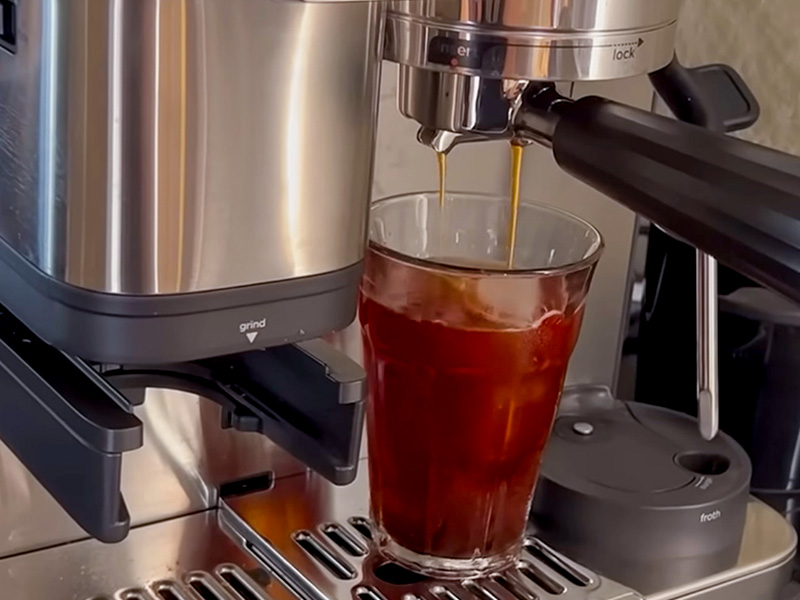
- Cold brew and iced coffee are a big part of your coffee life. This is where the machine really shines. The cold brew and over-ice options are easy to use and produce genuinely good results.
- You’re coming from a pod machine and want a proper upgrade. The step up in coffee quality is significant, and the Barista Assist guidance means you won’t be totally lost or have a steep learning curve.
- You mainly drink medium-dark to dark roasted coffee. This is what the grinder and extraction system are optimized for, and it shows.
❌ Skip it if:
- You love lighter roasted or high-altitude grown beans. The grinder and extraction system struggled with denser beans, and you’ll find yourself fighting the machine more than enjoying it.
- Pure espresso quality is your focus. You can find machines to brew better espresso for the same price if that is your no.1 focus – they just won’t do everything else too.
- Drip coffee is your go-to 90% of the time. The coffee is nowhere near as good as the espresso/cold brew drinks or that of a dedicated drip machine.
- You want a machine that will last you 5+ years with confidence. The 1-year warranty is short for a $750 machine, and Ninja’s track record in espresso is still relatively new, so we don’t know how it will handle the years.
- You like steaming your own milk. Manual mode exists, but it’s buried, and the steam wand isn’t where this machine shines.

Key Features
1. 4-in-1 Brewing: Espresso, Drip Coffee, Cold Brew and Hot Water
Ninja promises a machine that does all four, without doing any of them badly. And it mostly delivers.
- ✅ Real espresso shots with depth of flavor
- ✅ Smooth and chocolatey cold brew
- ✅ Mostly well-balanced drip coffee (though this is the weakest area by far)
- ✅ Hot water for tea (not that there’s much they could do wrong here!)
The cold brew is particularly impressive for this price point.
2. Barista Assist Technology
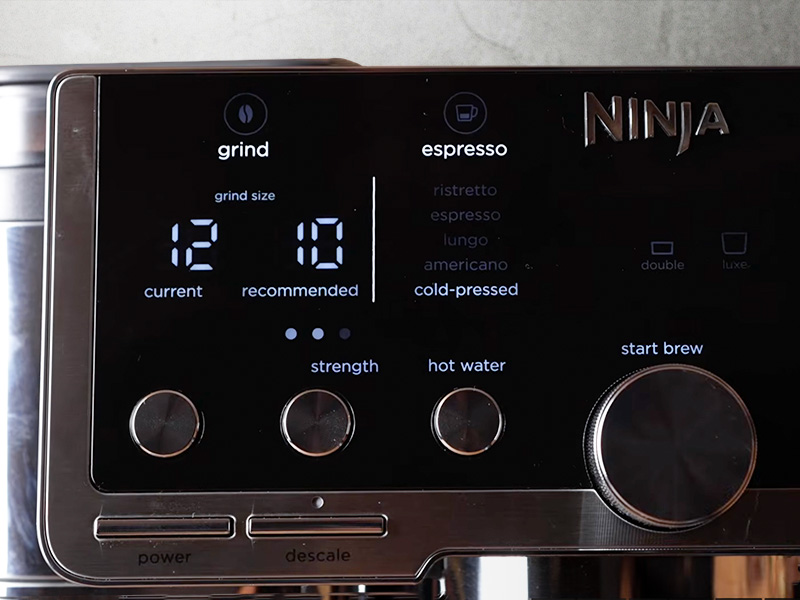
After every shot, the machine tells you whether it ran too fast or too slow (in other words, whether your shot will be overextracted and bitter, or underextracted and watery), and recommends a grind adjustment to fix it. It’s clear, simple, and genuinely helpful if you’ve never dialled in an espresso machine before.
3. Built-in Scale and Weight-Based Dosing
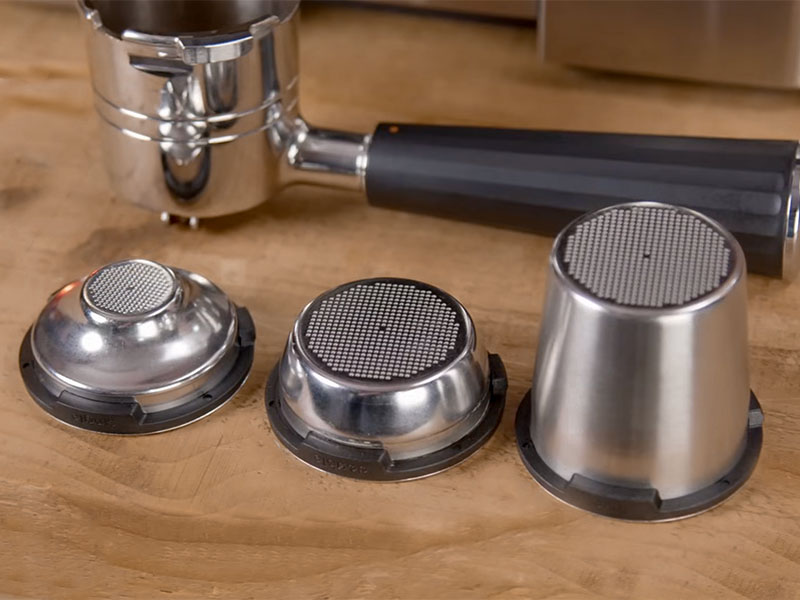
The portafilter cradle has a built-in scale. When you grind, the machine doses by weight to a precise target for whichever basket you have installed: 9g for single, 18g for double, up to 40g for the Luxe basket.
Inconsistent dosing can be a huge cause of poor espresso shots with newbies. So this is an instant win, taking out any learning curve. Plus, it means you don’t need to buy a separate scale.
4. Integrated Tamper
When you use the side-mounted lever, the tamper presses down with even pressure, and you’re done. You don’t even need to push the lever hard, but the machine does ask you to do it twice. This is also a big upgrade from the Cafe Premier.
5. Dual Froth System Pro
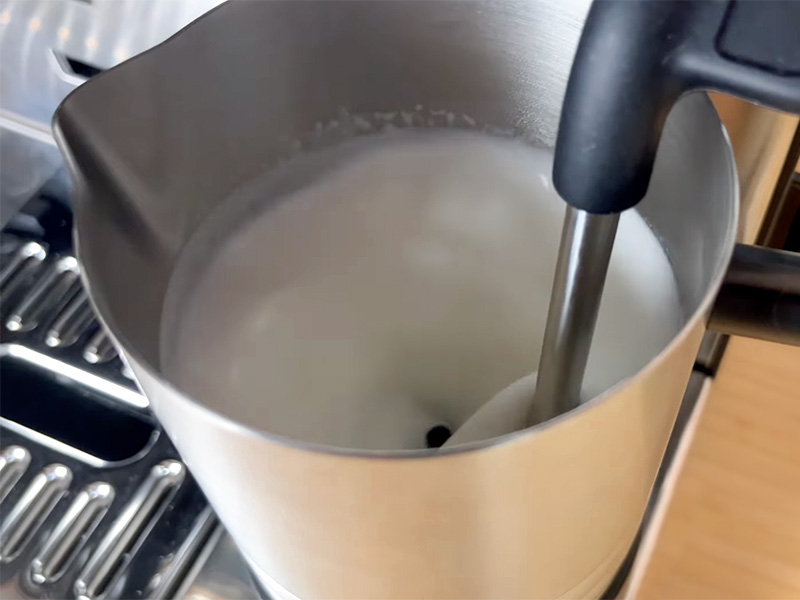
The auto milk frothing system steams and whisks at the same time, using a spinner inside the milk jug. The idea is that you get consistently incorporated microfoam without having to manually swirl or time anything. In practice, it works well on dairy milk, producing froth at the right texture for flat whites, cappuccinos, and lattes.
The swirling system means the Ninja Luxe Cafe Pro can also produce “cold foam” – almost unheard of at this price range.
6. 9 Coffee Options and 5 Milk Choices
You get a good selection of coffee choices, plus 4 levels of hot milk foam and a cold foam setting.
- Cold Brew
- Ristretto
- Espresso
- Lungo
- Americano
- Cold Pressed Espresso
- Classic Drip Coffee
- Rich Drip Coffee
- Over Ice Coffee

Is the Ninja Luxe Cafe Pro easy to use?
The Cafe Pro is easier than most espresso machines, but not a “one-button” machine.
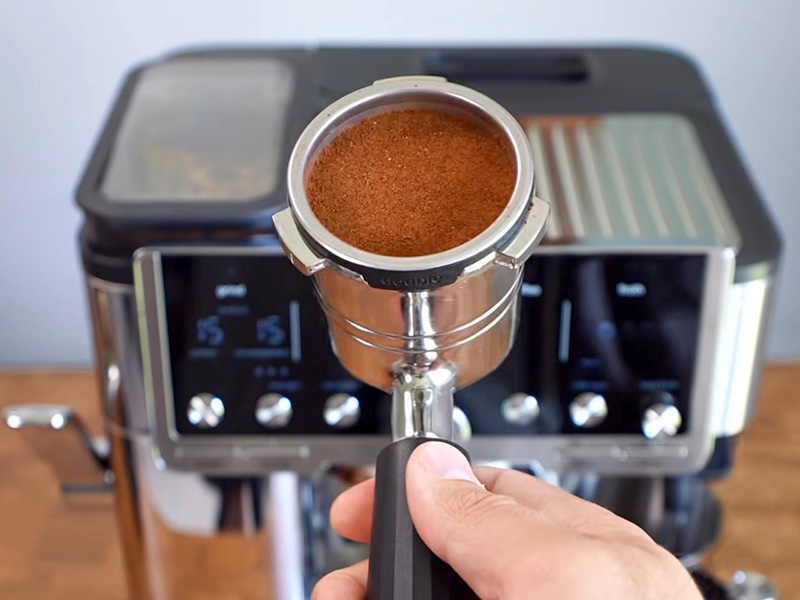
The front panel is split into four sections: Grind, Espresso, Coffee, and Froth. You pick your drink from the relevant section, place the portafilter under the grinder, press the ‘start grind’ button (the scale does the dosing for you), then tamp twice with the lever. Move the portafilter into the machine, and press ‘start brew’.
It sounds like a lot, but it very quickly becomes second nature. I promise.
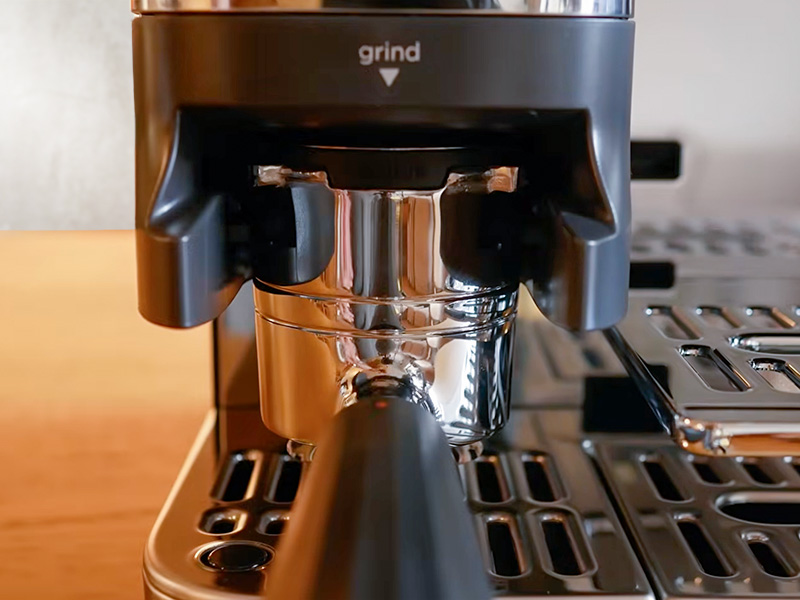
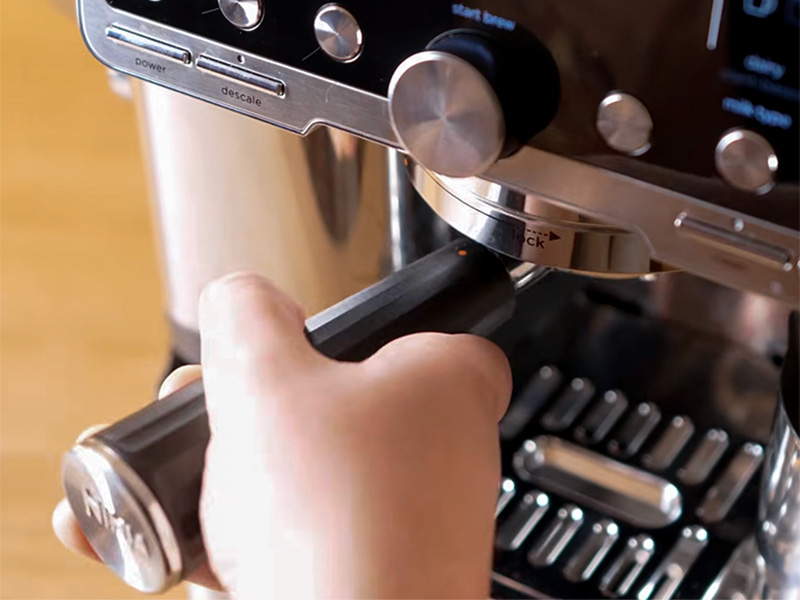
The machine handles temperature and pressure from there. The Barista Assist screen shows your current grind setting and a recommended adjustment based on your last shot. It took around 5 shots before we were consistently happy with the results from our medium-dark beans on strength setting 3, so be prepared to have a few ‘meh’ results whilst you get the grind dialed in.
It’s important to remember that you don’t have to do what it says. If you’re happy with how your shot tastes, leave the grinder where it is, even if the machine tells you to adjust.
Milk is fully hands-free: fill the jug, select your froth level and milk type, and press start. The built-in spinner helps give a really nice texture to your milk. Once you’re set up, the whole process from bean to flat white takes around 3-4 minutes, and most of that is just the machine doing its thing.
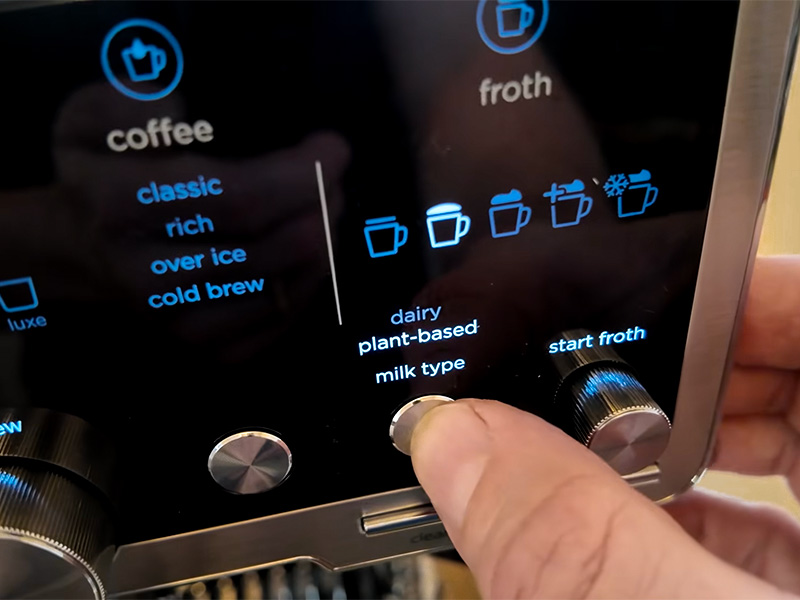
Our biggest frustration with the milk system is that manual milk steaming is possible, but not obvious at all. It’s not a button or a setting you can see.
To steam manually, you have to pull the wand out, select the lowest froth level, then hold the “start froth” button for 3 seconds. If you practice manual steaming, you’ll definitely get a better result than with the automated system. But you absolutely don’t have to learn to use it if you don’t want to.
Our other annoyance with the Cafe Pro is that it flushes around 4oz of water between drinks to keep the system clean. This is great for the machine’s longevity and the taste of your coffee, but the drip tray fills up after about 5 drinks. If you forget to empty it every morning before you start, it’ll overflow on you.
This can be exacerbated if your grind is too fine – if the pressure in the basket goes over 9 BAR then water is automatically diverted to the drip tray to avoid problems. Again, this is good for your coffee and the machine, but other manufacturers divert this water back to the tank instead. Ninja chose to fill up the drip tray even faster.

How good is the Coffee?
The Ninja Luxe Cafe Pro can produce genuinely good coffee… with the right beans.
With our medium-dark espresso blend, the shots were consistently solid: proper crema, decent body, and a chocolatey finish that held up well in milk and on its own. Not on the same level as what you can get from Breville machines, but significantly better than we expected for $750 from a brand that’s new to espresso machines.
The heated brew group really helps temperature consistency. Unless you’re wildly out with your grind size, you shouldn’t get a very sour, under-extracted shot.
That said, this machine really only works for medium-dark or dark roast beans. We tried a light roast and a high-altitude-grown medium roast; in both cases, the results weren’t great. The shots ran long, and the flavor was noticeably flat even when the timing looked right. The machine’s grind recommendation kept nudging us finer, but we never got a shot we were happy with. We also turned the temperature up to “high” but to no avail.
So we recommend sticking exclusively to medium-dark roast beans for the best results.
Our Cafe Pro Settings
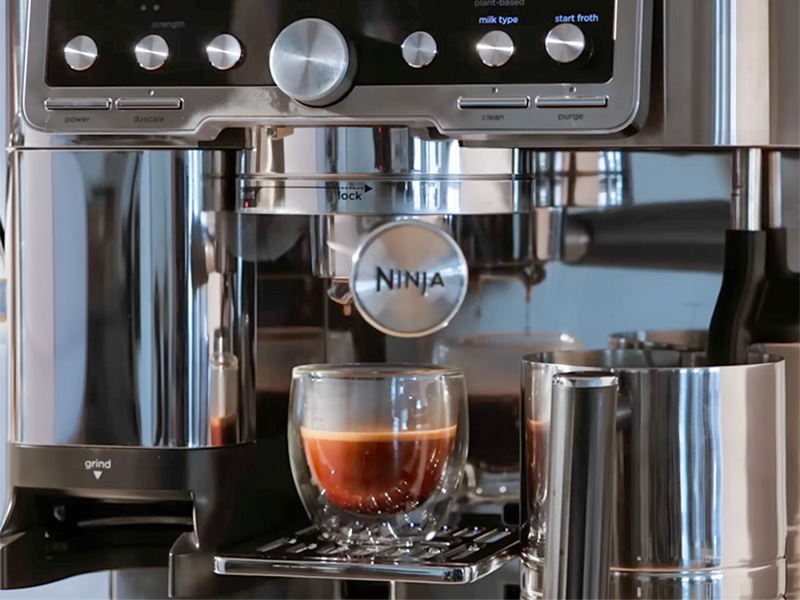
With the help of the Barista Guidance, these were the settings that gave us the most consistent quality for espresso:

- Grind setting 11
- Double unpressurized basket with an 18g dose
- Strength setting 3
- “Medium” brew temperature
- From there, we were consistently hitting 36g of espresso in 25-28 seconds
The 9g basket was fine, but we really feel the larger dose is needed to get a good depth of flavor and complexity.
Cold Brew
When it comes to “cold brew” from an espresso machine, this is up there as one of the best we’ve tasted. And certainly the best from a machine under $1,000.
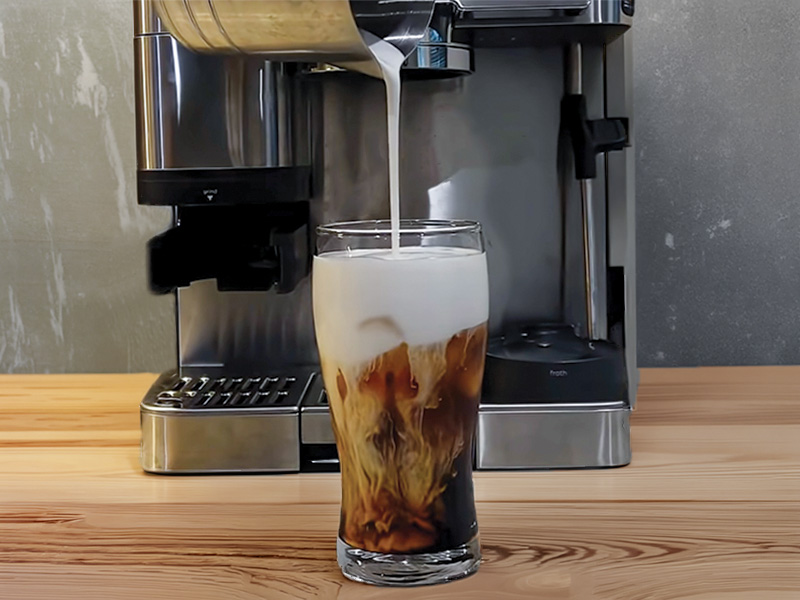
The flavor was impressive – nice and smooth, good chocolate notes, and not too bitter. If you’re an iced coffee fan, especially if you add milk or creamer using the “cold foam”, then you’ll love this setting.
Filter Coffee
The drip coffee is comfortably the least impressive part of the Ninja Luxe Cafe Pro.
If you mostly drink filter coffee, you’ll likely be disappointed. We found it better to make an Americano with a double espresso shot rather than touching the drip coffee at all. If you’re looking for a combo machine that leans more heavily toward drip coffee, it might be worth saving yourself some money and checking out the DeLonghi All-in-One instead.
That said, you can get away with using medium roast beans for the drip coffee. The flavor won’t be on par with a good, dedicated coffee maker, though, so I don’t know why you’d bother swapping out your beans for it.

Is the Milk Quality good too?
For the price, the automatic milk frothing performs well
The built-in spinner helps to get a really nice, even texture for drinks like flat white. The extra stiff foam setting creates a lovely froth for a more traditional cappuccino. Having cold foam as an option at this price is amazing, too.
Our biggest issue is the temperature inconsistency – it happened enough times that it’s worth flagging. During testing, the auto milk temperature varied by as much as 20°F (11°C). Not constantly, but regularly enough to notice. For consistent drink temperatures, you’ll need to get into manual milk frothing.
The manual steam is good but not spectacular. It’s powerful enough to create good milk texture and microfoam, but nothing exceptional.
The cold foam works really well and is a great feature, especially as it’s something the main competition from Breville doesn’t have.

Which Beans should you use?
The Cafe Pro performs best when you use medium-dark or dark roasted whole beans, especially for espresso.
Push it into medium or light roast territory – especially high-grown beans, which tend to be denser – and you’ll start to notice inconsistent shots. This is something a more espresso-focused machine, like the Breville Barista Express Impress, handles better (more on that in the competition section).
So stick with medium-dark for the best results.
It has a built-in 40mm stainless steel conical burr grinder with 25 settings. For the type of machine and the price, the grinder is solid.
We particularly like Ninja’s grind guidance: the machine automatically recommends a grind size based on whichever drink you’ve selected. If you’re switching between espresso and drip coffee, it’ll tell you to adjust. This isn’t something you see on machines under $1000 very often.
You can use pre-ground coffee directly in the portafilter, which is handy for decaf or flavored beans (the sugars in flavored coffee can damage your grinder over time). Importantly, the machine’s Barista Assist system is smart enough to recognise when you’ve bypassed the grinder and won’t update its grind recommendation for that shot.
Desgin and Build Quality Review
The Looks
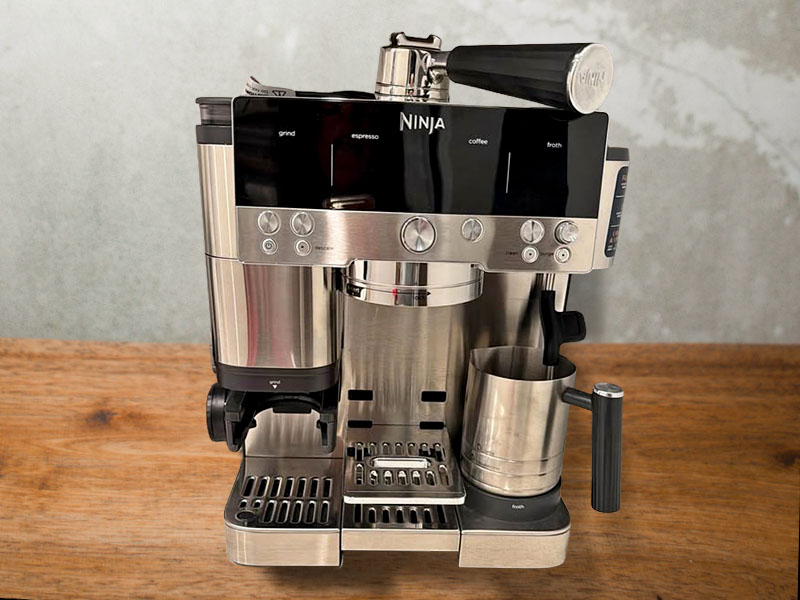
It looks like a Ninja product, for better or worse:
The design is boxy and tech-forward, with a large front panel of buttons and a square look. It’s a good-looking machine in its own way, but it feels a little “busy” to be a truly great-looking kitchen appliance. If you have a more traditional kitchen, it might feel a little out of place.
There are a few colour options, including some limited edition models with gold accents that are a little too out there for us. But you have choices depending on how bold you want to go.
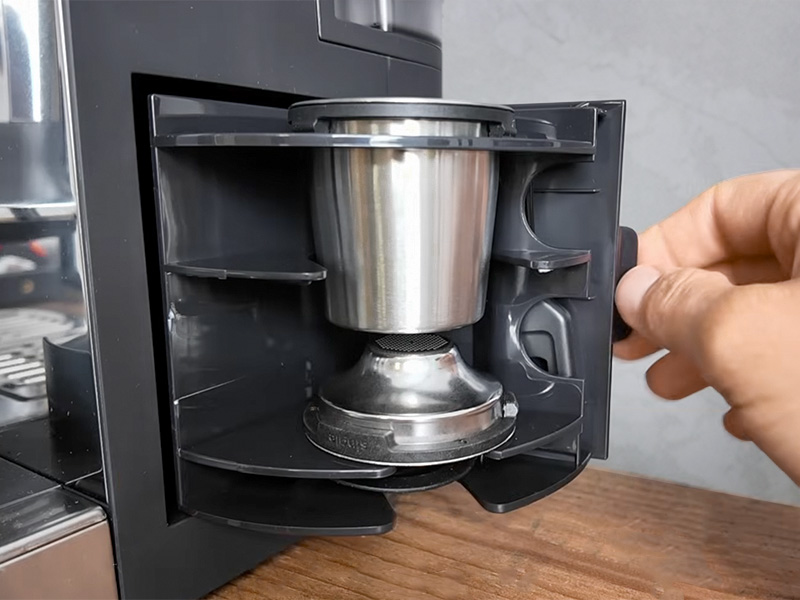
At the back-right side of the machine, there’s an accessories cubby hole that’s a genuinely nice touch. As someone who loses everything the second I put it down, it’s nice to always know where the little cleaning tools are.
One note: the footprint is meaningfully larger than the spec sheet suggests. Whilst it’s officially 15.5 inches long, 15 inches wide, and 19.3 inches tall, you need to account for accessing the bean hopper and water reservoir, and extending the steam wand to the side.
The Build
It’s solid for the price. The exterior uses a mix of stainless steel and plastic. Compared to the all-stainless Breville machines, some plastic parts feel less premium.
The tamper lever is well-built and feels good to use, though there’s no tactile feedback when tamping, so you could accidentally press far too hard. The portafilter cradle is solid.
Compared to most machines, the milk jug is pretty large. This comes in handy if you’re making two drinks at once.
The 1-year warranty is what gives us pause. Other manufacturers tend to offer 2 years for machines like this, and espresso machines get used hard. Ninja’s espresso pedigree is also relatively new, so we don’t yet have the multi-year reliability data that the other companies have. That’s not a reason not to buy it, but it’s worth keeping in mind.

We mention Breville a lot in this review, if you think one of their machines might be better for you, take a look at the best they have to offer:

Cleaning and Maintenance Review
Easier than most… with one big annoyance.
The cool-touch steam wand is a great feature for cleaning: milk residue wipes off easily with a damp cloth without any risk of burning your hand. That alone saves time every day. The wand also auto-purges, which we love. Milk wands get nasty really fast.
The drip tray is easy to remove and rinse. Which is just as well, given how frequently it needs to be emptied.
In the box, Ninja includes a cleaning disc, cleaning tablets, and descaling powder. The front panel has a dedicated clean button that walks you through the backflushing process.
Daily: wipe the steam wand, empty the drip tray.
Weekly: backflush with a cleaning tablet.
Periodic: descaling – frequency is based on your water hardness (hard water testing strip is in the box).
The main daily annoyance is the water flush between drinks. After every single drink, the machine expels around 4oz into the drip tray as part of its system cleaning. It’s good for coffee quality and machine health, but it means the drip tray fills up faster than on almost any other machine we’ve used. Get into the habit of emptying it every morning before you start, and it becomes routine.
The Competition
Ninja has a little brother to the Cafe Pro, which offers a lot of similar features for a little less money. But the main competition is the Breville Barista Express Impress:
Ninja Luxe Café Premier
- ☕️ Espresso Quality: 7.5/10
- 🥛 Milk Quality: 7/10
- 📋 Drinks Options: 8/10
- 💸 Value for Money: 9.5/10
- 🏆 Overall Rating: 7.5/10
The Cafe Pro’s predecessor is $150 cheaper. The main things you lose are the integrated tamper, the hot water outlet, the single basket, the thicker non-burn steam wand, and the ristretto/lungo drink options.
The espresso quality is essentially the same.
If you don’t need the integrated tamper and don’t make ristrettos or lungos, the Cafe Premier is a legitimately good saving. The tamper is the biggest upgrade in our view: it makes the workflow noticeably cleaner, and the consistency benefit is real.
We’d definitely go for the more expensive option. Having those extra drinks and the integrated tamper is well worth the extra cost for us. We’d actually be quite upset if we’d just bought the Premier 601 and then the Pro 701 dropped.
Breville Barista Express Impress
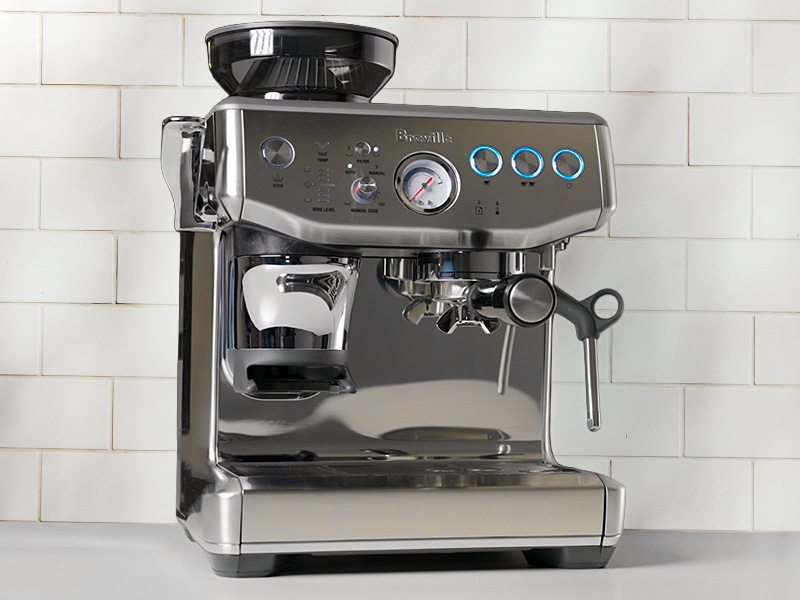
- ☕️ Espresso Quality: 9/10
- 🥛 Milk Quality: 8/10
- 📋 Drinks Options: 4/10
- 💸 Value for Money: 8/10
- 🏆 Overall Rating: 8.5/10
This is Ninja’s primary competition, and it shows.
The Barista Express Impress has a better grinder (it uses Baratza conical burrs that are a big step up), pulls slightly better espresso shots, and has Breville’s reliability track record behind it. What it doesn’t have is drip coffee, cold brew, or barista guidance built in.
If espresso is all you care about and you want the best possible shots at this price point ($750-800), the Barista Express Impress is the better machine. But you lose a lot of functionality and help. No assistance in dialing in, no automated milk frothing, no cold brew drinks. That’s an awful lot to lose out on.
You’ve got to really want the better espresso shots to make the Barista Express Impress the better machine. Which would probably be us. But we also accept we’re probably in the minority.
 Read our full Breville Barista Express Impress review
The Verdict
A really strong entry in a category that Ninja had no right to do this well in.
The Café Pro is a lot of machine for $750. It makes real espresso, okay drip coffee, and excellent cold brew, with enough guidance built in that a complete beginner won’t be totally lost. The value is pretty hard to beat.
Combining two types of coffee makers like this always has drawbacks, and this is no exception:
Stick to medium-dark roasts, get ready to empty the drip tray more than you’d like, only occasionally drink the filter coffee, and go in knowing the 1-year warranty is shorter than the competition. The occasional long shot and milk temperature inconsistency are frustrating if you don’t keep an eye on it, and just want things to work smoothly.
If you mostly drink darker roasts, love a cold brew in summer, and want espresso and filter coffee from one machine without spending big money, this is the one to get. In all our tests for this Ninja Luxe Cafe Pro review, we were most impressed by the cold brew function.
Psst… the Luxe Cafe Pro regularly goes on sale, and we’ve seen it for as low as $600. But even at $750, it’s great value.