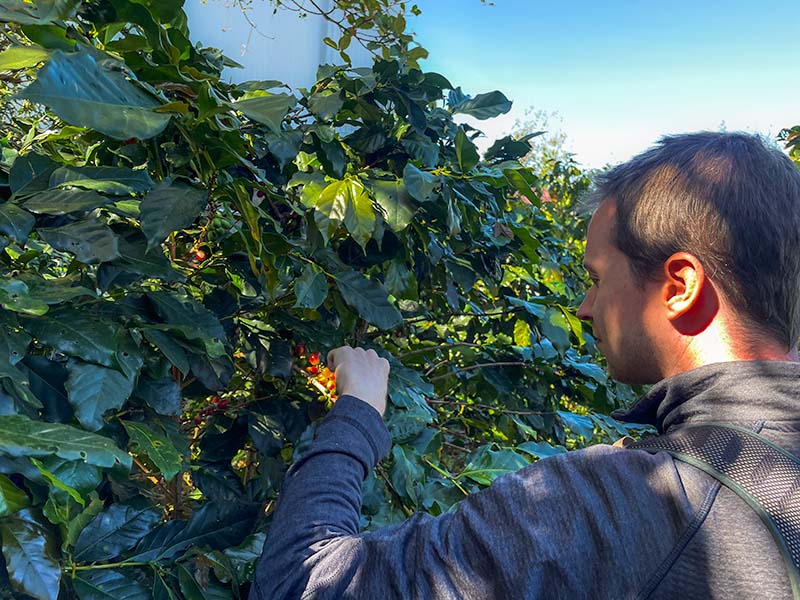
If there’s a nation on Earth that feels like it was specifically designed for growing coffee, it would be Guatemala. It’s the first place I ever visited a working coffee farm and, as I stood on the slopes of a volcano drinking freshly washed Bourbon straight from the source (the coffee varietal, not the whiskey), I knew I was an instant fanboy.
The combination of climate, altitude, and volcanic soil makes Guatemalan coffee some of the most exciting in the world. It’s known for its full body and balanced acidity. And, depending on the region, flavors can swing from bright and floral to rich and chocolatey.
With so much to explore, we’re breaking down exactly what coffee from Guatemala tastes like, how the different regions shape the flavor, and our 8 (current) favorite beans that are available in the US. So you can confidently choose the right ones for you. Then, for our fellow coffee geeks, we run through the nerdy details on everything you need to know about this Arabica-growing paradise.
This article may contain affiliate/ compensated links. As an Amazon Associate, we earn from qualifying purchases at no additional cost to you. For more information please see our disclaimer here.
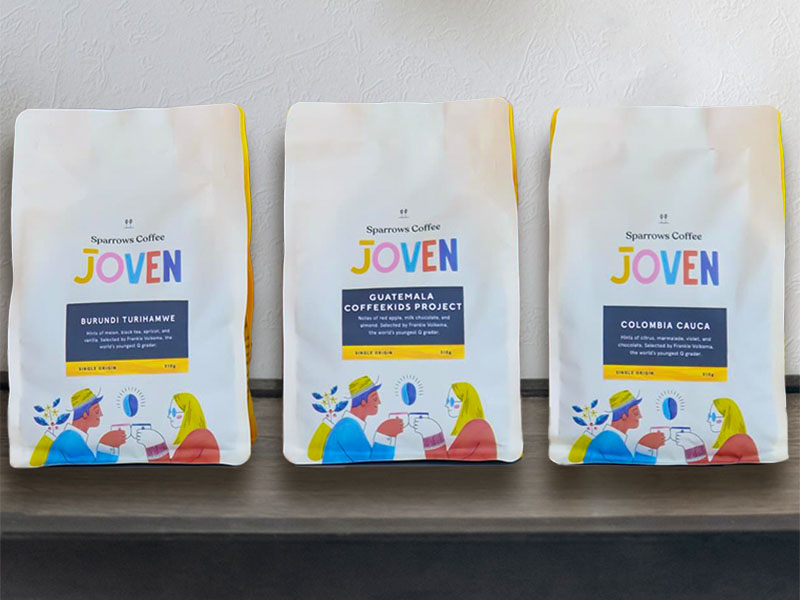
Sparrows Coffee – Joven Guatemala
We’re currently loving this offering from Sparrows Coffee as it’s super versatile. It makes a rich, flavor-packed espresso and can also hold its own in a V60/Chemex for a more chocolatey cup that’s just gently sweet.
Plus, it was selected by the world’s youngest Q Grader and supports children’s projects – and we love a coffee with morals.

What does Guatemalan coffee taste like?
Guatemalan coffee is known for being balanced, expressive, and crowd-pleasing… but never boring.
While flavor varies by region and roast level, most Guatemalan coffees share distinctive traits: full body, moderate acidity, and complex aromatics.
Here’s what you can typically expect in the cup:
Typical Flavor Profile
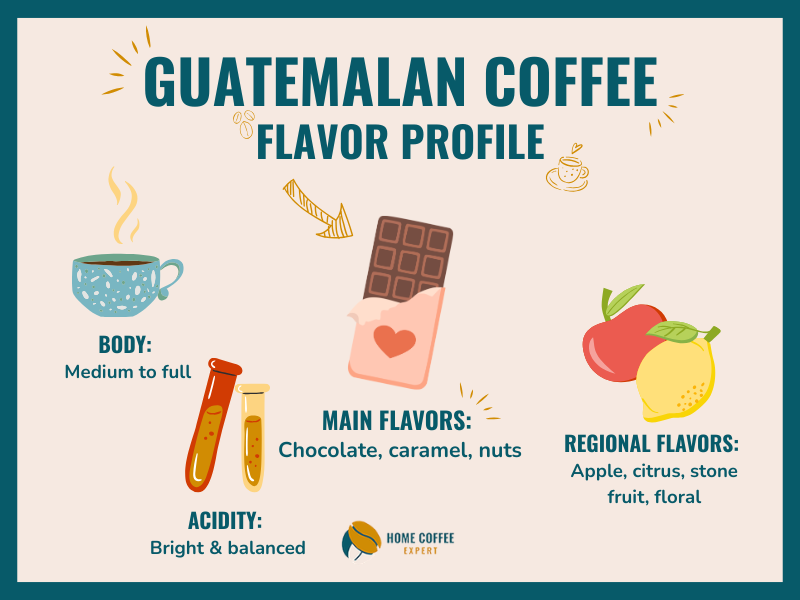
- Body: Medium to full, often round and silky
- Acidity: Bright but balanced (rarely sharp or sour)
- Sweetness: Gentle – brown sugar or caramel
- Common tasting notes: Cocoa or milk chocolate as the main flavor, with more subtle caramel and nut notes. Region-specific flavors include citrus, stone fruit, apple, toffee, and occasionally floral tones
In lighter roasts, the fruit and acidity are more pronounced. Think apple, orange or lemon zest, and stone fruits like apricot or peach. As you move toward medium and medium-dark roasts, the richer flavors of chocolate, caramel, and nuts become more dominant.
One of the reasons I keep coming back to Guatemalan coffee is how structured it feels. There’s usually a clear sweetness, a defined acidity, and a satisfying finish. It rarely tastes muddled or flat.
How Region Affects Flavor
Guatemala has over 300 microclimates, 1631 named mountains with dramatically different elevations, and 37 volcanoes with mineral-rich volcanic soil. So to say that the coffee from one region can taste noticeably different from another is an understatement.
For example:
- Huehuetenango coffees often show bright acidity and wine-like fruit notes.
- Antigua coffees are typically more chocolate-forward with gentle citrus and a refined sweetness.
- Atitlán coffees can be intensely aromatic with citrus-driven acidity.
- Nuevo Oriente is known for deeper chocolate notes and a round, balanced profile.
Even when two coffees are labeled “Guatemalan,” their flavor can vary dramatically depending on altitude, soil type, and climate.
High altitude means the coffee cherries ripen more slowly, developing more complex flavors. And volcanic soil is more mineral-dense, allowing the plants to thrive. So, depending on what natural elements are in each region, you’ll get a very different-tasting cup of coffee.
Best Roast Level for Guatemalan Coffee
Guatemalan coffee shines at light to medium roast levels.
Lighter roasts highlight the regional character – more acidity, clearer fruit notes, and floral aromatics (when they’re present). While the chocolate and caramel notes are there, they’re much more subtle.
Medium roasts bring out the chocolate and caramel, have more body, and are overall more balanced. The fruitier notes are still present, but they’re more nuanced and less dominating. For most people, this will be the sweet spot – and certainly the best place to start.
We typically avoid dark roasts as they tend to mask the origin’s character. For most brewing methods, this would be a crime given how distinctive many Guatemalan coffees can be. Though the sweetness can work as an espresso. We just wouldn’t recommend going very dark.
If you want to truly understand what makes this origin special, I’d recommend starting with a medium roast and brewing it as a pour over or in an AeroPress.
Why Guatemalan coffee tastes so good
Great coffee doesn’t just happen by accident.
Mama Nature gives a pretty big hand to growing great coffee. And, in Guatemala’s case, it’s the result of altitude, volcanic soil, and an impressively diverse range of microclimates. These factors all work together to develop great flavor in the beans.
Without getting too technical, here’s what’s happening on the farms:
High Altitude = Slower Ripening = More Flavor
Most of Guatemala’s coffee farms sit between 4,000 and 6,500 feet above sea level (that’s roughly 1,200 to 2000 meters).
At higher elevations, cooler temperatures slow the ripening of coffee cherries. That extra time allows more complex sugars and natural acids to develop inside the bean. As a coffee drinker, that means more sweetness, brighter acidity, and more defined flavor separation.
It’s one of the reasons Guatemalan coffee often tastes “structured”. You can clearly identify sweetness, acidity, and finish, rather than everything blending into one.
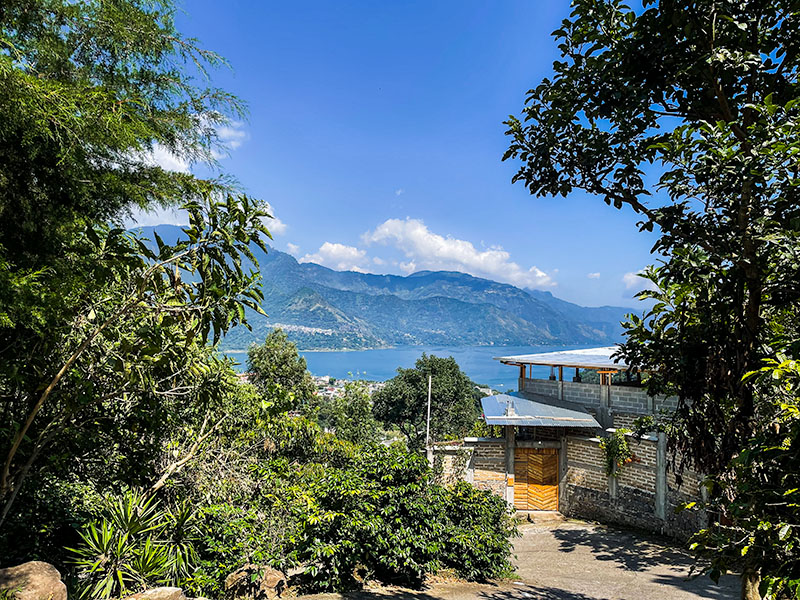
Volcanic Soil = Mineral-Rich Growing Conditions
Guatemala has 37 volcanoes, many of which are still active. And anywhere you find volcanic soil, you’ll find great fresh produce. This is because volcanic ash breaks down into mineral-rich soil. It’s packed with nutrients like potassium and phosphorus, which are essential for healthy coffee plants.
Healthy plants produce denser beans. Denser beans generally translate to better flavor concentration.
Regions like Antigua, Acatenango, and Fraijanes benefit heavily from this volcanic influence, which helps explain the depth and clarity many coffees from these areas display. Quality soil means they typically grow high-grade varietals of the Arabica coffee plant, generally from the Typica and Bourbon groups.
Microclimates & Shade-Grown Coffee
With over 300 microclimates across the country, Guatemala doesn’t produce one defining “style” of coffee. It produces many, as the climate changes.
For example, there are cooling winds from the nearby oceans, shade from native forests, and varying rainfall patterns. These all influence how the cherries develop.
Many farms (particularly the better ones) also grow their coffee under a canopy of shade from taller trees. The benefits of this are:
- Protect cherries from excessive heat
- Slow ripening even further
- Support biodiversity
That slower maturation process (once again) contributes to complexity and balance in the cup.
It’s all these elements working together that make Guatemalan coffee taste so varied.

Coffee growing regions
Now that you know why Guatemalan coffee develops so much character, let’s look at where that character comes from.
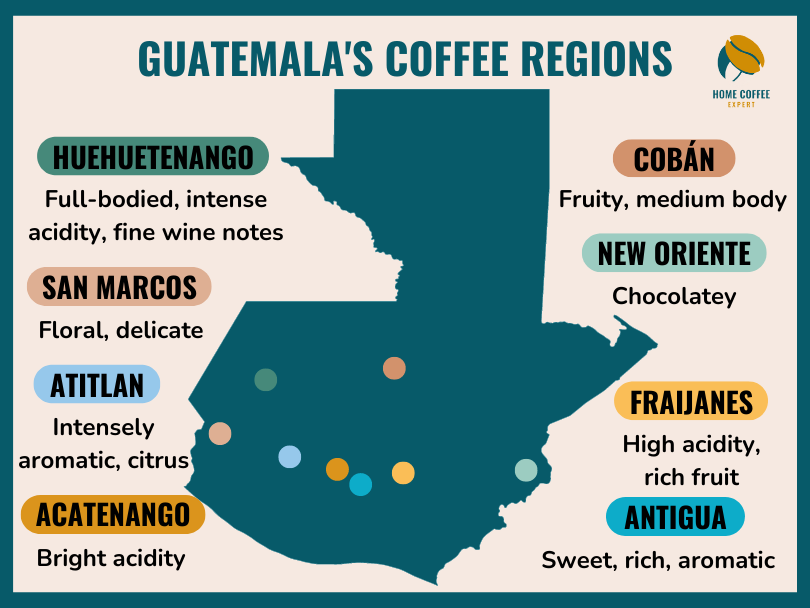
Guatemala officially recognizes eight distinct coffee-growing regions, each with its own elevation range, climate patterns, and flavor tendencies. While there’s overlap, most regions have a recognizable “personality” that you can taste in the cup.
If you prefer bright, wine-like acidity, you’ll likely gravitate toward one area. If you lean toward chocolate-heavy, balanced coffees, another region may suit you better.
Thankfully, bags of coffee from Guatemala usually display (very proudly) which region they came from (similar to many other great coffee-producing countries. So you can easily pick the style you’ll like best.
Here’s a breakdown of the major coffee regions and what you can typically expect from each.
Acatenango Valley
- Elevation: 4,300 to 6,500 feet above sea level
- Landscape: Grown in the shadow between the dormant Volcán de Acatenango and the highly active Volcán de Fuego. The forests thrive here, so coffee plants typically grow under a canopy of shade
- Flavor: Bright acidity, strong aromatics, a fully body, and great balance
- Best for: Pour over drinkers who enjoy bright, expressive coffees that are bursting with complex flavors and clear acidity
The soil in Acatenango is kept mineral-rich by the constant daily explosions of Volcán de Fuego – there are between 2 and 14 per hour. (It’s one of the most impressive things I’ve ever seen!) These are ideal growing conditions for Arabica coffee, so the cup quality from this region is among the best in Guatemala.
In lighter roasts, you’ll often find bright citrus, red apple, and floral notes layered over a subtle cocoa sweetness. As the roast moves toward medium, that citrus softens into caramel and milk chocolate while retaining a clean, crisp finish.
Acatenango coffees usually have excellent balance: noticeable brightness, but enough body to keep them grounded. If I’m brewing beans from this region, I first reach for a Hario V60 to highlight the clarity and acidity.
Antigua
- Elevation: 5,000 to 5,600 feet above sea level
- Landscape: Surrounded by Volcán de Agua, Acatenango, and Volcán de Fuego, with relatively low humidity and cool nights
- Flavor: Refined sweetness, gentle citrus acidity, medium-to-full body, and pronounced chocolate notes
- Best for: Espresso drinkers or anyone who prefers chocolate-forward coffee with balanced brightness
Antigua is Guatemala’s most famous coffee region, holding a special place in the hearts and homes of many coffee lovers. The combination of cool evenings, moderate rainfall, and well-draining volcanic soil produces coffees that are polished and balanced (no wild flavor profiles here).
Compared to Acatenango, Antigua coffees are typically less sharp in their acidity and more rounded overall. You’ll often find notes of milk chocolate, caramel, and toffee at the core, supported by soft citrus or red apple brightness.
In lighter roasts, that citrus can lean toward orange zest with floral aromatics. In medium roasts, the chocolate deepens, and the body becomes creamier, making Antigua particularly well-suited to espresso. If I’m dialing in an espresso from Guatemala, this is usually the region I hope it comes from.
Traditional Atitlan
- Elevation: 5,000 to 5,600 feet above sea level
- Landscape: Grown around Lake Atitlán and surrounded by steep volcanic slopes, with strong afternoon winds known locally as Xocomil
- Flavor: Intense aromatics, citrus-driven acidity, full body, and layered sweetness
- Best for: Coffee drinkers who enjoy vibrant, aromatic cups with pronounced citrus character
Traditional Atitlan is arguably the most beautiful coffee region in Guatemala – which is saying a lot given the tough competition. It’s also considered one of the most distinctive coffee growing regions. The soil here has the highest density of organic material, and strong winds sweep across the lake in the afternoon.
In the cup, Atitlán coffees are typically lively and expressive. Expect bright citrus (often orange or tangerine) alongside deeper notes of cocoa and brown sugar. There’s usually a noticeable aromatic lift, sometimes with subtle floral or spice undertones.
Compared to Antigua, Atitlán tends to show more acidity and aromatic intensity. Compared to Huehuetenango, it’s often slightly heavier in body.
When brewed as a pour over, the citrus and aromatics really shine. In a French press, the fuller body becomes more pronounced while still retaining brightness.
Rainforest Cobán
- Elevation: 4,300 to 5,600 feet above sea level
- Landscape: Located in Guatemala’s Atlantic basin, with limestone and clay soils and frequent misty rainfall known locally as chipi-chipi
- Flavor: Fruit-forward, delicate aromatics, medium body, and soft, rounded acidity
- Best for: Coffee drinkers who want a low acid option with subtle fruit complexity over sharp brightness
This is Guatemala’s wettest coffee-growing region. Unlike the drier volcanic areas, Cobán experiences frequent cloud cover and consistent rainfall, which helps to naturally maintain soil health.
Here, the coffee must be dried by machine as it’s too wet to reliably dry by only the sun.
Coffee from Cobán tends to be approachable. They have a delicate aroma and are more fruit-driven than coffees from regions like Acatenango or Atitlán. You’ll often find notes of red apple, plum, or mild berry, supported by cocoa undertones and a smooth finish. The acidity is present but usually less sharp.
If you’re sensitive to high acidity but still want complexity, this region is a strong choice. I particularly enjoy Cobán beans brewed in a French press or traditional drip coffee, where the fuller texture complements their fruit character.
Fraijanes Plateau
- Elevation: 4,500 to 6,000 feet above sea level
- Landscape: High-altitude plateau near the active Pacaya volcano, with volcanic pumice soil and distinct wet and dry seasons
- Flavor: Bright, pronounced acidity, full body, and rich fruit complexity
- Best for: Coffee drinkers who enjoy vibrant, high-acidity coffees with bold structure
Fraijanes Plateau sits near the Honduran border, by one of Guatemala’s most active volcanoes – Pacaya. The region benefits from clearly defined seasons – a very wet growing period followed by a reliably dry harvest season – which allows for consistent cherry development and effective sun drying.
Fraijanes coffees generally have the highest acidity in Guatemala, but it’s balanced by a full body and layered sweetness.
Flavor notes often lean toward red berries, plum, and citrus zest, backed by cocoa or dark caramel. Coffees from here feel more bold, making them versatile to most brewing methods.
Huehuetenango (Highland Huehue)
- Elevation: Up to 6,500 feet above sea level
- Landscape: Guatemala’s highest non-volcanic coffee region, located in the Western Highlands near the Mexican border
- Flavor: Bright, wine-like acidity, full body, and complex fruit notes
- Best for: Coffee drinkers who enjoy layered, fruit-forward coffees with lively acidity (especially pour over lovers)
Huehuetenango (often shortened to “Huehue”) produces some of Guatemala’s most sought-after coffees. Unlike many other regions in the country, it isn’t directly influenced by volcanic soil. Instead, warm winds from Mexico’s Tehuantepec Plain stave off frost, allowing coffee to be grown at impressive elevations.
As it’s extremely remote, all of the coffee beans must be processed in Huehuetenango. Luckily, there are plenty of streams and rivers, so coffee mills can be located pretty much anywhere.
You can expect vibrant and fruit-driven coffees, with notes of ripe berries, stone fruit, and occasionally red wine-like acidity. There’s usually a caramel or brown sugar sweetness too to balance the brightness.
When brewed as a pour over, Huehuetenango coffees can be incredibly expressive. I also like using an AeroPress, where the sweetness and fruit complexity really stand out.
Nuevo Oriente (New Oriente)
- Elevation: 4,300 to 5,600 feet above sea level
- Landscape: Mountainous region near the Honduran border with older volcanic soil and a drier climate
- Flavor: Chocolate-forward, balanced acidity, medium-to-full body
- Best for: Everyday drinking – smooth, cocoa-rich cups with restrained brightness
Pretty much every farm in New Oriente grows coffee now. It was first cultivated here in the 1950s and has helped turn around one of the poorest areas of Guatemala. Although the farms are on a volcanic range, the soil is very different from the areas with active volcanoes.
Nuevo Oriente coffees have the most pronounced chocolate flavor, which I find makes them strangely comforting. There’s usually also some gentle fruit notes like red apple or mild berry. Though coffees from here are also more typically used as blends than single-origins.
The acidity is present but usually softer and more integrated, making these coffees feel round and easy-drinking rather than vibrant or sharp. I’ve not found a brewing method that doesn’t work well with coffee from this Guatemalan region.
Volcanic San Marcos
- Elevation: 4,300 to 6,000 feet above sea level
- Landscape: Guatemala’s warmest and wettest coffee region, located near the Pacific coast with active volcanic influence
- Flavor: Floral aromatics, medium body, and pronounced, crisp acidity
- Best for: Coffee drinkers who enjoy lighter-bodied, aromatic coffees with a bright finish
San Marcos has a slightly different harvest season from the other regions, with flowering and picking taking place earlier. The intense rainfall often means the coffee needs to be mechanically dried, as well as sun-dried.
This is another remote region so all coffee processing needs to take place nearby.
To drink, San Marcos coffees are often delicate and aromatic. Expect floral notes, light citrus, and sometimes hints of stone fruit. The acidity can be noticeable and crisp, but the body is usually a bit lighter than regions like Antigua or Nuevo Oriente.
When roasted lightly, San Marcos coffees can be beautifully expressive as a pour over. If you enjoy coffees that feel bright and elegant rather than bold and chocolate-heavy, this region is worth exploring.

Best Guatemalan coffee beans (that we’ve tasted & reviewed)
Understanding the regions is one thing, getting your hands on great tasting Guatemalan coffee is another.
To help you find the best Guatemalan coffee for your taste preferences and brewing style, we tested a range of beans. We focused on ones that are widely available in the US (rather than small batches), so you should be able to get your hands on them. Some highlight classic chocolate-forward profiles, others showcase brighter, fruit-driven expressions from higher elevations.
Below are the standouts that impressed us most, and why.
How we tested these coffees
To keep things fair and consistent, we used the same brewing methods and recipe to taste test all of these coffees (and the ones that didn’t make the cut). We used an espresso machine, V60, and French press to give them the benefit of the doubt, as some really didn’t shine in one method but came into their own in another.
We favored coffees that clearly expressed their region, showed balance, and delivered complexity without harshness. As taste is subjective, both my wife and I had to agree – easier said than done!
Quick comparison
Here’s a quick snapshot of the Guatemalan coffees we’re currently loving. For a more detailed breakdown, tasting notes, and brewing recommendations, keep reading:
| Image | Product | Details | |
|---|---|---|---|
|
|
Joven Guatemala Coffeekids Project – Sparrows Coffee |
|
|
|
Volcanica Guatemala Peaberry Coffee |
|
|
|
Volcanica Guatemala Antigua Decaf |
|
|
|
Onyx Guatemala El Soccoro Gesha |
|
|
|
Out of the Grey – Guatemalan Antigua SHB |
|
|
|
Cooper’s Cask – Guatemalan Cold Brew |
|
|
|
Two Volcanoes – Guatemalan Espresso Blend |
|
|
|
Guatemala by Portland Coffee Roasters |
|
Joven Guatemala Coffeekids Project, Sparrows Coffee (Best Overall)
This was the most balanced and versatile coffee we tested.
Across all our brew methods, it consistently delivered the structure and flavor you’d expect from the Huehuetenango region. There was bright, bold fruit up front, the classic Guatemalan chocolate flavor through the middle, and a clean finish.
As a V60, the fruit notes really stood out. Whereas the body and chocolate notes were more prominent from our espresso machine and French press.
If you want one Guatemalan coffee that represents the country well without leaning too bright or too heavy, this is it.
As suckers for a good story, we also love that Sparrow’s “Joven” line is dedicated to promoting coffee farming as a viable career to young people around the world – the typical age of a coffee farmer is over 55. And it was selected by the world’s youngest Q Grader.
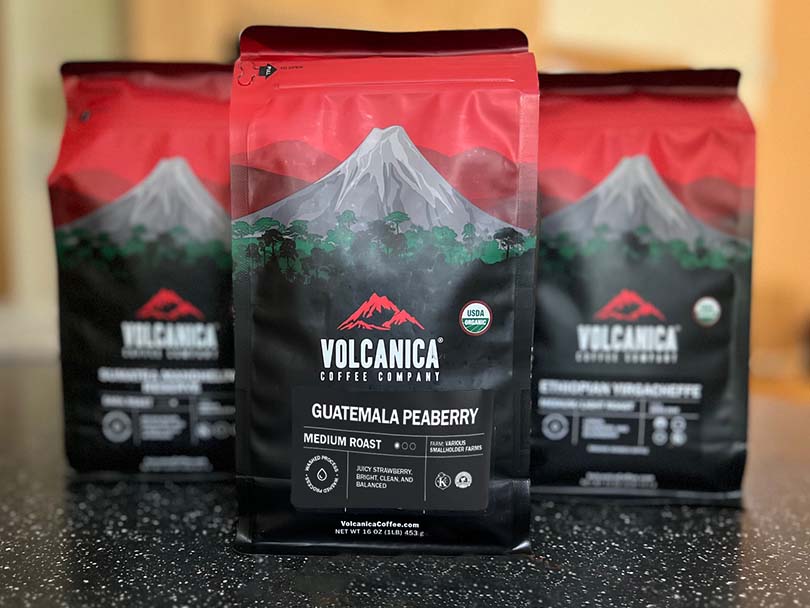
Guatemala Peaberry Coffee, Volcanica (Best Peaberry)
What to Expect:
Roast Level: Medium Roast
Region: Antigua
Varietals: Bourbon and Typica group
Processing Method: Washed
Tasting notes: Sweet berries, gentle citrus notes, and fresh acidity
Important notes: Peaberry coffee is rare, making up only 5% of the crop
Prefer Amazon? Buy Here
Peaberry coffee beans occur naturally in around 5% of the crop. It’s a biological freak of nature where there is just a single bean in the coffee cherry, rather than the usual two facing each other.
What it usually means for you is a smoother finish and more intense flavors. And that was certainly the case here.
This was one of the brighter and more fruit-forward Guatemalan coffees we tested. The soft acidity immediately stood out.
As a V60, we got the tastiest results. Sweet berry notes were unmistakable, layered with a gentle citrus acidity and a smooth, medium body. As is typical of Antigua coffees, the acidity felt controlled and not a sharp smack in the face.
It’s a little more energetic than some of the chocolate-heavy Guatemalan profiles. So if you gravitate toward brighter coffees, especially if you’re a pour over lover, this is a great pick.
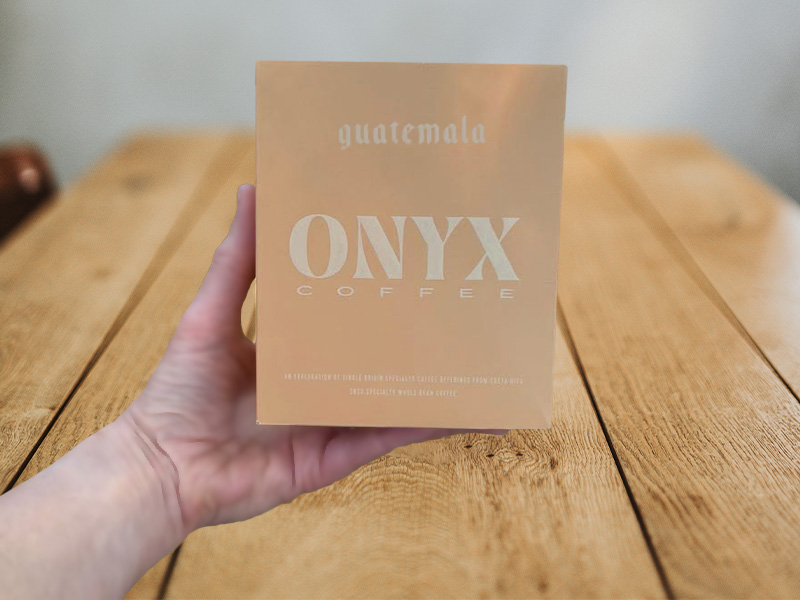
Guatemala El Soccoro Gesha, Onyx Coffee Lab (Best Seasonal Pick)
This is a slightly bougier pick for those days when you deserve something special, rather than your everyday beans.
Gesha (an Arabica varietal) is prized for its perfume-like profile. And, in the case of this Gesha from El Soccoro, those jasmine and white-flower notes come through beautifully. It’s definitely the most delicate and floral coffee we’ve tried from Guatemala. Alongside those floral notes, we tasted juicy oranges and a honeycomb sweetness.
We’d exclusively reach for our V60 or Chemex for this one.
The light roast lets the floral and citrus sing, and the body stays soft and elegant. It’s different from the more classic chocolate-forward Guatemalan profiles – lighter and almost tea-like. We found that some of that bright nuance was lost when brewed in different ways.
Because it’s harvested and released only seasonally after the March harvest, availability can vary. But if you enjoy bright, expressive coffees, this one’s worth keeping on your radar for the right time of year.
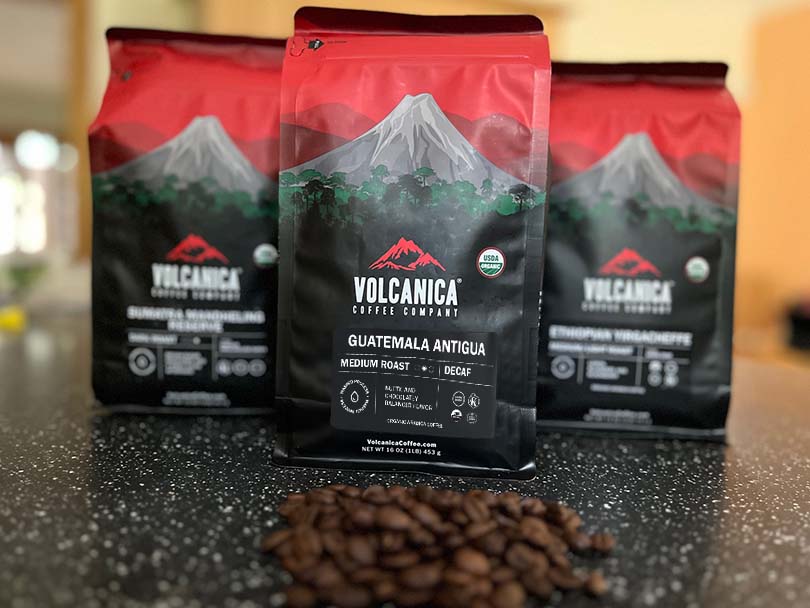
Guatemala Antigua Coffee, Volcanica (Decaf)
What to Expect:
Roast Level: Medium
Region: Antigua
Varietals: Bourbon and Typica group
Processing Method: Washed
Tasting notes: Chocolate and nuts
Important notes: Decaffeinated using Swiss Water Process
Prefer Amazon? Buy Here
If you can’t or don’t want to consume caffeine, you can still enjoy the famous Guatemalan coffee beans thanks to Volcanica.
Hailing from a single farm in the beautiful Antigua region of Guatemala, this coffee has the bold flavors and gentle acidity associated with Antigua coffee… Just without the caffeine.
You get all the familiar chocolate and nut notes, with a freshness from apples and raisins, then a bright, balanced finish. There’s enough sweetness going on to keep it interesting, but nothing sharp or distracting.
We were really impressed with how this full-bodied decaf stood up to the test. It held up well in both French press and espresso, where the chocolate character was able to shine.
This coffee is decaffeinated through the Swiss Water Process. In other words, no chemicals have been used – just pure water to soak the beans, extracting all the flavors and the caffeine. The caffeine is then stripped from the water by charcoal and, when the next batch of beans is soaked, only the caffeine is removed. Pretty cool and the result is some of best decaf coffee we’ve tasted.
If you want something you can drink in the evening without sacrificing that traditional Guatemalan profile, this is a dependable choice.
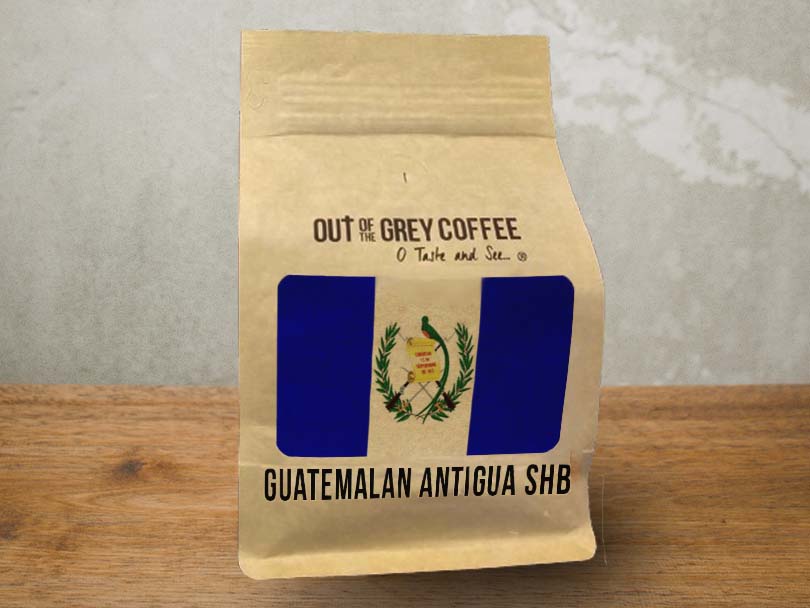
Guatemala Antigua Coffee Las Nubes SHB, Out of the Grey
Okay, this one’s a little different as it’s the boldest, most heavily roasted Guatemalan coffee on this list. In a good way.
If you’re not chasing bright acidity and floral nuance, this is where you’ll feel at home. Instead, the cup leans into caramel, vanilla, and deeper sweetness, with just enough fruit in the background to stop it from feeling flat.
The gentler acidity can be ideal for anyone with a sensitive stomach.
In the French press especially, we found that it produced a rich, rounded body with very little sharpness. It’s best for anyone who prefers more roasty coffees than citrusy ones.
The SHB on the label means Strictly Hard Bean coffee – the highest grade of Guatemalan coffee beans. Only the best hard bean coffees are allowed to be sold with regional designations (Antigua in this case). So, if you see any SHB coffee labeled as just “Guatemalan”, it will be of lower quality.
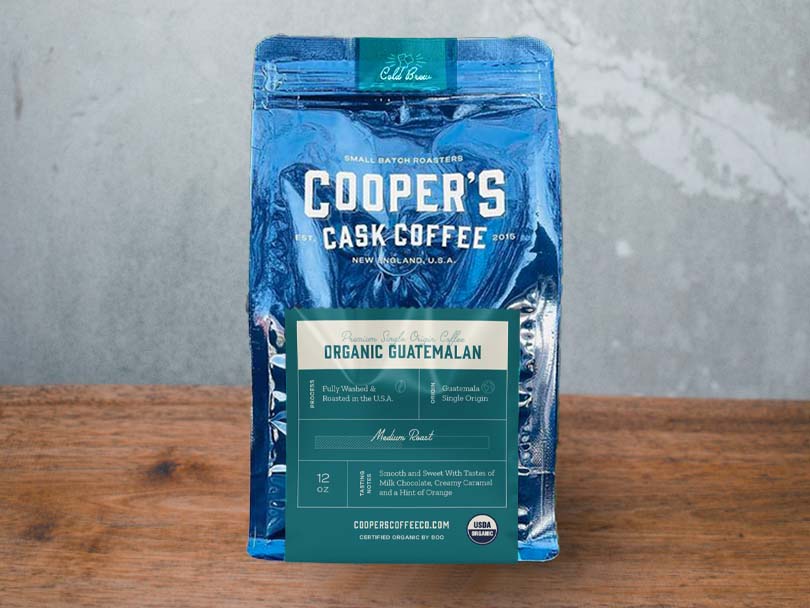
Cooper’s Cask Guatemalan Coffee Cold Brew
Roasted especially with cold brew coffee in mind, this option from Cooper’s Cask produces a rich and smooth cold brew (we steeped it in our French press for 18 hours).
Where some Guatemalan coffees can turn a little sharp when brewed cold, this one stayed mellow and chocolate-forward. We picked up milk chocolate, caramel, and a subtle orange sweetness in the background.
It produced a full-bodied, naturally sweet cold brew that didn’t need much (if any) milk to round it out. If cold brew is your go-to in the summer months, this is an easy-drinking option.
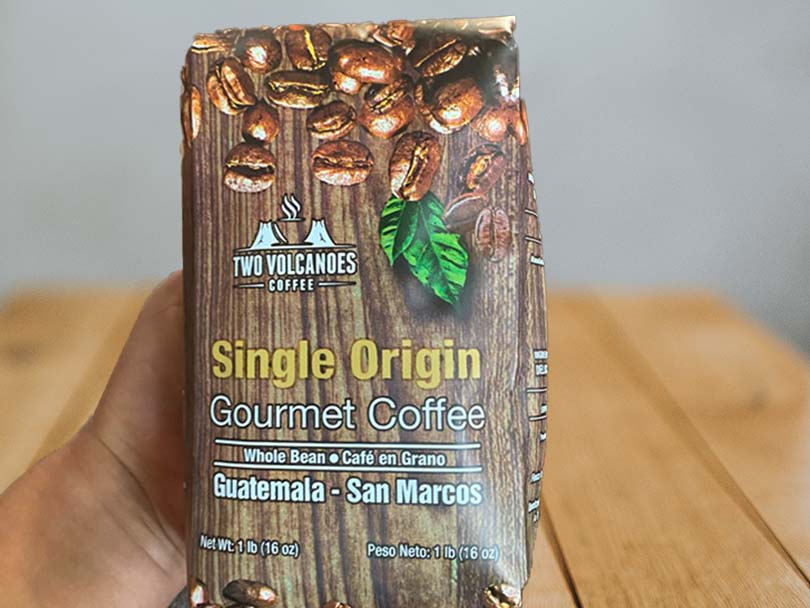
Two Volcanoes Guatemala Coffee
Two Volcanoes know exactly where their coffee comes from. They take control of the entire process from growing to shipping, ensuring that they only send you the very best quality Guatemalan coffee.
For us, this is a solid crowd-pleaser:
It leans into the caramel, toasted nuts, and chocolate flavors of Guatemala, with just enough citrus brightness to keep it from feeling flat.
We particularly enjoyed this coffee in the French press. It had a full, rounded body with a smooth finish. It also handled espresso well, where the caramel sweetness really stood out.
As a company, Two Volcanoes Coffee, are very active in the local community to promote and ensure the sustainability of coffee farming practices. Plus, they are 100% USDA Certified Organic.
If you’re looking for something steady, chocolate-forward, and easy to brew across different methods, this is a dependable pick.
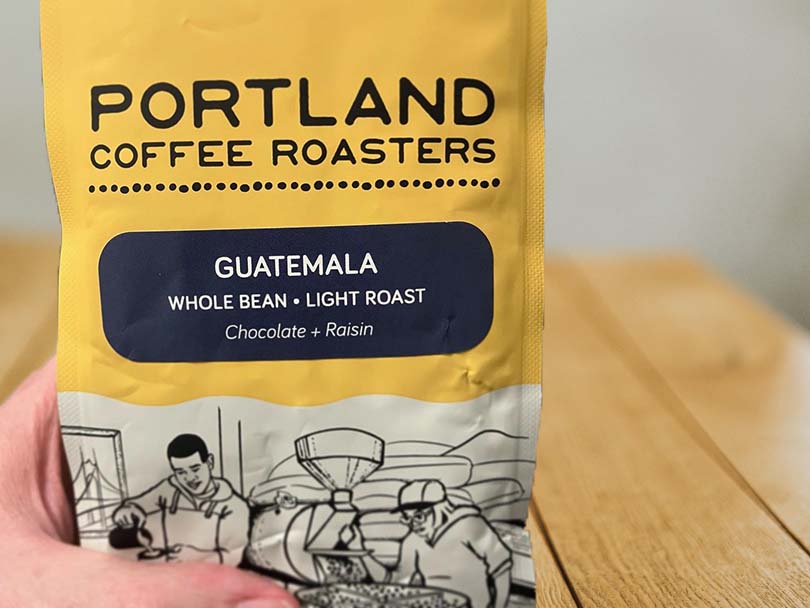
Guatemala, Portland Coffee Roasters
The all-around excellent Portland Coffee Roasters have been buying from a single farm in the Highland Huehue region of Guatemala for nearly 20 years. This long-term relationship has been a fantastic partnership for both sides, resulting in a superb light roast coffee for us.
While it’s a lighter choice, it doesn’t lean overly floral or delicate. Instead, we picked up layered notes of chocolate, caramel, and raisin, with a gentle molasses-like sweetness as it cooled. The sweet notes are balanced with bright acidity, so nothing feels too overpowering.
We really enjoyed it as a pour over, as we got to enjoy the separation between flavors in a way that wasn’t so obvious with the other brewing methods tested.
Portland Coffee Roasters has been steadily improving the sustainability of its business with renewable energy and recycling processes. This dedication to constant improvement is good to see as it hopefully means they’ll continue to work as green technologies develop.

Best Brewing Methods
Having bought some of the best Guatemala coffees, you’re going to want to make sure you do them justice with your brewing method.
You may already have a favorite type of coffee maker, but here are our top choices for experiencing Guatemalan coffee at its finest:
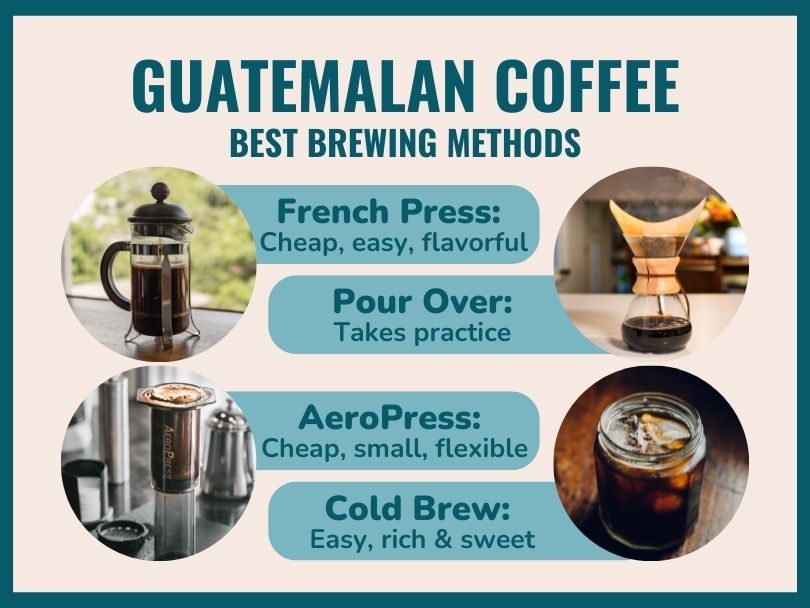
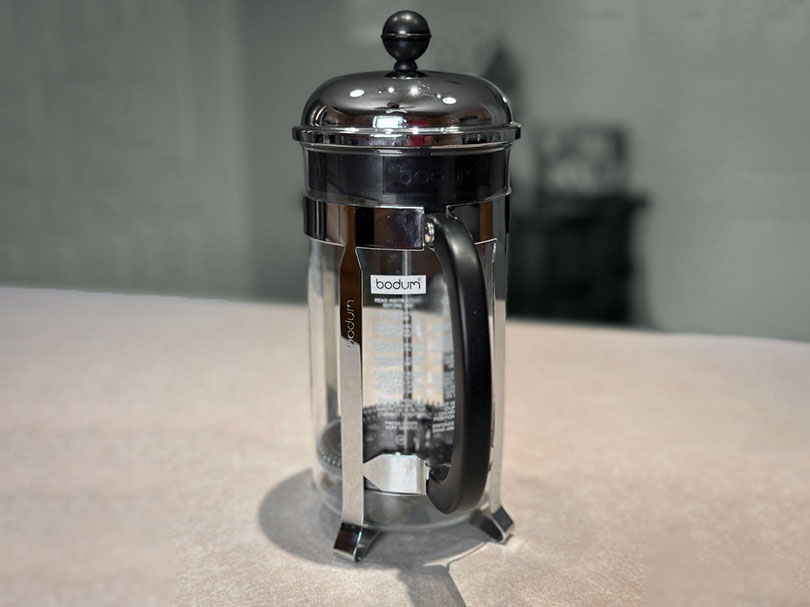
French Press
It’s easy, the equipment is cheap, and it preserves all those flavorsome oils that exist in your beans. What’s not to love?
French press is a great way to experience any new coffee beans as it works for all roasts, doesn’t require any skill, and ensures all the flavor goes where it should.
It doesn’t leave you with many options with the final form of your coffee, just black or…..white. But you’ll definitely experience all the unique flavors from your Guatemalan coffee beans.
Psst.. Want to know more about making French Press coffee? We’ve got some useful guides to transport you straight to the streets of Paris – you just need to bring the croissants:
Ultimate Guide to French Press Coffee | Best Coffee Beans for French Press | French Press Ratio Made Easy (With Calculator)
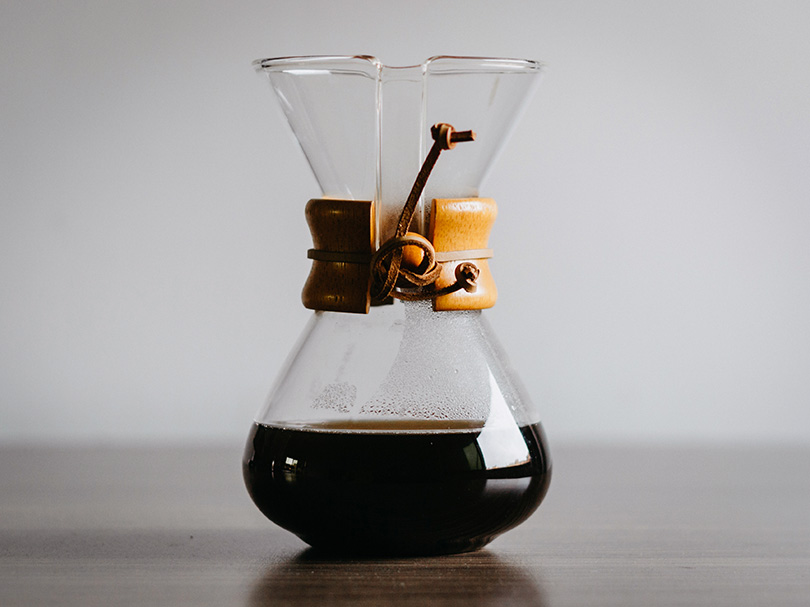
Pour Over
Similar to the French press in that pour over coffee makers are cheap, work for all coffee roast levels, and preserve the volatile oils on the beans. However, making pour over does require a little more effort than making French press and a touch of skill too.
The purity of the aromatics from a well-executed pour over is incredible and totally worth the effort. It’s particularly good for brewing lightly roasted coffee beans.
If you’re not a fan of the texture of French press, pour over can be a great option for you to get clean, clear coffee but with all the flavor. If you’re not sure where to start, the Kalita Wave, Hario V60, or Chemex are the big hitters. But, for beginners, we recommend grabbing a Chemex as it is easier to use. Then, once you’re a bit more confident you can graduate to making Hario V60 coffee.
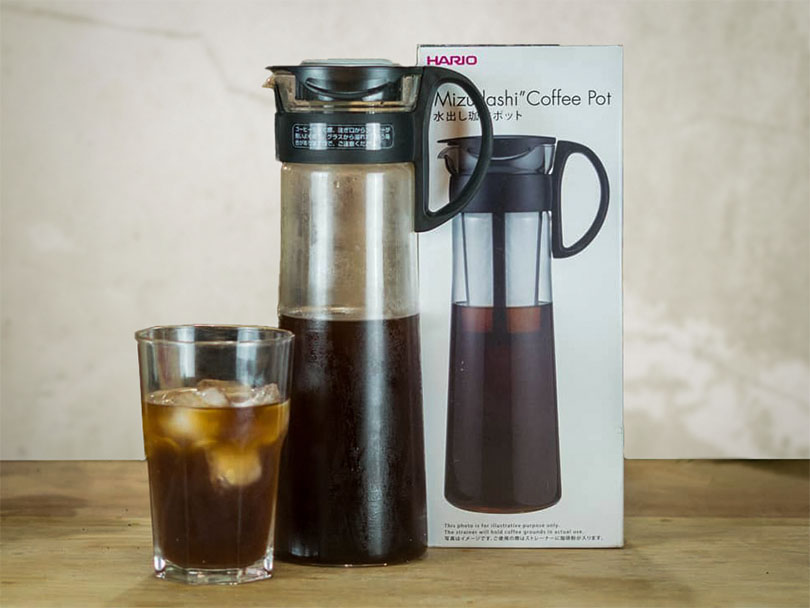
Cold Brew
This might not be an obvious choice, but cold brewing Guatemala coffee beans will bring out the rich flavors, particularly the sweetness, of the nation’s best coffees.
It’s not a quick option as it takes 12-24 hours to brew, but the concentrate can last over a week in the fridge so it’s ready to go when you are.
When you’re choosing your coffee beans for cold brew, look for darker roast coffees. This is where this brewing method will really shine. Medium roast is the lightest that will work well.
The distinctive cold brew coffee taste is smooth, sweet, and easy-to-drink particularly on a hot day. So, you might want to skip it during the winter months. But it’s a nice option to have in your back pocket for summertime brewing.
To make cold brew, you can use a French press or just a big mason jar with a filter.
AeroPress
Last, but certainly not least, is the old faithful: the AeroPress coffee maker.
This little device is the darling of millions of coffee lovers around the world, including us. There are endless online recipes and tutorials, it’s cheap to buy and really easy to use.
The Aeropress is always a good option when you’re trying out some new beans to really get a feel for the profile of a coffee region.
Some may not like the fact it’s made of plastic, or that it uses throwaway filters. But there are very few drawbacks to this amazing little device.


History of Guatemala Coffee
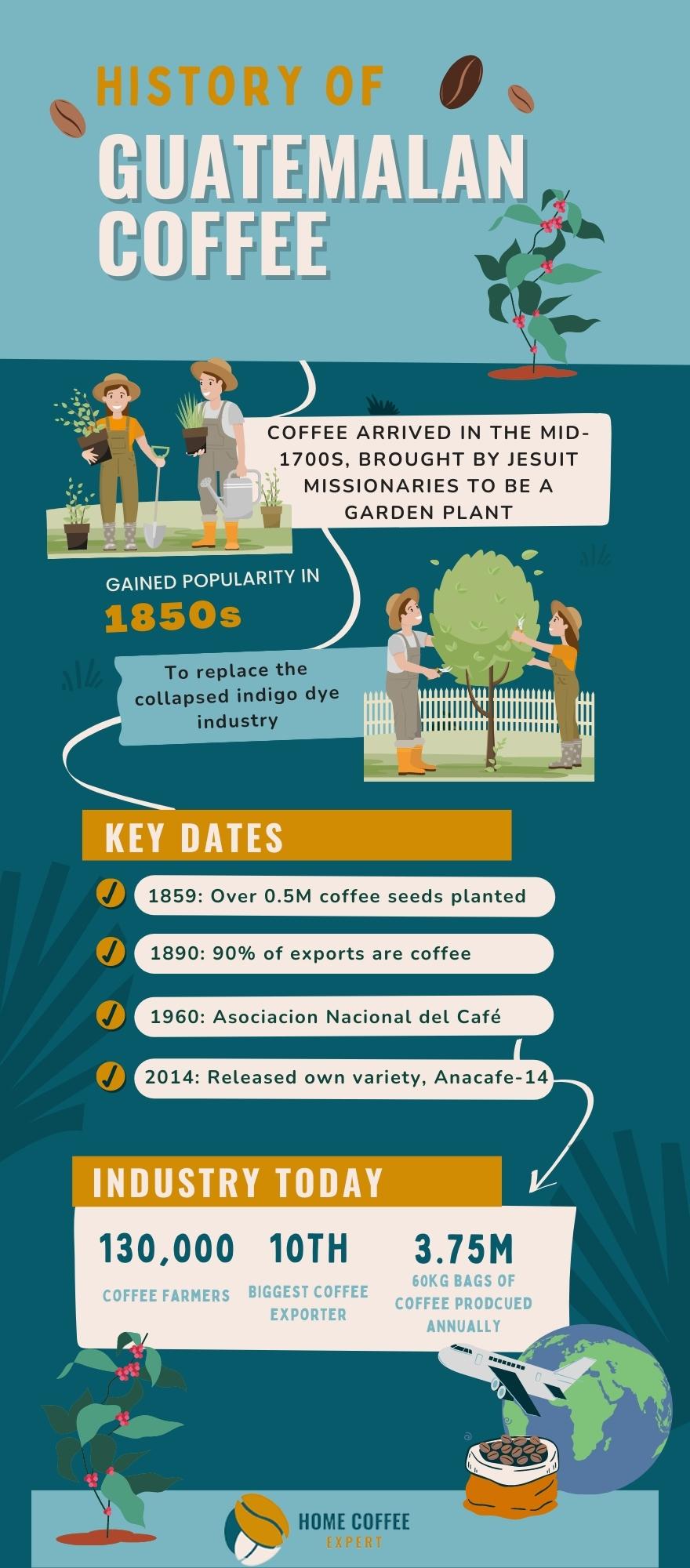
Coffee was brought to Guatemala in the mid-1700s by Jesuit missionaries. In an act of not seeing something’s true potential, they brought the coffee trees over to be decorative garden plants.
So coffee didn’t start being used as a commercial crop until the mid-1800s.
Before coffee, Guatemala’s economy was based on producing dyes. This involved growing huge fields of indigo to be harvested and made into dyes. But, with the arrival of synthetic dyes in the 1850s, this industry collapsed. So a quick solution was needed.
Guatemala’s government turned to coffee as a source of income, quickly growing the industry across the country so farmers could support themselves. With an increasing global interest in drinking coffee, this provided the government with something to export and generate revenue.
By 1859 over half a million coffee seeds had been planted, and by 1890, 90% of Guatemalan exports were coffee. People were impressed with the quality and flavor of Guatemala’s coffee – they came to expect an enjoyable blend of complex aromas, rich flavors, and bright acidity.
In 1960, coffee farmers across the country formed the Guatemalan National Coffee Association (Asociacion Nacional del Café or ANACAFE) which is now responsible for marketing, research, and providing financial support to coffee farmers in Guatemala. In 2014 they even released their own coffee variety – Anacafe-14 which has high yields of very large coffee beans.
Nowadays, it’s impossible to walk around the towns of this great country without coming across coffee tree after coffee tree. In fact, there are around 130,000 coffee farmers in Guatemala (a nation of only 17 million people). All of the Guatemalan coffee varietals currently farmed are descended from the Bourbon and Typica varieties that were first brought to Central America all those years ago.

The Industry Today
Guatemala is currently the 10th biggest coffee exporting country in the world with over 50% going to the US.
During the Covid-19 pandemic, there was a dip in exports but this is recovering back to pre-pandemic levels.
Around the country, there are over 130,000 coffee farms of which 44% are smallholders. In fact, the average Guatemalan coffee farm size for smallholders is just 1.1 hectares.
Over 96% of the coffee grown in Guatemala is Arabica, with a small amount of Robusta and no Liberica. The most common varietals are Bourbon, Typica, Caturra, Catuai, and Pache. Arabica thrives in the high-altitude regions of Guatemala.
As more people move from the countryside to the cities for better opportunities, the coffee farms are more reliant on seasonal labor for their harvests. There’s also a chance some coffee farms around Lake Atitlan and Antigua may be sold to developers as tourism increases in these regions.

Summing Up
Guatemalan coffee is popular due to its easy availability and high quality.
With the variety of volcanic and non-volcanic regions, soil types, and elevations, there are a lot of different styles to try. When brewing Guatemalan coffee, it’s key to preserve the volatile oils from the beans that produce much of the coffee’s signature aromatics.

You Might Also Like
-

Vietnamese Coffee Brands You Can Buy in the US [Tried & Tested]
Discover the best Vietnamese coffee brands currently available in the US for a caffeinated sip that transports you to the streets of Hanoi
-
How to Order Coffee in Vietnam: Sip Like a Local
Don’t be put off by Vietnamese coffee menus. Use this guide on how to order coffee in Vietnam – you’ll feel like a local in no time