The Gaggia Magenta Prestige is one of the standout espresso machines currently in the sub-$1000 category. Not only does it perform exceptionally, there’s also the romance of having a machine from Italy, the birthplace of espresso. But heritage alone doesn’t guarantee quality. What really matters is whether this automatic machine can consistently deliver great coffee at home.
In this hands-on Gaggia Magenta Prestige review, we put it to the test – and we were impressed. Great espresso, great milk texture, beautiful design, easy to use and customize, and a high quality build like having a ceramic flat burr grinder. Overall, it’s one of the best value automatic espresso machines you can buy. The only real downside is that it’s a little loud, which is a pretty small issue for most people.
If you’re trying to decide whether it deserves a spot on your countertop, this review will give you a clear, experience-based answer. Then offer up some alternatives that we’ve tested too.
This article may contain affiliate/ compensated links. As an Amazon Associate, we earn from qualifying purchases at no additional cost to you. For more information please see our disclaimer here.
At a Glance: Gaggia Magenta Prestige Review
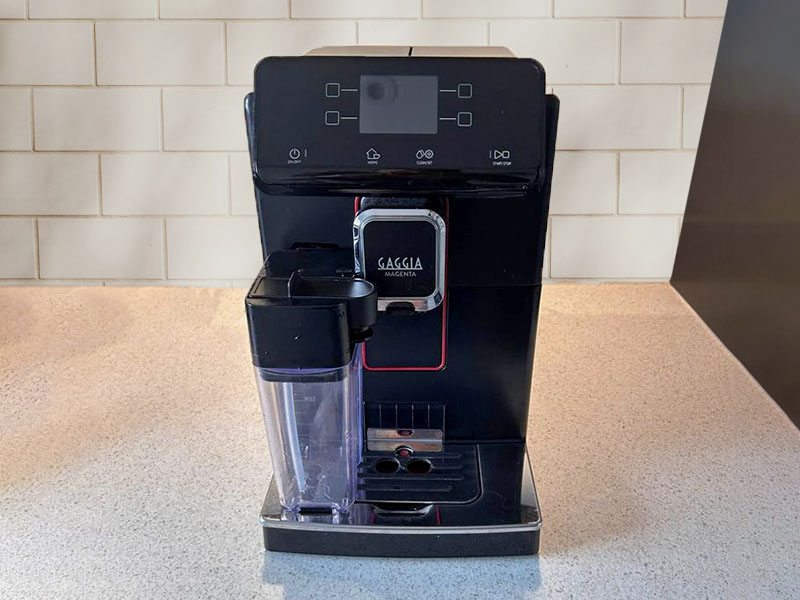
For what you’re paying (RRP $899), the Gaggia Magenta Prestige packs in a lot:
Great drinks options (including all the most popular milk-based coffees), an excellent grinder, easy-to-use interface and a fantastic milk system.
The level of customization is also impressive. The only compromise is that there’s no “iced coffee” settings.
It’s also quite loud. So if you work on a different schedule to others in your house, this could be problematic. It also doesn’t have user profiles – you can only save one version of each coffee.
For us, these are small annoyances compared to all the positives of the Magenta Prestige, but you might disagree.
Pros
- Flat burr ceramic grinder
- Excellent user interface
- High quality espresso
- Detachable milk carafe
Cons
- Loud grinder and brew unit
- No user profiles

Who It’s For (And Who It’s Not)
✅ Buy the Magenta Prestige if:
- You want café-quality drinks with minimal effort. The Magenta Prestige delivers excellent espresso and milk drinks with simple, intuitive controls.
- You value customization without complexity. Adjusting brew strength, temperature, and milk volume is easy (even if you’re not a coffee nerd).
- You prefer hands-off milk steaming. The integrated milk carafe makes lattes and cappuccinos as simple as pressing a button.
- You want great value under $1,000. At this price, it outperforms most competitors in espresso quality, usability, and overall design.
- You don’t mind a little noise. The ceramic flat burr grinder is excellent but it’s louder than average.
❌ Skip it if:
- Multiple people in your home like different drink settings. There aren’t user profiles, so only one version of each drink can be saved.
- You need a very quiet coffee setup. Light sleepers, parents to young children, or shared-space users might find the grinder’s noise a dealbreaker.
- You want truly café-level microfoam for latte art. The automatic milk system is good but it can’t match a manual steam wand.
- You prefer higher-dose espresso. With a max dose of 11.5g, you are more restricted in drink size/strength than machines that allow 15-18g shots.
- You enjoy a more hands-on experience. Machines like the Breville Barista Touch or Barista Express offer greater manual control.

Key Features Review
1. Ceramic Flat Burr Grinder
Most automatic espresso machines use stainless steel conical burr grinders. Gaggia, however, equips theirs with the more premium ceramic flat burr grinders. These have two advantages:
- The ceramic burr doesn’t heat up as quickly as stainless steel, ensuring all those volatile oils stay in the grounds where you want them, and
- Flat burrs are more accurate than conical burrs, meaning you get more even grounds (and better, more consistent tasting coffee)
2. Intuitive Interface
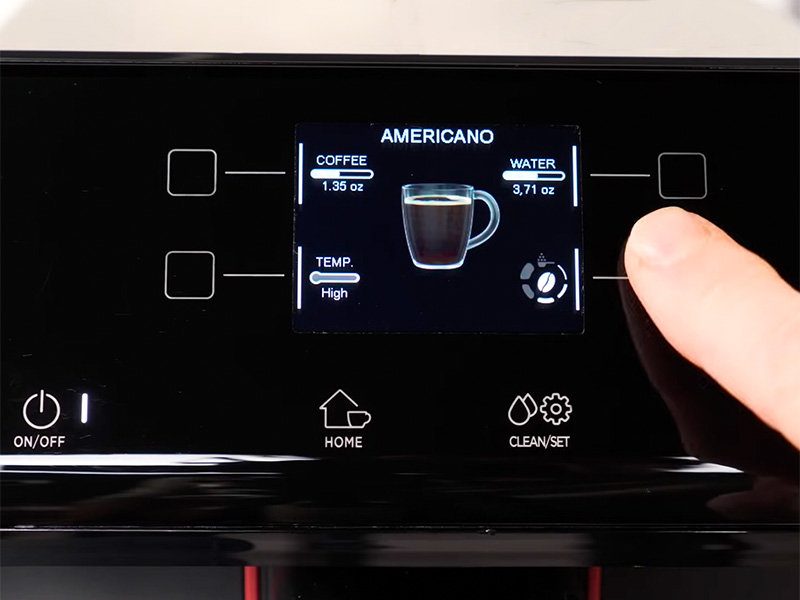
The bright, color display with soft touch buttons makes customizing your drinks incredibly easy. There’s no need to scroll through endless menus. Instead, you can choose your brew temperature, volume, and strength all on the screen and save your preferences for later.
Okay, it’s not as fancy as the (much more expensive) Gaggia Accademia. But why make things more complicated than they have to be?
3. Integrated Milk Carafe
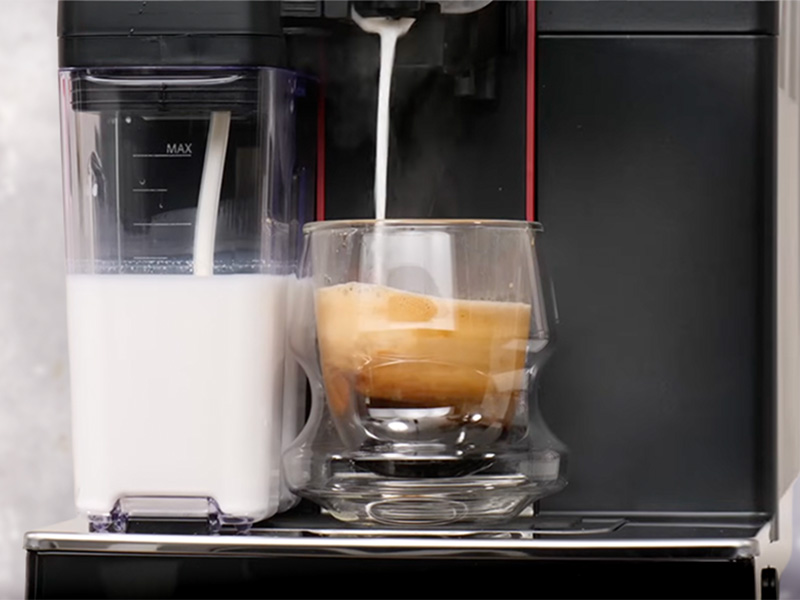
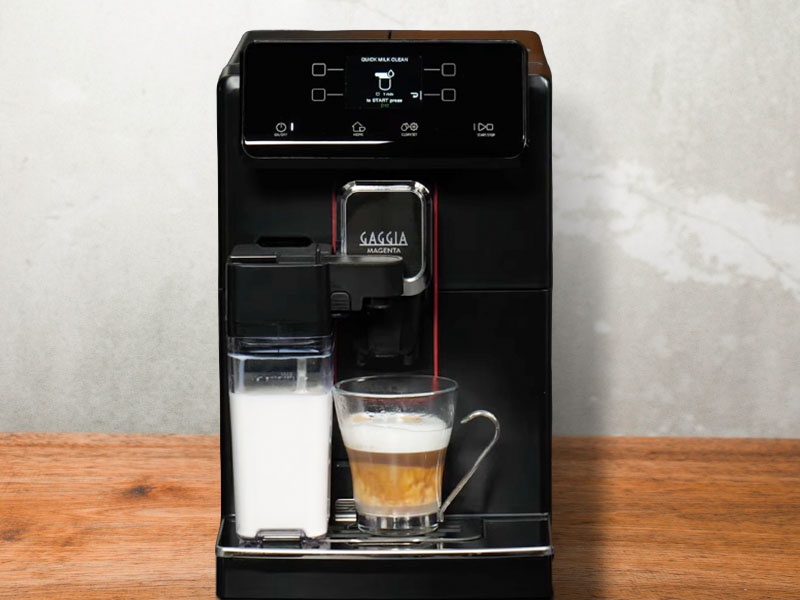
The milk carafe dispenses from the same spout as the coffee so you don’t need to move your cup around. It’s easy to clip on and off, and can be stored in the fridge when not in use. And, most importantly, it produces great quality milk foam.
4. 10 Coffee Recipes
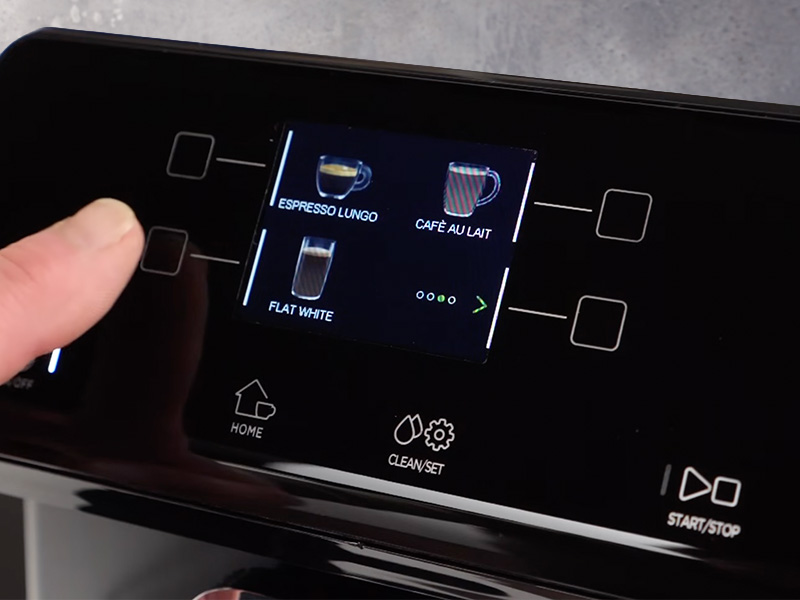
In addition to just hot water and milk foam options, the Magenta Prestige offers 10 coffee recipes that hit all the crowd pleasers:
Ristretto. Espresso. Espresso lungo. Americano. Coffee. Café au lait. Flat white. Cortado. Latte macchiato. Cappuccino.
5. Pre-Infusion
Adding a little water to the coffee grounds before brewing is critical for releasing CO2 and getting the best flavor from your beans. The Magenta Prestige does this automatically for you, and you can’t turn it off which is great as your coffee will suffer without it.

How Easy to Use is the Gaggia Magenta Prestige?
One of the most important features of any bean-to-cup machine is ease of use, and the Magenta Prestige passes with flying colors.
Ideally we want to just push a button/ touch a screen, and be rewarded with a great cup of coffee. This is what you get from the Magenta Prestige.
Using the on-screen selections, you first choose which of the 10 coffees you want to “order”. Then you can select the volume of espresso and milk you want, your preferred brewing temperature and dose, and it will do the rest. If you like the result, you can simply save the settings when prompted. So it’s about as easy as it gets.
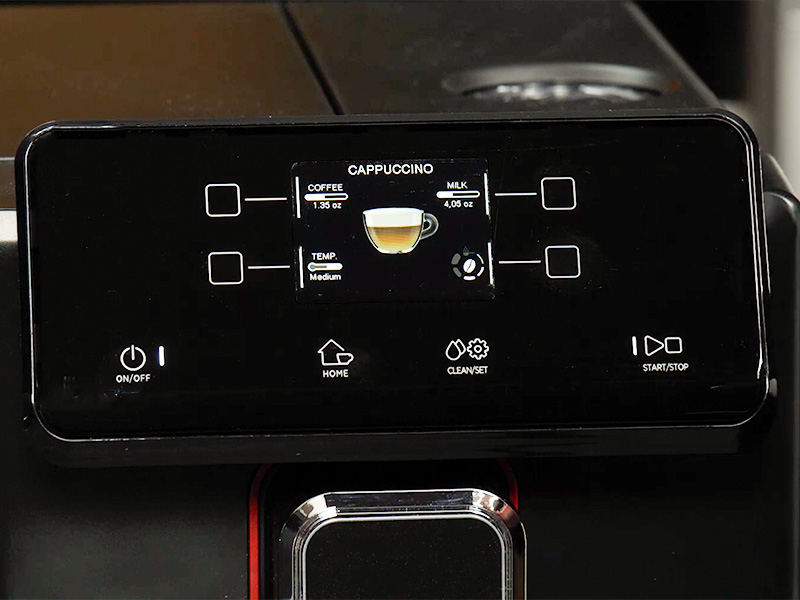
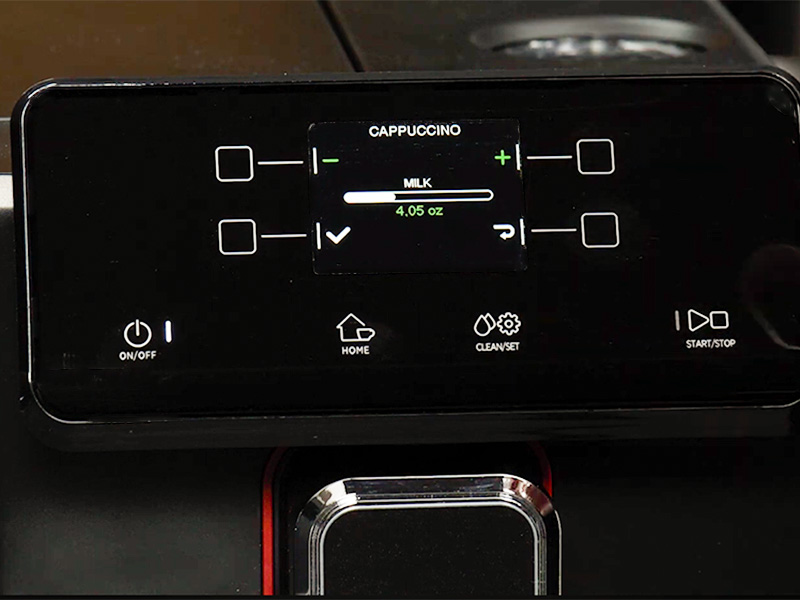
You’ll likely need to spend a little time messing around with the settings for the grinder, dose, volume, etc, before you’re really happy with the results. But the good news is this should only take a few coffees, maybe a maximum of 10, and then you’re set for life (or until you change beans).
For our medium roast beans, we used the finest grind setting, highest aroma (dose), highest temperature, and 30ml espresso volume for the best results. We actually preferred using the ristretto rather than espresso for a straight shot because we could get a 25ml volume, which we thought was a little more balanced.
The only real drawback is the lack of user profiles. (For that, you’ll need to spring for the Cadorna Prestige instead.)
You can save your settings, but you only get one version of each coffee. So if there are 2 of you and you both love a cortado, but make them vastly different, you won’t be able to save them both.
For many people, like us, this is a complete non-issue as they either drink different coffees or like the same one the same way. But it’s worth thinking about if lots of people in your house drink coffee.
It’s also worth mentioning that the max dose is 11.5g. We usually prefer a higher dose than this, roughly 15-18g. But the Gaggia produces great shots, just keep the dose in mind when adjusting your settings.

Grounds or Whole Beans?
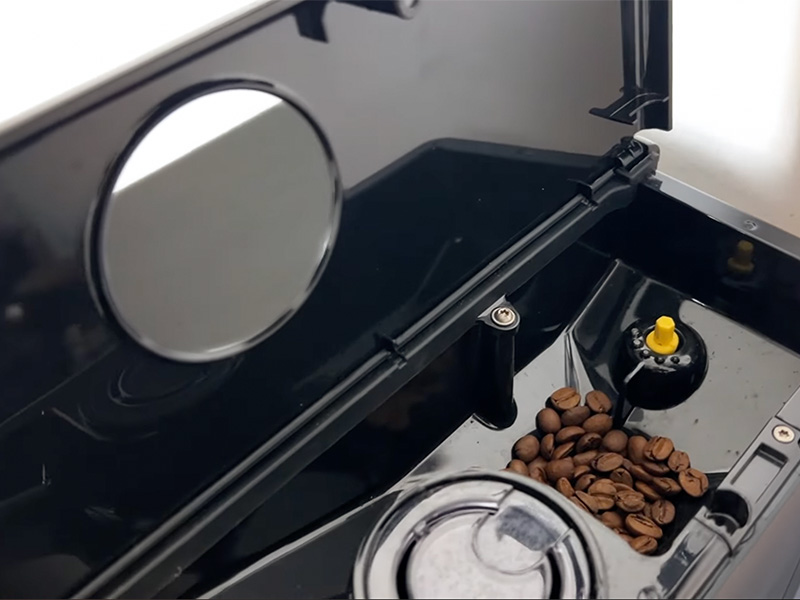
Use fresh roasted whole beans and maximize that awesome grinder.
The ceramic flat burr grinder is a huge selling point of these Gaggia automatic espresso machines; it’d be a real waste not to use it.
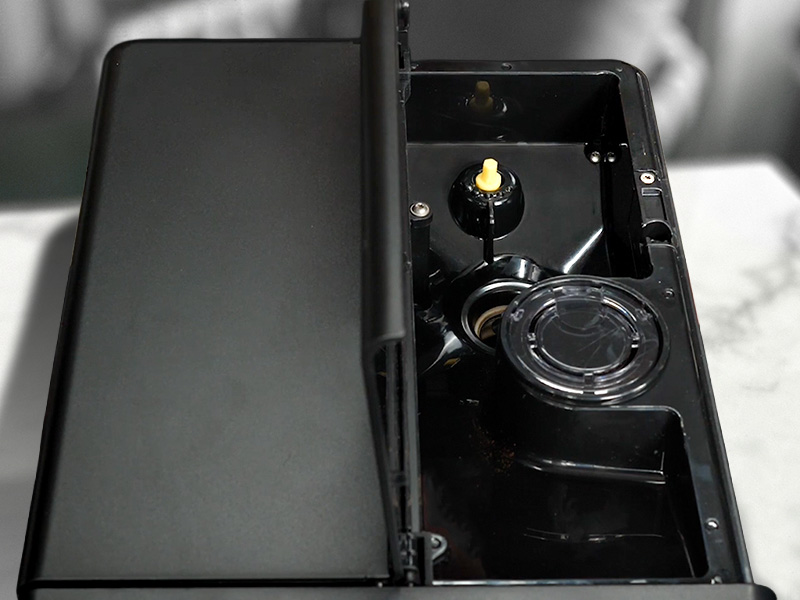
The 8.8oz bean hopper is about the perfect size for many bags of coffee beans.
There is, as always, a bypass chute for using pre-ground coffee if you need it. We usually save this for decaf coffee, but more importantly, if you (or a guest) drink flavored coffee, then you should definitely grind it separately and use the bypass chute. The sugars in the flavored coffee can damage your grinder.
If you change beans frequently, we’d recommend the KitchenAid KF series instead, as they have removable air-tight bean hoppers. Or the De’Longhi Rivelia has a similar (but less good) hopper-swapping system.

Design & Build Quality Review
The Looks
Personally, I love the slick black machine with silver and red accents. It looks very modern, which we think avoids some of the worst aspects of the minimalist trends and will age considerably better than some of its competitors, or Gaggia’s older machines like the Anima Prestige or Babila.
Gaggia has also tilted the screen upwards slightly – a lovely touch, both aesthetically and practically.
It’s also a relatively narrow machine, for those of us concerned with countertop space. Being only 8.8 inches wide makes it one of the narrowest super automatic machines you can buy. At 14 inches high and 17.1 inches deep, it’s about the same size as most of its competitors in those dimensions. It shouldn’t cause any issues if you have cabinets over your countertop, which is nice.
We really like the compromise on practicality over looks by having four buttons around the screen. Maybe this isn’t for everyone in the age of touchscreens. But we’d rather have buttons that look a little dated than a touchscreen that isn’t very responsive.
The Build
Gaggia machines are all made in their factory in Italy, if that matters to you. Like most modern super-automatic espresso machines, they’re mostly made from plastic. This doesn’t seem to affect their durability, and Gaggia has a well-earned reputation for extremely high build quality.
If the idea of your coffee machine being mostly plastic bothers you, then we suggest checking out the Breville espresso machines instead. They’re almost the only manufacturer that uses predominantly stainless steel.
It’s a pretty heavy piece of kit – 17lbs – but are you realistically going to transport it places? Maybe just have a plan for getting it into your apartment if you don’t have an elevator.
Everything on the Magenta Prestige fits together nicely – nothing feels “flimsy” or “cheap”.
It’s hard to gauge what the machine’s inner workings will be like after years of use, but Gaggia has a strong reputation. And you can remove the brew unit for cleaning, which helps.
Gaggia North America offers a 1-year warranty – hopefully you don’t ever need it, but it’s reassuring if you do get unlucky.

How Good is the Coffee from the Magenta Prestige?
It’s very good. Good enough to comfortably replace your daily cafe visits.
When you first get your Magenta Prestige, you’ll need a little patience. No automatic machine nails it right out of the box. In this case, you’ll need to make about 5-10 coffees before getting to the good stuff. After this, you should get rich, aromatic espresso and silky foamed milk (if milk is your preference).
If you drink multiple black coffee types – ristretto, lungo, coffee, and espresso – then you’ll probably need practice to dial in each one individually. To make sure your lungo or coffee isn’t too bitter, it’s a good idea to set the grinder a little coarser than for espresso. If you’re moving from lungo to espresso, or from espresso to ristretto, then you might need a finer grind to get that perfect shot.
For the price, with the right beans, you can get espresso as good as any of the competition around this price (around $900). This is a testament to Gaggia’s dedication to great coffee brewing.
That said, this isn’t the absolute best espresso you can make at home with a super-automatic. If you’re willing to spend more, Jura espresso machines pull top-tier espresso. Or, if you’re willing to put in a little work, Breville espresso machines can produce coffee as good as any barista.
Milk System
A clip-on milk system is pretty much the standard across automatic espresso machines now. So we won’t give Gaggia too much praise for the convenience of being able to store the carafe in the fridge.
The milk foam density and consistency are very nice, if a little foamier than we’d like for a cortado and a flat white. It’s absolutely not perfect, but an automatic machine at this price means some compromises have to be made. And the milk system is still very good.

Ease of cleaning
Gaggia has made cleaning your Magenta Prestige about as easy as it can be.
This is most people’s least favorite thing about owning a coffee machine – having to clean it. But failing to keep on top of cleaning won’t just mean bad-tasting coffee; it could even break your machine and invalidate the warranty.
With the Magenta Prestige, you need to empty the drip tray and the used puck container frequently. And, if you make milk coffees, the milk carafe needs to be cleaned often too.
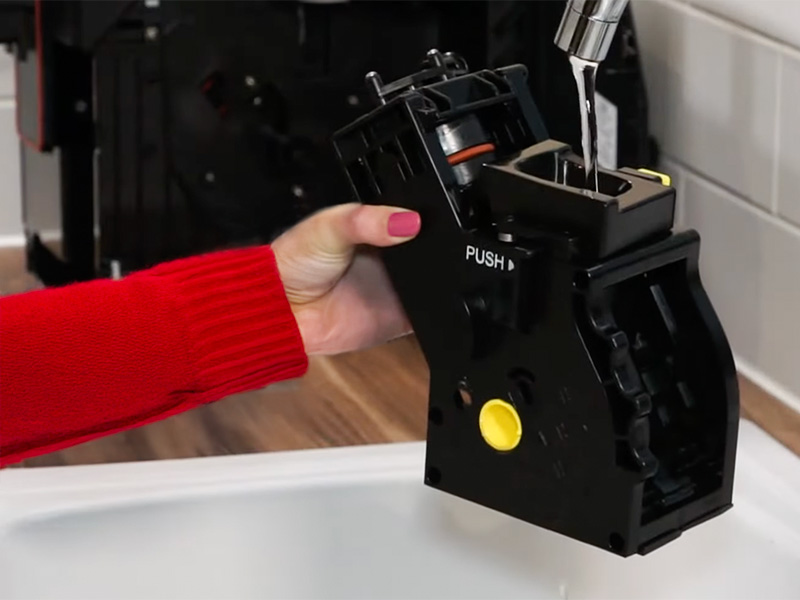
Taking out the brew unit on a weekly basis, rinsing it, and allowing it to fully dry is also very good for coffee quality. This should only take 5-15 minutes.
It’s also best to run a deep cleaning cycle once a month using branded cleaning tablets. This ensures all is well with the insides of your machine. Give yourself 30 minutes for this.
The machine will prompt you when it needs to be descaled, usually every 6-8 weeks. This also takes 30 minutes using the branded descaling solution. Though the frequency will depend on your water hardness, whether you use water filters (recommended for the best flavor too), and machine usage.
Now this sounds like a lot, but it’s mostly just a couple of minutes here and there with the once-a-month bigger clean. This is a small price to pay for awesome espresso whenever you want it.

Competition
Now we’ve explained how good the Gaggia Magenta Prestige is, what about the other options at the same price point?
De’Longhi Magnifica Evo with Latte Crema
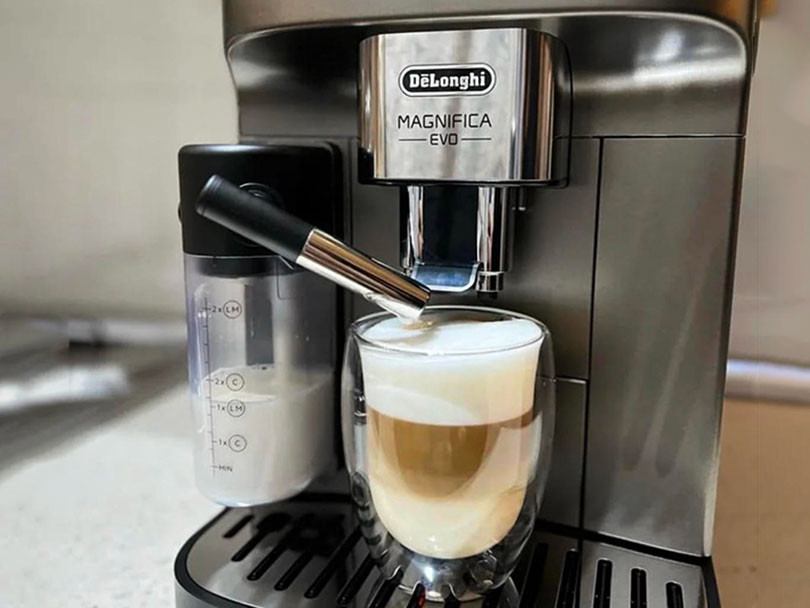
The De’Longhi Magnifica Evo with Latte Crema is the same price as the Magenta Prestige at RRP… But it’s frequently discounted by a couple of hundred dollars.
Comparing them both at full price, the De’Longhi just isn’t as good as the Gaggia in any of the ways that matter:
The coffee isn’t quite as good. The drink options aren’t as good. The milk isn’t as good. And it doesn’t look as nice.
This seems harsh, but at the same price, the Magenta Prestige wins by a mile.
Having said all that, the Magnifica Evo is still a very good machine. So if you can get it at a heavily discounted price, then it may be worth picking up if value is your main concern.
For anyone looking for the best machine in the $800-900 price range, the Gaggia Magenta Prestige is the one for you.
Read next: Our in-depth De’Longhi Magnifica Evo Review | Compare Gaggia vs De’Longhi
Breville Barista Touch
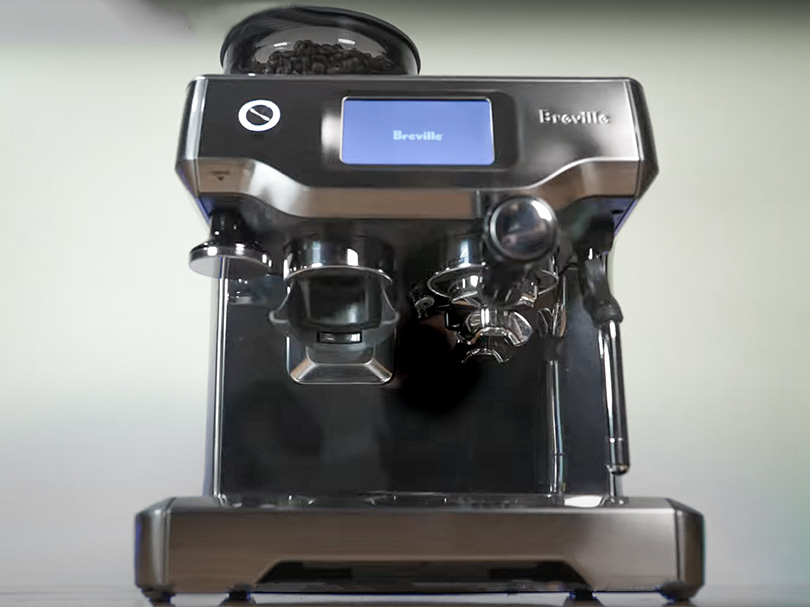
If you’re willing to put in a tiny amount of work (tamping and moving the portafilter) and you have an extra $100, you can get incredible coffee from the Barista Touch.
For us, it’s worth it. We’ll always choose working a little harder to get great coffee.
This is not for everyone, especially as the point of the Magenta Prestige is to make things as easy as possible. But the rewards are great.
It’s also a little more expensive than the Magenta Prestige. So you have to choose whether nice, easy, and a little cheaper wins over slightly better coffee and milk.

Final Thoughts
Superb value for money and well ahead of the competition at the same price.
The Gaggia Magenta Prestige is an excellent option that combines looks, quality, and value into a neat package of great coffee.
It is not perfect – user profiles would be nice, and the grinder is a little loud. But we’re really looking at small issues on an overall superb espresso machine. If easy, great coffee is what you want, then you don’t need to look any further.
To sum up our Gaggia Magenta Prestige review: you can’t find a better super-automatic espresso machine for less than $1000.
Don’t forget to buy your Gaggia Magenta Prestige today

You Might Also Like
-

Miele CM 6360 Review: Beautiful, Powerful, But Is It Right for You?
In this Miele CM 6360 review, we share our hands-on thoughts on who should buy it, who shouldn’t, and how it compares to Jura and Breville
-
Best Philips Espresso Machine: We Tested the 3300, 4400 vs 5500
Confused by the 3300, 4400, and 5500? We tested all 3 to show the real differences and help you choose the best Philips espresso machine