Miele isn’t the best-known brand in the coffee world, but it is one of the most respected brands in luxury kitchen appliances. That’s why we spent several weeks testing and putting together this hands-on Miele CM 6360 review (the best espresso machine Miele currently makes, in our humble opinion) to see if it’s actually worth the almost $3,000 price tag (at RRP).
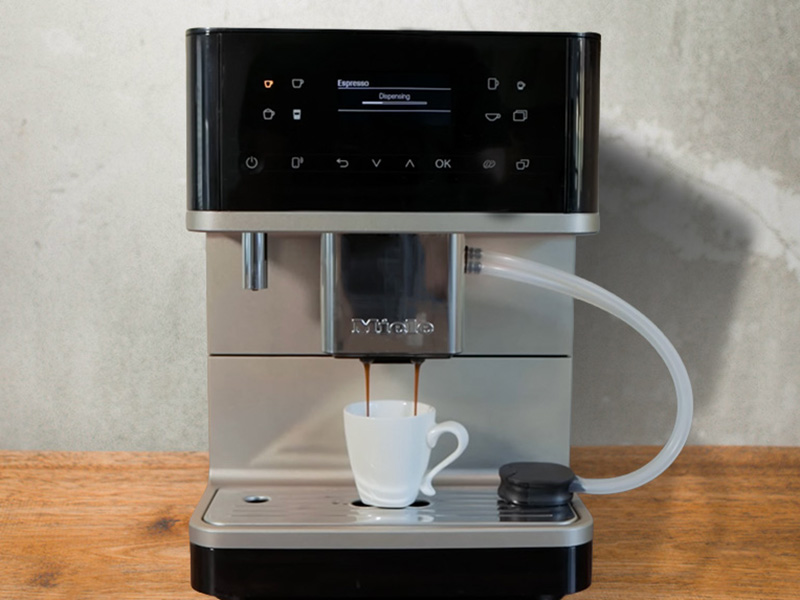
In short, the CM 6360 is a beautifully built, design-led espresso machine that makes great coffee and milk, with awesome customization options. It also has a unique feature for brewing specialty teas thrown in. It’s clearly aimed at the luxury market for buyers who care about looks, build quality, and brand reputation.
That said, it’s not the easiest machine to use. It doesn’t make iced coffee. And, if coffee quality is your only priority, there are better machines out there.
But, for the right buyer (maybe that’s you), the Miele CM 6360 is a fantastic machine. This review breaks down everything we learned from testing and who (and shouldn’t) buy this espresso machine.
This article may contain affiliate/ compensated links. As an Amazon Associate, we earn from qualifying purchases at no additional cost to you. For more information please see our disclaimer here.
At a Glance: Miele CM 6360 Review
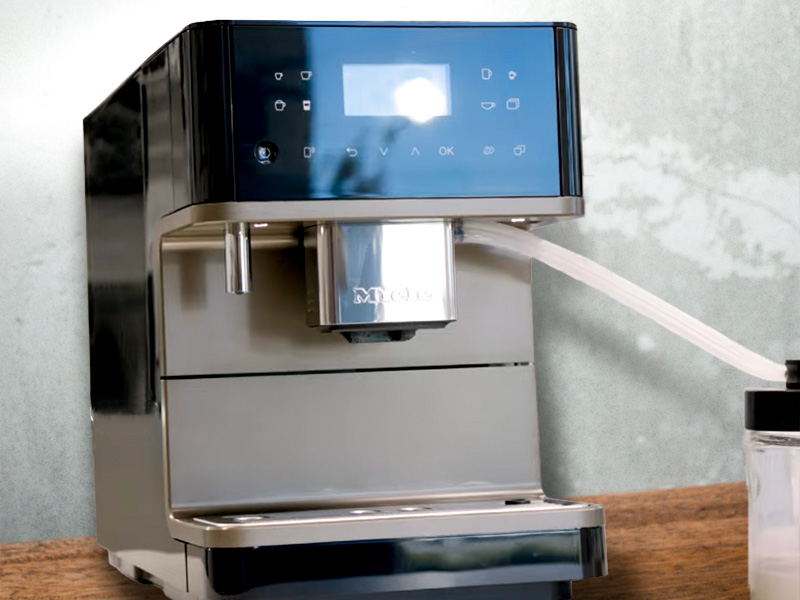
Verdict: The Miele CM 6360 is a gorgeous, well-built luxury espresso machine that makes great coffee and milk-based drinks. If you’re considering it because you love how it looks, the coffee quality more than justifies the purchase.
It’s not the easiest super-automatic to use, it’s not the absolute best on pure espresso performance, and it doesn’t have the largest range of drinks (no iced coffees). But none of these things are big enough issues if the aesthetics and trust in the Miele brand are your priorities.
Bottom line: If you love how it looks and are happy spending around $3,000 on a premium espresso machine, the Miele CM 6360 is an excellent buy. However, if ease of use, iced drinks, or getting the most value for money matter more to you, there are better alternatives.
Pros
- Large 15g max coffee dose
- Very quiet grinder
- Outstanding build quality and design
- Self-cleaning milk tubes
- Fantastic customization options
- Extra shot and 2x functions
- App connectivity
- 8 user profiles
Cons
- Not as easy to use as similarly priced competitors
- No iced coffee drinks

Who It’s For (And Who It’s Not)
✅ Buy the Miele CM 6360 if:
- You want a beautiful espresso machine. This is one of the best-looking super-automatic machines you can buy, in any of the 3 color options. If design and finish matter to you, the Miele delivers in a way few machines do.
- You love rich, strong coffee. The CM 6360 produces bold, full-flavored espresso thanks to the large maximum dose and extra shot options.
- You like to customize your drink. Picky coffee drinks can tweak everything (strength, temperature, milk, size), then save those preferred settings to any of the 8 user profiles. That way you only have to make your selections once.
- You value build quality and brand reliability. Miele has a (justified) long-standing reputation for premium appliances. The build quality is superb, and the machine comes with a 2-year warranty as standard.
- Someone in your house loves tea. You can dispense hot water for 6 different types of tea (it alters the water temperature and brewing time to suit). This is a rare feature on these machines and excellent for tea lovers.
❌ Skip it if:
- You want the absolute best espresso. On coffee flavor alone, both Jura and Breville espresso machines are better than Miele. Though it’s marginal in Jura’s case.
- You need a simple machine. The CM 6360 isn’t hard to use, per se. It’s just that there are easier machines for a similar price.
- You regularly drink iced coffee. This machine focuses only on hot espresso and hot milk-based drinks.
- You’re looking for the best value for money. You’re paying a premium for Miele’s brand and build quality. If price-to-performance matters most, then DeLonghi machines offer a better bet.

Key Features Review
1. One Touch for Two Coffees Button
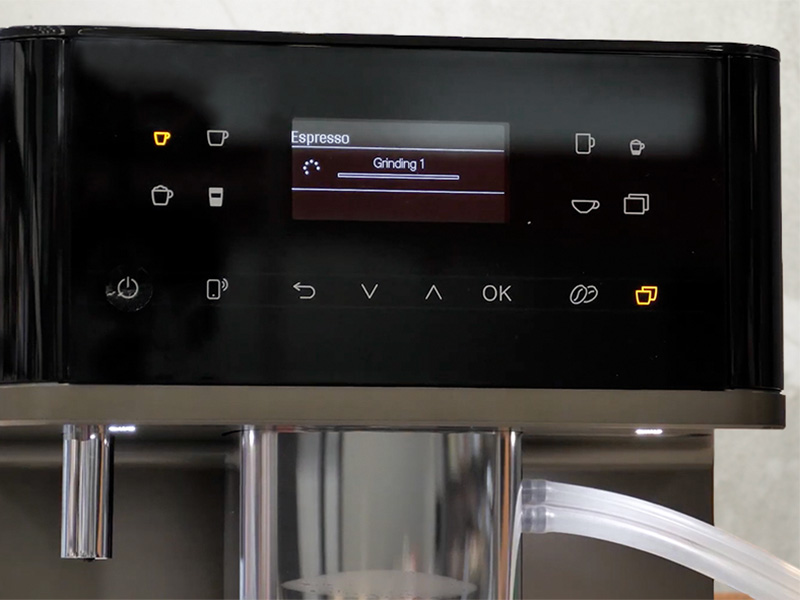
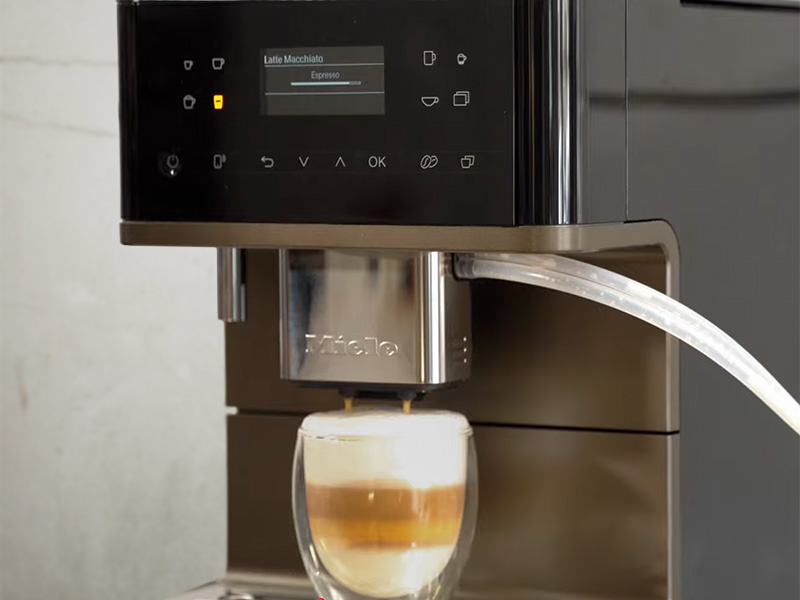
With the touch of a button (the lit-up two-cup button on the bottom right of this photo), you can make two of any of the specialty drinks at once. Ideal for households that constantly need multiple lattes in the morning.
2. 12 Coffee Recipes and 6 Tea Settings
Almost all of the coffee favorites are pre-programmed into the machine, plus the option for 6 different styles of tea with different temperatures and timings. You can choose from:
Coffee:
- Ristretto
- Espresso
- Coffee
- Long coffee
- Espresso macchiato
- Café au Lait
- Latte Macchiato
- Cappuccino
- Cappuccino Italiano
- Café Latte
- Flat white
- Coffee pot
Tea:
- Black tea
- Fruit tea
- Herbal tea
- Green tea
- White tea
- Japanese tea
Every coffee (except the ristretto and coffee pot) is available as a double shot.
3. Improved Milk System
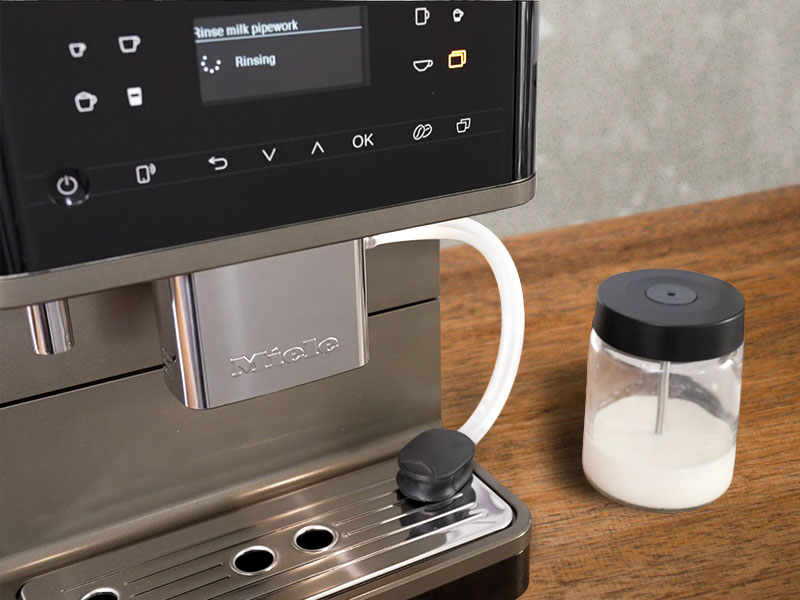
The milk carafe and two-tube milk system deliver better quality milk foam for both cappuccino and flat white style drinks than older models. The new system is also easier to clean as the two-tube design can be flushed out after every drink.
4. Superb Customization
Every coffee can have from 0.6oz (20ml) to 10oz (295ml) of liquid added, divided between the coffee and milk (where appropriate). This allows for everything from fantastic, concentrated ristretto shots, up to large cups of silky latte.
You can select the amount of coffee, the brewing temperature, and the pre-infusion time for each drink. Those with milk can be adjusted for hot milk and foam volumes to get the ideal ratio.
For the tea options, you can customize water temperature and brewing times. Though we’re not home tea experts, so whilst we thought the settings worked well in our tests, tea nerds might not agree.
5. Eight User Profiles
Everyone gets their own custom coffees with the ability to create up to 8 user profiles. Each profile can save its own coffee and tea preferences for each drink so everyone gets perfect coffee, every time. Though I don’t know anyone who really needs eight profiles.
6. Five Modes for Optimized Brewing
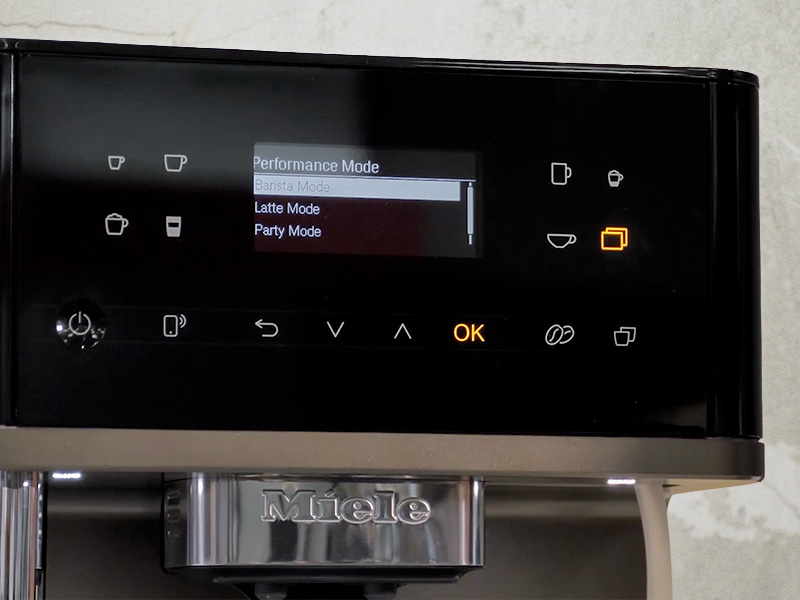
You can flick between 5 different (strangely named) settings on the CM 6360 to keep your machine at optimal performance for your needs. This makes it faster when you go to use it. Your options are:
- Eco mode saves power and only heats up when needed.
- Barista mode keeps the machine at the correct temperature for brewing black coffee and espresso.
- Latte mode keeps the machine heated ready to dispense milk first for those coffees that require it.
- Party mode is for when you need to make lots of coffees quickly.
- Expert mode is for adjusting coffee volumes on the fly rather than through the customization menu.

How Easy to Use is the Miele CM 6360?
It’s pretty easy, but not as easy as the competition.
Miele has decided to stick with the combination of buttons and a small display rather than going full touchscreen. There are benefits to this, like if you want two espressos, you touch the “two drinks” mode button, then the smallest cup one, and out it comes. So far, so simple.
The minimalist buttons are far prettier than the color icons used on Philips and DeLonghi machines. But they also make the milk-based drinks less obvious. It’s not immediately clear that there’s a dedicated button for espresso, coffee, cappuccino, espresso macchiato, and latte macchiato. I asked my 93-year-old Grandad to try make a cappuccino by himself, and he was baffled.
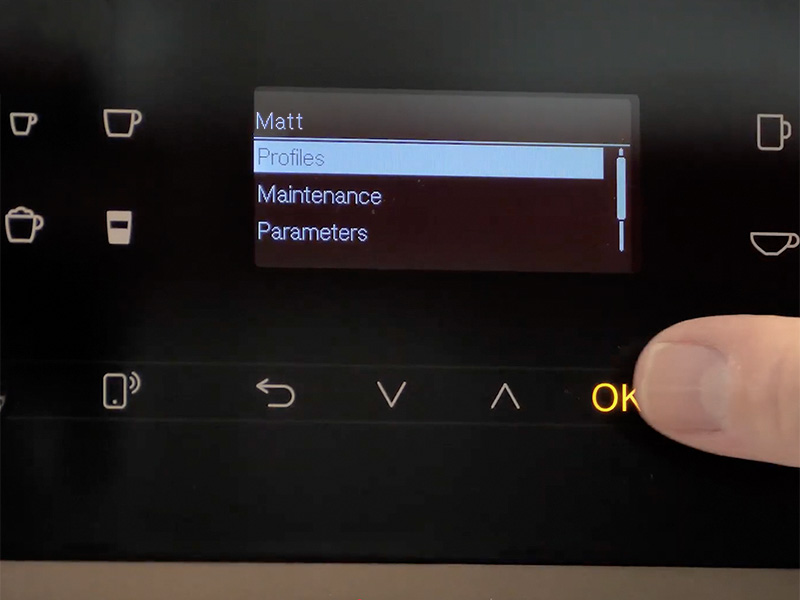
The other drinks are accessed by touching the button with 2 rectangles to get you into the menu. This is also where you can adjust all your coffee and tea settings under “parameters”, choose some automated cleaning, and set up a new profile.
So nothing is necessarily difficult. It’s just not as intuitive as we’d like. And certainly harder than Jura machines at the same price point.
💡 Note: When setting up the machine, it will ask you early on if you want to connect it to your WiFi; this is worth doing. But skip initially, finish setting up the machine (with your water hardness and so on), then go back and set it up using the Miele App.
We tried to connect it in the app first, and ended up in a loop of the app asking us to set up the machine first, and the machine telling us to set up the app. Hopefully, they’ll fix this glitch.
Our Miele CM 6360 Settings
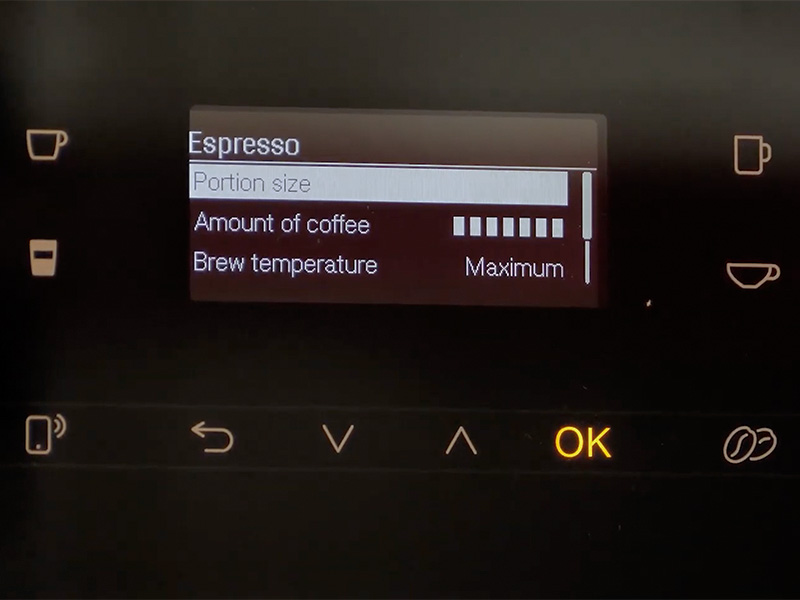
After a few coffees, we landed on the 2nd finest grinder setting, temperature set to high, max amount of coffee, 1oz coffee volume for our espressos. This was using our medium roasted beans – your settings might be a little different.
We found the factory standard settings for coffee worked quite nicely. So if you have zero desire to start playing around, you’ll still be happy. But the long coffee option only really worked when the “double shot” button was pushed first. It was too weak otherwise.
Double Shot Option
You can easily get a “double shot” by pressing the two-bean button on the front, which will light up, then selecting your coffee. It works for all coffees except ristretto and coffee pot.
It works by grinding twice as much coffee for the same volume of water. This threw us at first, as it’s not a “double drink” like most people think of it. You don’t get a double espresso as in 2 shots in one cup, instead, a “double shot” of espresso still gives you a 1oz drink but stops halfway and grinds another 15g of coffee.
This creates very strong and aromatic drinks which, on shorter coffees, is like drinking rocket fuel. But it’s a very nice feature for adding more oomph to a latte or cappuccino, for example.
If you want an actual double espresso, we’d just hit the 2x button instead.
Miele At Home App
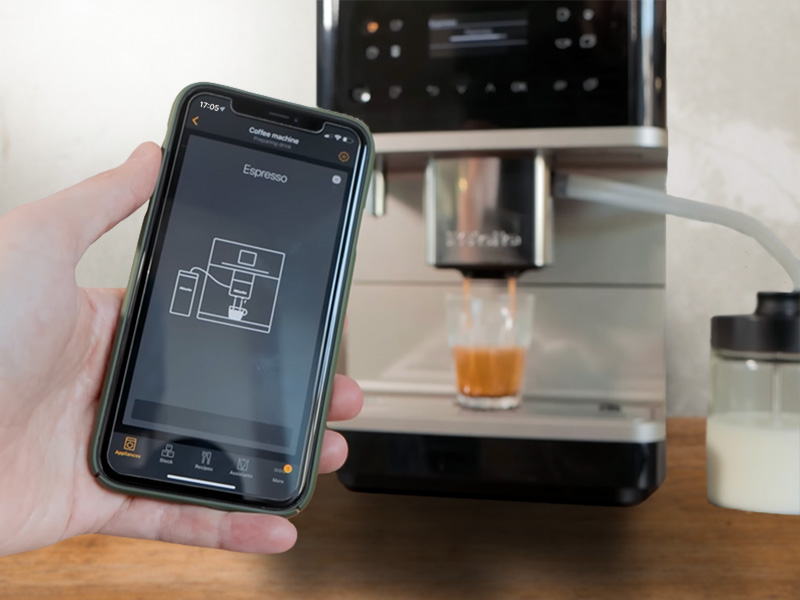
Miele wants you to connect all your appliances to their app. Which is fine, I love an app. Once connected, you can order a coffee to the machine from your phone, which sounds nice.
The downside is you need to hit the button on the front first to tell the machine you’re doing this, then order your coffee through the app. And you need to do this for each individual coffee you order.
This does make sense, since you need to put the cup under there anyway, and then replace the cup before ordering a second one. But if you’re standing there anyway, you could just use the buttons.
Which leads to the obvious question: can it make your coffee while you’re still in bed, ready for when you walk into the kitchen?
Yes… with a slight hacky workaround.
The CM 6360 has an auto-off timer, which you’ll need to set to the maximum (9 hours), put your cup under the spout, and press the app button on the machine before going to bed. If you want a milk-based drink, then the container will have to sit out all night, which isn’t ideal. But you can get a black coffee made while still in bed, then cruise down and get it.

Grounds or Whole Beans?
Using fresh roasted whole beans makes better tasting coffee, and is easier.
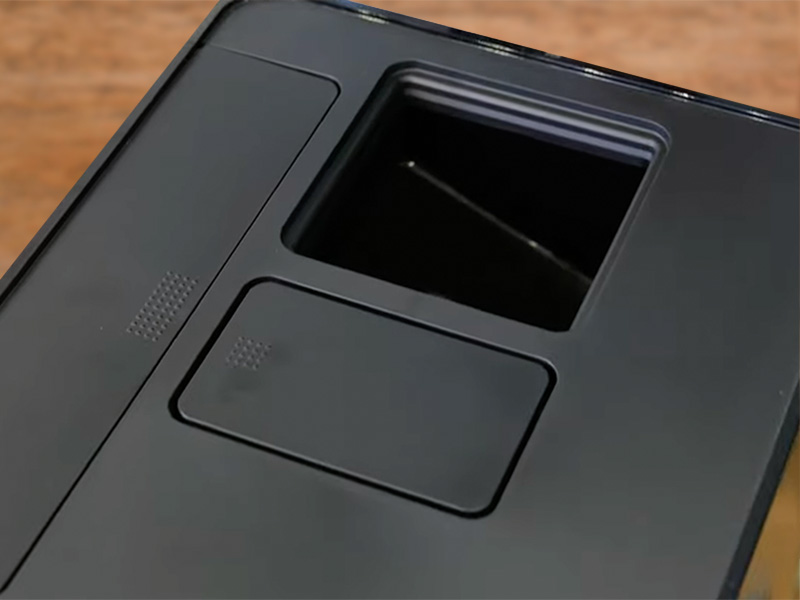
The CM 6360 bean hopper fits around 10.5oz of whole beans, and the stainless steel conical burr grinder has 5 settings for getting the best-tasting coffee from them. Freshly grinding is always the best method in terms of flavor quality. You’ll notice a huge upgrade in flavor with a bean-to-cup machine over a pod coffee maker or using pre-ground coffee.
Having 5 grinder settings is quite low for a high-end espresso machine like this. We found that the 2nd finest setting worked perfectly for us. This also gives a little bit of wiggle room to go coarser if you use darker roast beans.
There is also a chute for pre-ground coffee, though it can only do one shot of coffee at a time. So no 2x or double shot options. For most people, this is only used for the occasional decaf coffee or maybe a flavored coffee. Flavored coffee beans have sugars on them, which damage coffee grinders. Only use pre-ground if you like a flavored coffee.

Design & Build Quality Review
The Looks
The biggest selling point of the CM 6360 is that it looks fantastic.
There are 3 color options – two black and one white – and they’re all amazing. Minimalist, clean lines, very modern, and luxurious. It’s probably the best looking super automatic machine you can buy right now (though the Gaggia Accademia is also a strong contender).
But it’s walking a tightrope between looks and functionality:
Having the icons makes it a little easier to use for some people. But the minimalism doesn’t make it immediately obvious what they do – you definitely need the instruction manual. So you’re compromising on some ease of use for beauty.
The Miele is reasonably compact for this type of machine. It is 9.9 inches wide, 14.1 inches high, and 16.8 inches deep (in milimeters that’s 251 x 359 x 427). I think it looks smaller than it is, maybe due to the flatter look of the machine. But even if you’re short on space, this should fit nicely into your kitchen.
The Build
One of the biggest reasons people would buy a Miele product is the build quality. These machines are made in their factory in Switzerland, and the care with which they are made and finished is very apparent.
It is, as almost all super-automatic machines are, made mostly of plastic. But all the parts feel premium and well-made. If you’re really against plastic in your espresso machine, then you might be interested in our review of the Breville Oracle Jet instead.
Miele offers a 2-year warranty as standard on all their espresso machines. A sign of confidence in that famed build quality. If you buy direct from Miele, then you can pay for an additional 3 years warranty, making a total of 5. This is nearly $500 extra, though, so we’re not convinced it’s worth it.
We’ve heard some mixed reports about the quality of customer service from Miele. As we’ve never had an issue with their products, we’ve not had to contact them ourselves. But is definitely worth keeping in mind.

How Good is the Coffee from the Miele CM 6360?
The combination of a large dose, good grinder, and excellent control is a recipe for really good coffee.
There are a couple of things that we love about the Miele CM 6360 that lead to great quality coffee:
1. First, is that the maximum dose is 15g, which allows for richer, more powerful espresso shots.
The KitchenAid KF series also has a 15g max dose, and Jura machines (except the ENA series) have a 16g max dose. It’s no coincidence that all of these machines make great coffee.
2. The second thing is that you don’t need to have all the settings dialed up full to get big flavored shots.
We use the second-finest grind setting and the second-highest temperature to get great coffee from our medium roast beans. Max dose and 1oz output for the espresso (15g in and around 30ml out). This leaves room for hotter water, finer grounds, and smaller volume if you want more powerful espresso shots.
For longer drinks, adding a second dose of coffee halfway through allows you to brew to the maximum volume (10oz) without getting weak, watery, and bitter coffee. It’s genuinely fantastic.
Milk Quality
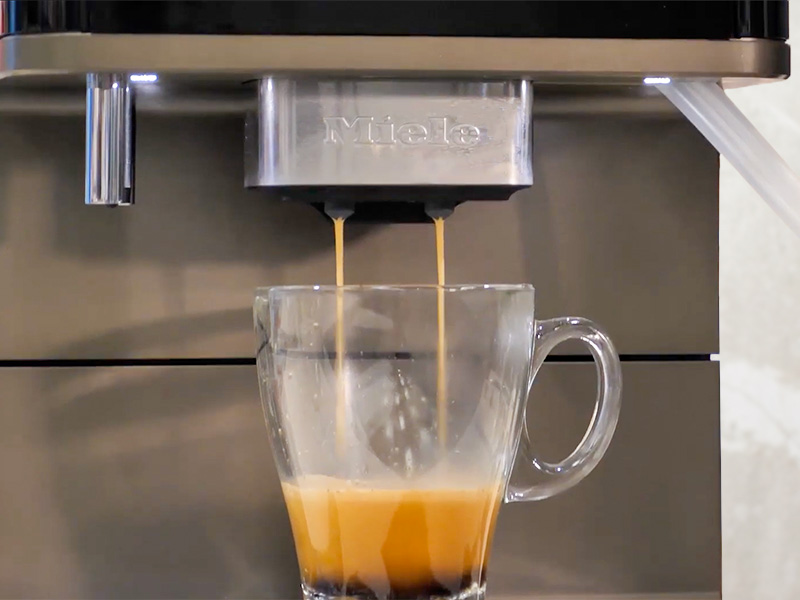
The milk is similarly impressive.
Being able to adjust the hot milk and foam amounts separately is much better than just adjusting the total milk amount. Your coffee will be much closer to exactly how you like it with this level of control.
This means drinks like latte, flat white, and cappuccino can all be made with the automatic milk system and have the correct texture. Very important for fans of these drinks (and not a given on all machines like this).
The Miele also handles plant-based milk very well. As long as you use a milk that’s designed for coffee foam (a “barista” version), then it’s basically indistinguishable from cow’s milk. We tested the CM 6360 with Oatley Barista oat milk and thought it was fantastic.
One thing to note is that all the coffees are quite small by American standards on factory settings. They’re very much geared towards European sizing and preferences.

Ease of Cleaning
Nobody really enjoys cleaning an espresso machine, so the fact that this one is easy to clean can only be a good thing.
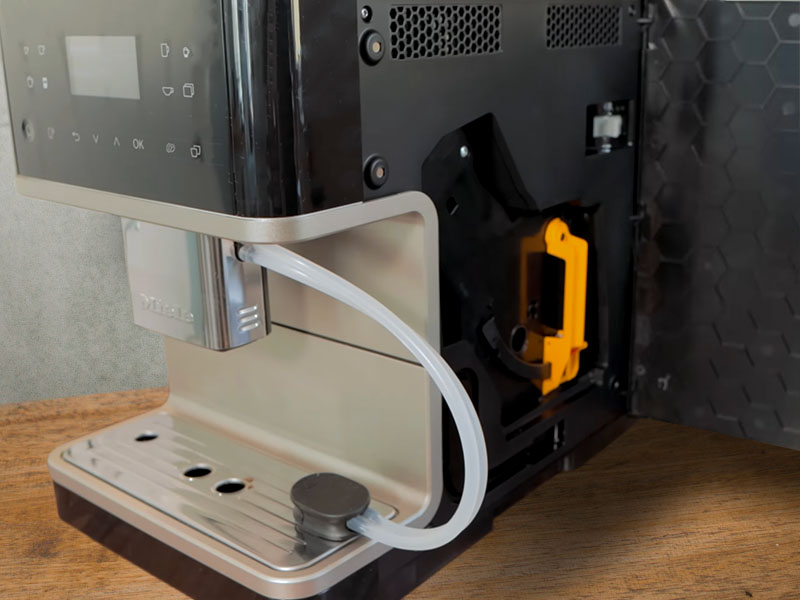
The first big thing that makes the CM 6360 easy to clean is the two-tube milk carafe connector. Riveting stuff, I know. But this means the machine can rinse the tubes through after each use. Less cleaning for you, less chance of something nasty building up in there, and, ultimately, better-tasting coffee.
You have various options in the menu to rinse out the machine as and when needed too.
When it’s full, you’ll have to empty the drip tray. In fact, ideally do it before it’s full, as it’s really hard to carry to the sink without spilling once it’s actually full. You’ll also need to empty the used coffee.
The brew unit (the part that actually makes your coffee) can be removed from the side of the machine for cleaning. It’s quick and easy to do, but you need to let it air dry completely before putting it back in.
Every few months, you’ll need to descale the machine to remove mineral buildup from the inside. It depends on your water hardness as to how often this has to be done, and the screen will tell you when it’s needed. It takes around 25 minutes to do and is quite annoying, but it’s only once every few months, and all automatic espresso machines require it.
One important thing to note is that you’ll want to wipe down the area behind where you put your cup relatively frequently. It gets splashed with water, coffee, and milk while making drinks and it shows up quite clearly when it isn’t clean.

Competition
If you’re looking for a premium espresso machine, then there are a few really impressive options out there for a very similar price as the CM 6360.
Jura E8
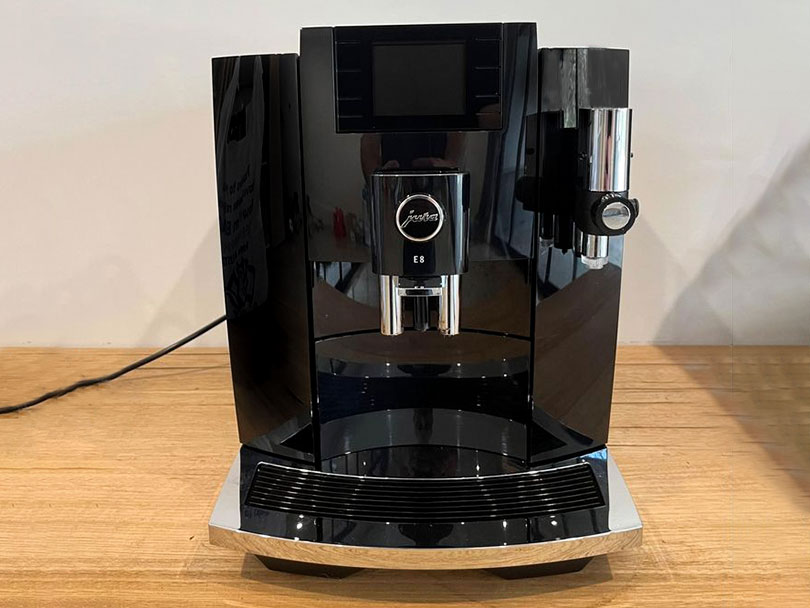
When it comes to balancing functionality, looks, quality, and price, it’s hard to beat the Jura E8. Its RRP is a little less than the Miele CM 6360 ($2800 vs $3000). And we’d say that the Jura’s coffee is a little better than Miele’s (especially with the new P.A.G. 2 grinder), and the milk is about the same. Though there’s not much in it.
That said, the Miele CM 6360 has slightly more drink options than the Jura E8, and I think it’s better looking. It’s also 1 inch narrower, though it’s 0.5 inches taller. So we’re talking marginal differences here – unless you’re a tea fan, as the E8 doesn’t have the range of tea brewing options the Miele does.
We do think the E8’s touchscreen makes it easier to use than the Miele. Though this really comes down to which you’d feel more comfortable using.
Jura machines have higher running costs with the need for branded cleaning tablets and expensive filters to keep them in top condition.
Choosing between the two comes down to what you value more. Do you want a better-looking machine with slightly more options but not quite as good coffee? Or would you rather have the machine that makes better coffee and is slightly easier to use?
We’d probably edge towards the Jura E8 as coffee quality is always our guiding star. But there are no wrong answers between these two machines.
➡️ Need more info? Check out our full Jura E8 review
Breville Oracle Touch

The Breville Oracle Touch is a very different type of automatic espresso machine, as it requires some input from you. Though it can still produce your coffee for you without any skill needed.
You’ll have to move the portafilter from the grinder into the brewing position, and put the milk into a jug and under the steam wand. But the machine does the rest. And it does the rest insanely well.
You can make any drink you can imagine with this machine, as you have so much control over grind, dose, extraction, temperature – the works. But it does take more effort and more knowledge to really get the best out of.
Once you nail your technique, the coffee quality is as good as your barista can do. The milk quality is as good as your barista can do. But is it worth the extra fuss to you to get it?
Looks-wise, it’s also a very different animal from the CM 6360. It’s all glittering stainless steel with no plastic in sight, with a touchscreen to make it easier to use. It’s also $200 cheaper at RRP ($2800).
If you’re thinking about the Miele, you’re probably not considering an espresso machine like this. However, if really getting into coffee is in your future, the Breville is 100% the machine for you. Let it do the work while you learn and then slowly take over.
➡️ Read next: Our in-depth Breville Oracle Touch review

Final Thoughts
This Miele CM 6360 review comes down to your priorities.
If you want a beautifully designed espresso machine that feels premium, is reliable, and makes very good coffee with minimal effort, the CM 6360 delivers. Miele might be a niche name in the coffee space (outside of Europe anyway), but its reputation for build quality is well earned, and that shows in the day-to-day use of this machine.
That’s probably enough for most people to buy one and admire it’s understated luxury in their kitchen.
But a few things to note – it isn’t quite as easy to use as the Jura E8, nor is the coffee quite as good (marginal). Whilst we would pick the E8, if you think the Miele will look nicer on your counter, that alone is a good enough reason to choose it.
The verdict? If you love the looks and are happy with the price, buy the Miele CM 6360 – it’s an excellent espresso machine and an easy recommendation from us.

You Might Also Like
-

Best Philips Espresso Machine: We Tested the 3300, 4400 vs 5500
Confused by the 3300, 4400, and 5500? We tested all 3 to show the real differences and help you choose the best Philips espresso machine
-
Philips 5500 Review: Great For Beginners – Or Overpriced?
After weeks of testing, read our honest Philips 5500 review. In short, it’s easy to use with 19 drink options – but it’s not worth full price