
When KitchenAid launched their first set of super automatic espresso machines, we were legit surprised by the coffee quality and thoughtfulness of some of the features. Now they’ve released a trio of smaller, cheaper options that, on paper, offer similar benefits at a friendlier price. But what do you sacrifice to save some money and space? After 200 coffees made, that’s what we’re chatting about in this KitchenAid KF3 review.

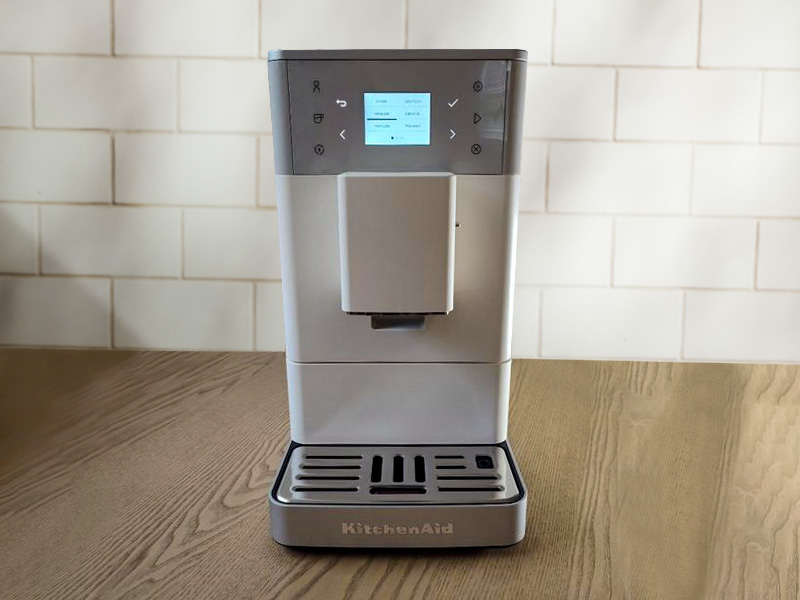
At just shy of $1000, the KitchenAid KF3 is impressive in a few ways. You get a large dose, quality espresso, different milk textures, and a sleek, slim machine that will fit even the tiniest apartment. What you’re missing is removable bean hoppers (our favorite feature of the bigger KitchenAid machines) and drink customization options, plus it’s made of lighter, flimsier materials.
Overall, the KF3 is a great option for households with lots of different coffee lovers – espresso, flat white, cappuccino, and iced latte drinkers will all be happy with this automatic machine. Everything is done well… even if nothing is exceptional.
We enjoyed spending a month testing out the KitchenAid KF3; there’s a deceptively large amount going on in this very simple-looking package. Lots of good and some bad:
This article may contain affiliate/ compensated links. As an Amazon Associate, we earn from qualifying purchases at no additional cost to you. For more information please see our disclaimer here.

At a Glance: KitchenAid KF3 Review
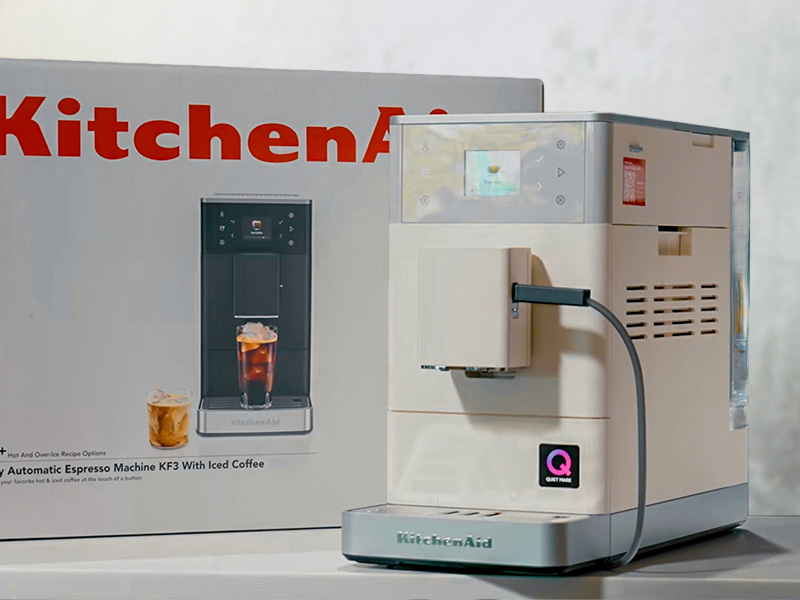
Verdict: On the surface, the KF3 looks like incredible value compared to the more expensive KitchenAid models. Over ice drinks, lots of options, really good coffee and milk foam, and a 15g dose. All in a svelte, lightweight body.
But there are downsides: It’s smaller and lighter, using more plastic and less metal in the construction. You don’t get the swappable bean hoppers that are such a good feature of the KF6, 7, and 8. You also get fewer grind settings, which can be the difference between decent and great coffee depending on your beans.
Bottom line: For many people, the KF3 will be a perfect espresso machine offering all the drinks you want with excellent milk, good espresso, and a small footprint. For others, the loss of some features and quality materials isn’t worth the money/space savings.

Pros
- Very good espresso
- Automated milk adapts to the drink
- Over ice drink options
- Looks fantastic
- Very compact
- Very easy to use

Cons
- Not many grind settings
- Lots of plastic
- Hard to access water tank
- No swappable bean hoppers

Our Ratings

Who It’s For (And Who It’s Not!)
✅ Buy the KitchenAid KF3 if:
- You need a compact espresso machine – it’s only 7.7 inches wide (19.5cm), the most important dimension for those of us short on space. It also fits nicely under cabinets at 14.2 inches tall (36cm).
- You like a variety of milk drinks. Getting the correct milk texture for flat white, cappuccino, and latte is very rare on a machine at this price – a feature not to be sniffed at.
- You’re an iced coffee lover. The KF3 brews them at a lower temperature to pour over ice, making summer coffee vibes possible at the push of a button.
- You like rich, full-bodied espresso. A 15g dose allows you to pull bigger, fuller espresso shots. Plus, you can also control the flow rate, giving more ways to make bold coffee.
❌ Skip it if:
- You’re looking for espresso precision. With only 5 grind settings, there’s very little room to make fine adjustments where it matters most.
- You love to switch coffee beans. We love the swappable hoppers of the premium KitchenAid machines; sadly, that feature has been dropped for the KF3.
- You love a huge coffee. The KF3 caps the maximum size of each drink at a little smaller than you might expect. If you’re a fan of 10oz+ milky coffee, then skip it.

Key Features
1. 11 Coffee Options
KitchenAid’s marketing team will tell you it’s 15+, but that includes doubles, hot water, and milk foam. The actual coffee options you get are:
- Espresso
- Espresso Lungo
- Coffee
- Americano
- Macchiato
- Cappuccino
- Flat White
- Caffè Latte
- Latte Macchiato
- Iced espresso
- Iced coffee
2. Adapting Automated Milk
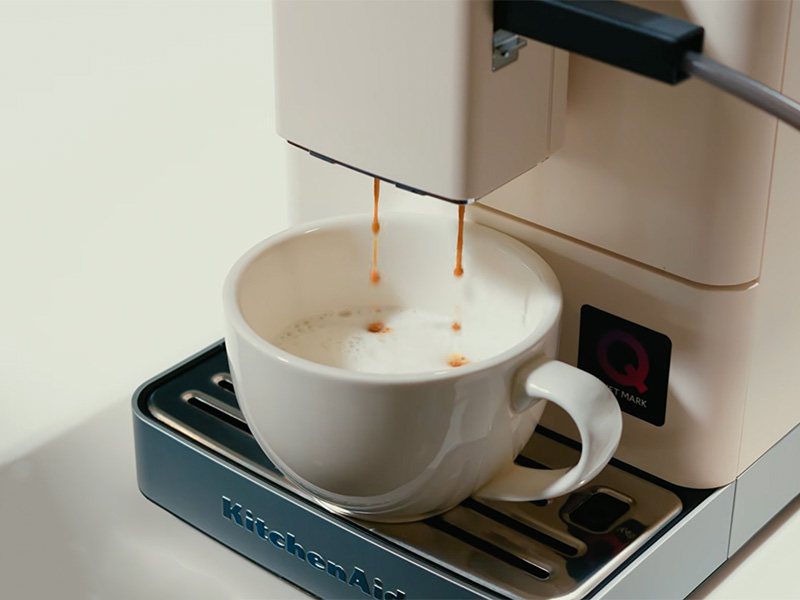
Rather than a “one texture fits all” or adjustable dial, the KF3 automatically tailors the milk texture to the drink. It’s depressingly rare for an espresso machine under $1000 to adjust between stiffer foam for cappuccino and latte macchiatos, then a silkier texture for creamy flat whites.
3. Iced Coffee and Iced Espresso
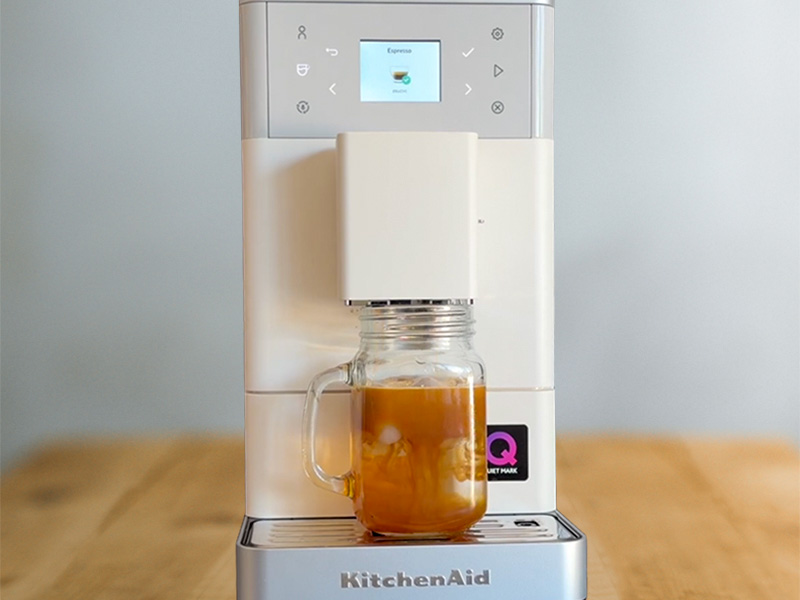
It’s become normal to expect some form of “iced” coffee options on super-automatic espresso machines – what varies is the quality. The KF3 brews the coffee at a lower temperature, roughly 160°F rather than 190°F, which, when poured over ice, produces a perfectly chilled drink.
The iced espresso is a great building block for many milky iced coffees and is a fantastic feature for anyone who enjoys them. But it wouldn’t be my top choice if you drink your iced espresso black.
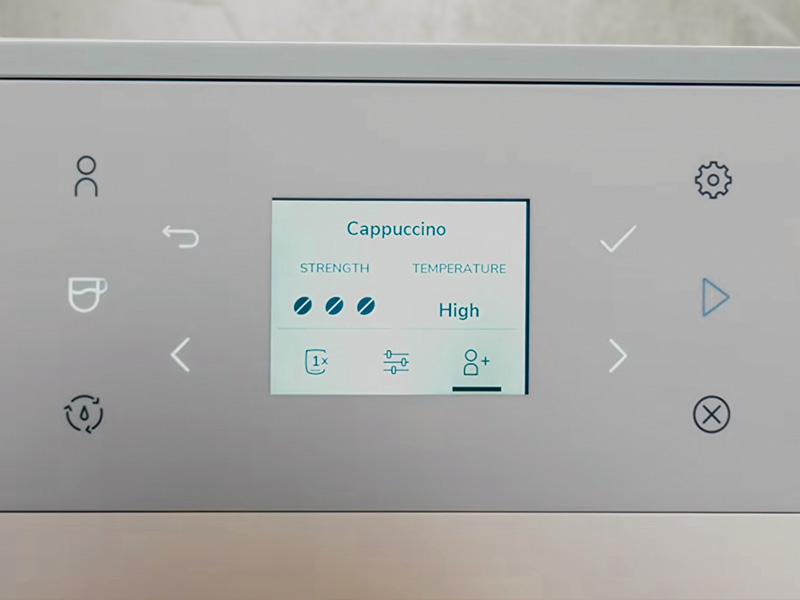
4. Up to 15g Dose (3 Strength Settings)
If you want deep, rich espresso shots (who doesn’t?!), a large dose is crucial. Many cheaper espresso machines only allow 9g, maybe 12g if you’re lucky. So the little bit extra from the KF3, extending to a 15g max dose, really makes a difference.
You get 3 strength choices between 7 and 15g, with the medium strength falling around 11g.
5. Two Drinks at a Time
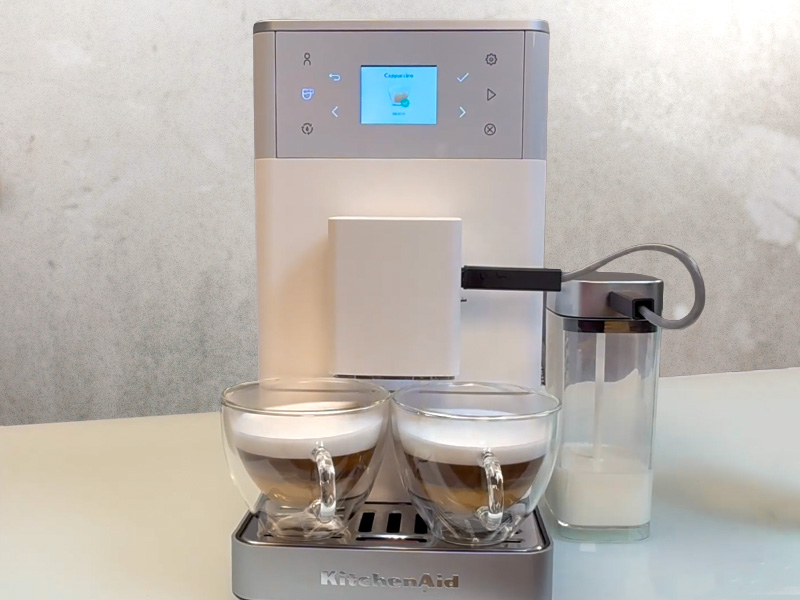
With two coffee spouts and two milk spouts, you can brew two of almost any drink at the same time. It runs 2 distinct brewing cycles, so you don’t end up with un coffee. This is a brilliant feature for couples or larger households who want multiple coffees in a hurry.
6. Flow Rate Settings
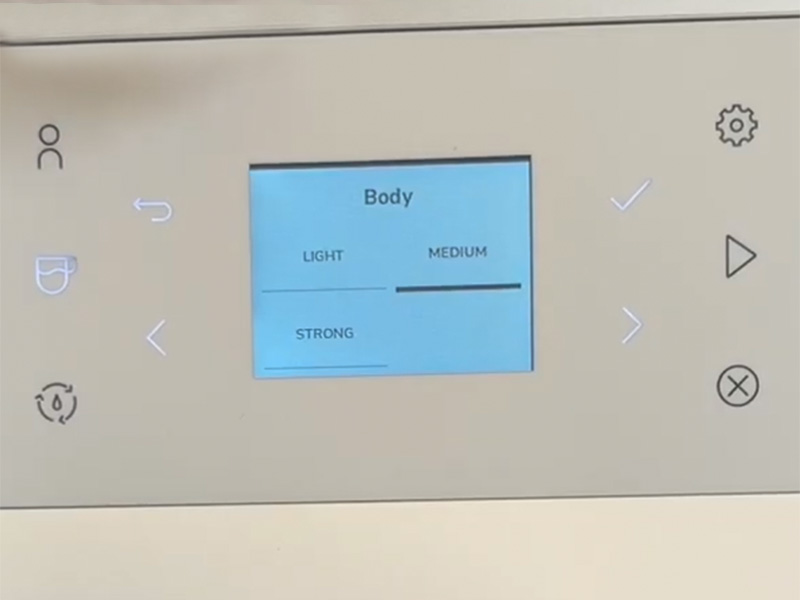
The “Body” settings actually control the flow rate, which is just a fancy way of saying how quickly the water flows through the coffee puck. This gives you an additional layer of control for fine-tuning your ideal espresso flavor. Whether that’s a slower flow rate for a bolder flavor or a faster flow rate for a more subtle taste.
7. 4 User Profiles
You can save your personal settings for each coffee to one of four user profiles. Each person can have their own personal recipe for each drink saved to the KF3, so you don’t have to readjust the settings every day. Or, in my case, forget to change all my settings back and end up getting a devastatingly weak coffee after my mother-in-law visits.

Is the KitchenAid KF3 easy to use?
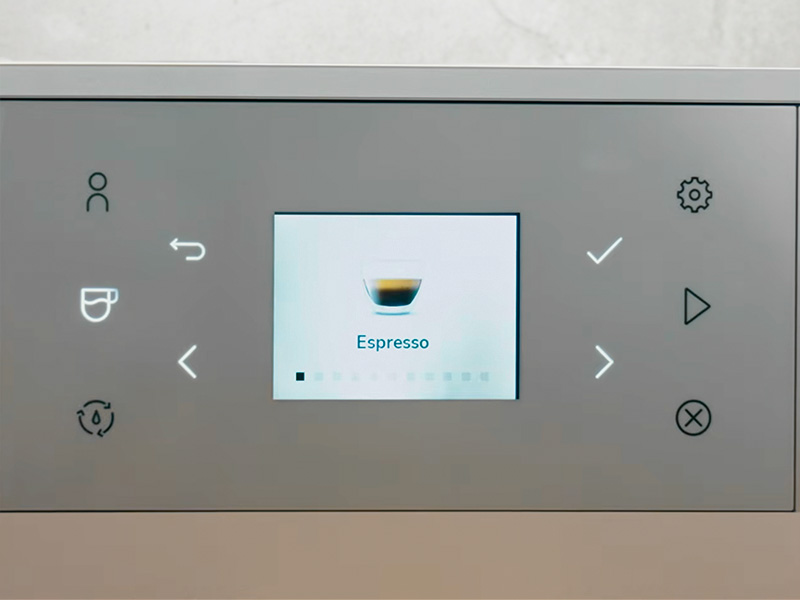
The combination of the small screen and soft-touch buttons makes the KF3 very easy to use, even if you’re a total beginner to automatic espresso machines.
Straight out of the box, the KF3’s screen makes initial setup very straightforward, with everything you need to do clearly explained. Which is great, but a pretty low bar to clear, given that the whole point of buying a bean-to-cup espresso machine is to make things easy.
When it comes to making coffee, the soft-touch buttons allow you to choose the menu, scroll, and adjust on the screen – it all feels very intuitive. Unless you’ve been living in a cave for the past 10 years, all the icons are easy to follow: the person button to choose a profile, the cup icon to see the coffee menu, the water drop with arrows for cleaning, and the universal cog for settings.
You don’t get many customization options with the KF3. So, after selecting your drink, you’ll always see the options to adjust the strength, temperature, and whether you want one or two drinks. All very easy, very obvious.
If you want to make more changes, the little crossfader icon opens another menu to change coffee (and milk) volume and the drink’s body. Adjusting the length of your drinks is something you’ll probably want to do because the default coffee sizes are massive and the ratios are far too milky for us. This menu could be slightly more obvious, but that’s me really trying to find faults.
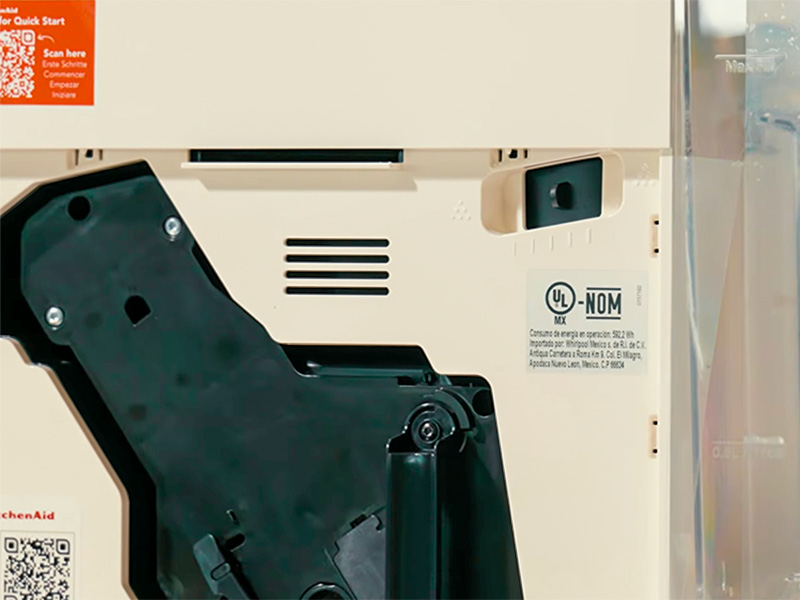
Adjusting the grinder is done by moving the lever inside the brew unit panel on the right-hand side; only do this while the grinder is running. It’s not the most obvious or easiest, but you’ll almost certainly need it on the finest grind setting permanently anyway.
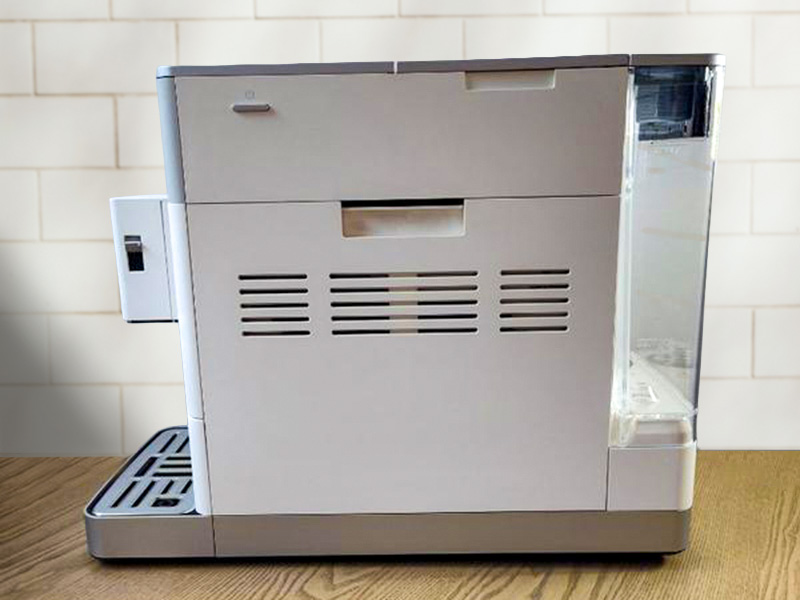
My biggest day-to-day annoyance is that the water tank is only accessible from the back. Yes, there are little wheels to move the machine out and get to it, and it makes the KF3 a couple of inches thinner, but it’s still annoying to refill.

How good is the Espresso?
For a super automatic at this price, it’s really good; it won’t blow you away, though.
We’ve tested a heck of a lot of super-automatic machines at this point, and the two biggest factors that determine the end espresso quality are usually the dose size and grinder quality. Sure, other features matter, but these are the things that move the needle most.
Like the other KitchenAid super-automatics, the KF3 has a maximum 15g dose, which we like – it allows for fuller-bodied espresso and more chance of extracting the more delicate notes from your chosen beans.
But the grinder has only 5 settings, which isn’t ideal. Fewer settings usually mean pretty big jumps between them, and a lower chance you’ll get the grind right for your beans. We stuck with the finest setting – anything else just resulted in under-extracted, sour shots.
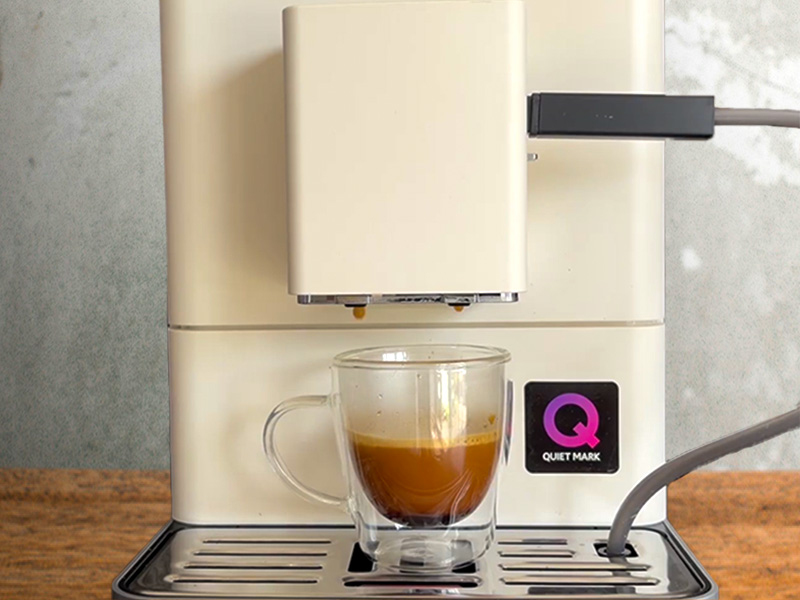
Once set up, we consistently got good espresso shots from the KF3. Rich, full-bodied, nice flavor, and pretty enjoyable by themselves. For the price of the machine, they were slightly above expectations in quality.
This was using medium-dark roasted espresso blend beans. We wouldn’t recommend anything lighter-roasted, as I don’t think it’s capable of producing a decent shot. It certainly couldn’t come close with the light roast beans we tried; the shot was sour and watery (though that’s true of many espresso machines).
Some good things, though. The double shot is a “true double,” as in two coffee pucks and two brew cycles, not just double the water through one puck. Plus, the 2x option means you can easily make two coffees at once – not common at this price at all.
The “over ice” drinks work OK; we felt they were about on par with those from DeLonghi, who use the same method. To get them cold enough to drink, they melt a lot of ice, which heavily dilutes your coffee. Instead, we prefer using whiskey rocks to chill without diluting. But they’re really only good as a base for milky iced coffees (what most people drink anyway).
Intelligrind
KitchenAid says their Intelligrind system “adapts automatically to every bean type and roast”.
In reality, what it does is adapt to ensure the dose is consistent across different beans and roasts. It doesn’t do anything to adapt to different brewing conditions that might be needed to get the best out of those different beans and roasts.
This isn’t nothing; it’s nice to know you’re getting the full 15g dose (or whichever size you’ve selected), regardless of whether you use medium roast peaberry or very dark roast robusta. But it isn’t adapting based on the flavor of the coffee coming out, just the amount going in.
Our KitchenAid KF3 Settings
This is using a medium-dark roast blend for Espresso:

- Finest grind setting
- Max strength (3 beans)
- Temperature on ‘High’
- Body on ‘Strong’
- 1oz volume
It’s never ideal to need to turn all the settings up to 11 like Spinal Tap to get your best espresso. Maybe if we used a dark roast, we’d be on the medium temperature or the second-finest grind setting. So there’s potentially a little room to adjust depending on your beans’ roast level.

How good is the Milk?
The auto milk system adjusting milk texture is a very impressive feature.
Flat white, cafe latte, and cappuccino all require different milk textures. But many super-automatic espresso machines give you basically the same milk type for all of them. Honestly, so do a lot of baristas these days, but that’s a very personal gripe.
The KF3 automatically adjusts the milk so you get a much stiffer foam for latte macchiato and cappuccino and a silkier, less foamy milk for your flat whites, with a cafe latte sitting nicely in the middle.
Is it the perfect milk texture for each one? Of course it isn’t; that would be astonishing from an automatic machine at this price. But the milk texture is as good as the competition, with more variety than many of them. Color me impressed.
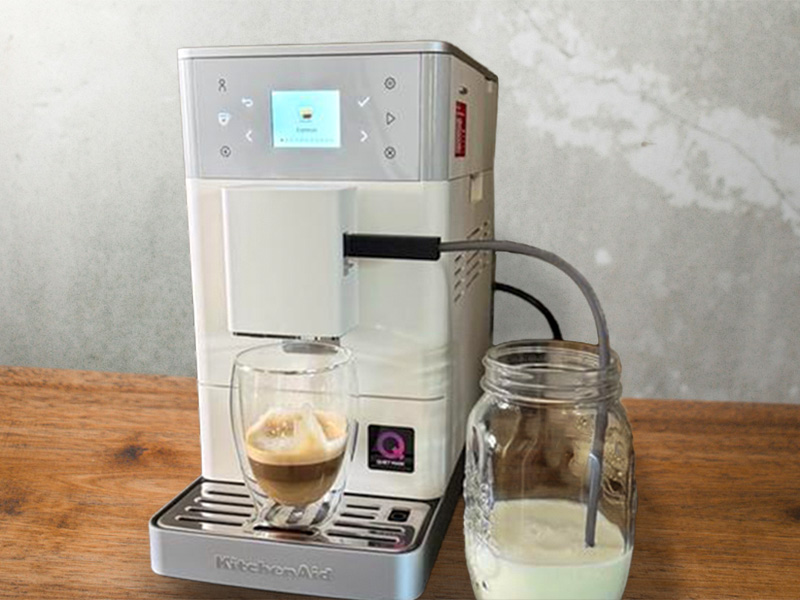
The milk system separates KitchenAid’s compact espresso machines. The KF2 has a manual, beginner-friendly Panarello milk wand and no auto milk. The KF3 and KF4 have the same milk system, but the KF3 comes with just a hose that you can put into any container, whereas the KF4 comes with a dedicated milk jug.

Should you use Pre-Ground Coffee or whole beans?
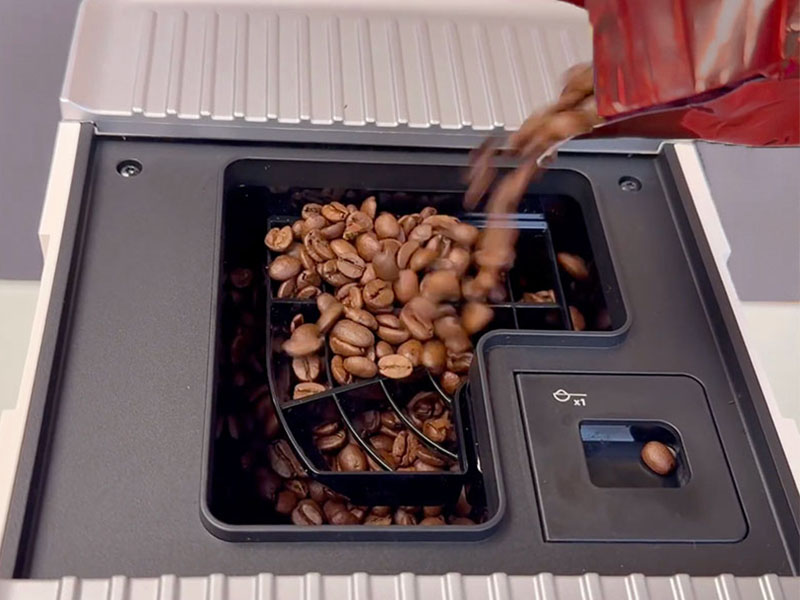
Always use whole beans (ideally fresh), but there is an option for pre-ground if required.
Freshly roasted and ground beans will always produce better-tasting coffee than pre-ground, as they start to go stale around 30 minutes after grinding. Even with the relative limitations of the KF3 grinder, it’s the much better option. We’re sad that the swappable bean hoppers that are such a good feature on the KF6, KF7 & KF8 haven’t appeared here. Being able to quickly swap to decaf in the afternoon or between two favorites depending on mood is brilliant.
You can use up to 15g of pre-ground coffee with a dedicated chute if you need to. In our house, we usually assign this to a late-night decaf or for guests. But also if someone in your house loves flavored coffee, because you shouldn’t ever put flavored beans through your grinder (the sugars can really mess it up).

Design and Build Quality Review
The Looks
It’s sleek, minimalist, and monochrome – like almost everything else in the mid-2020s. A great-looking machine that will fit nicely into most kitchen styles. It comes in two colors: porcelain white and matte black. Hardly the most exciting of options, but if you’re only going to have two colors, then those are probably the two to offer.
The light-up icons and screen combo looks good. Though the screen looks a little lost at the front of the machine. There was obviously a cost choice with the smaller screen, and it would be harsh to say it looks bad. We’re just nitpicking.
We also don’t love how the milk hose looks when attached, slotted into the drip tray. But we’re really being overly fussy at that point.
The Build
One of the reasons that the KF2, KF3 & KF4 are cheaper than the other automatic KitchenAid machines is that they use a lot less stainless steel and a lot more plastic in the construction. Now most super automatic machines are mostly made of plastic these days, so this isn’t a unique knock, but it’s always nice to get some metal construction.
KitchenAid is new-ish to the world of coffee machines, but their record in other kitchen appliances is absolutely stellar. The parts of the KF3 do feel a little flimsy, but no more so than other espresso machines around this price. It’s not like you should be throwing them around anyway.
The main thing is that at 7.7 inches wide and 14.2 inches high, it’s really compact for a super automatic machine. We had no issues with overhead cabinets on our counter. 18.5 inches deep is pretty big for one of these – the water tank on the back adds a good amount. But very few people have issues with counter depth vs. width, so it’s a fair compromise.
The water tank is big, 60 oz (1.8l), and the 8.8 oz bean hopper is plenty big enough too.
It also comes with a 2-year warranty, and KitchenAid promises to keep parts and service available for the next 10 years. Overall, a pretty good deal.

Cleaning and Maintenance Review
The KF3 keeps things very simple and is about as good as you can hope for keeping cleaning tasks to a minimum.
The KF3 doesn’t come with a milk container, which I actually like. We put the hose in a small jug of milk when needed. The hose self-cleans in the drip tray afterwards, and the jug can go in the dishwasher. Much better than some milk containers with their odd shapes that can be tough to get fully clean.
Emptying the drip tray has also been improved by a small lip at the back corner to make it easier to pour out without spilling. It’s such a simple upgrade, but it makes a big difference. You can also access the brew unit to deep clean it as needed. Something the more cleanliness-conscious coffee lover will appreciate.
The cleaning routine for the KitchenAid KF3 looks something like this:
Daily: Rinse milk tube, empty drip tray and spent pucks.
Weekly: Clean out the brew unit and leave to air dry.
Periodic: You’ll need to descale the KF3 every 6-8 weeks depending on your water hardness and water filter. It takes 20 minutes, and the screen walks you through it.

The Competition
Just under $1000 means there’s some stiff competition from more established players.
Gaggia Magenta Prestige
You save a decent amount of money, but sacrifice some features.
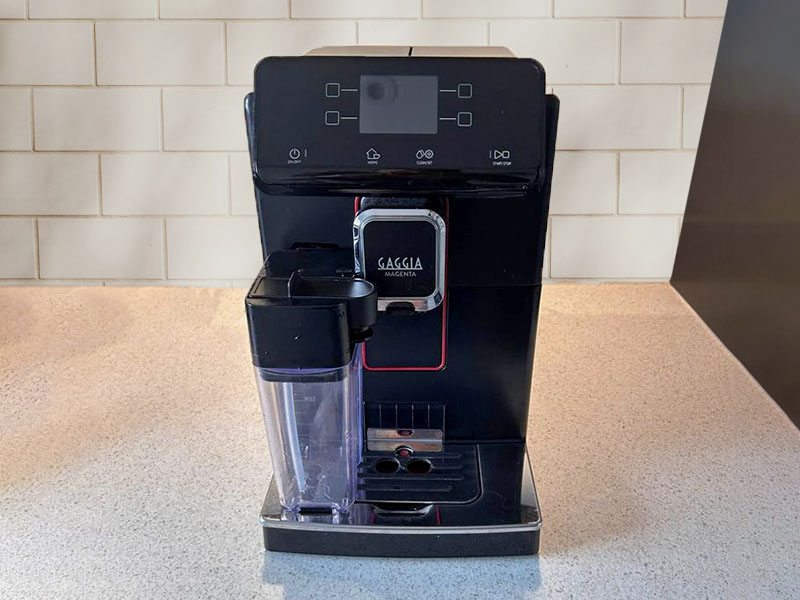
- ☕️ Espresso Quality: 9/10
- 🥛 Milk Quality: 9/10
- 📋 Drinks Options: 8/10
- 💸 Value for Money: 10/10
- 🏆 Overall Rating: 8.5/10
We chose the Magenta Prestige as our Best Super Automatic under $1000. The combination of quality espresso, milk, ease of use, and great features makes it amazing value for money and a brilliant machine for most people.
There are a couple of things that the KitchenAid does better. It has a larger max dose than the Gaggia (15g vs 11.5g), it offers a couple of over-ice drinks, and it customizes the milk to the drink.
The Gaggia grinder is far superior to that of the KitchenAid, and we feel the espresso from the Gaggia is marginally better than what the KF3 can produce.
If you’re big into milk-based drinks, then the KitchenAid’s milk system might be enough to sway you. But it’s $150 more, so you’ve got to really care about getting better texture on your flat white or café latte, as the Magenta Prestige does excellent foam.
 Read next: Our complete Gaggia Magenta Prestige review
De’Longhi Magnifica Duo
You get a heck of a lot more drink options – both hot and cold – for the same price.
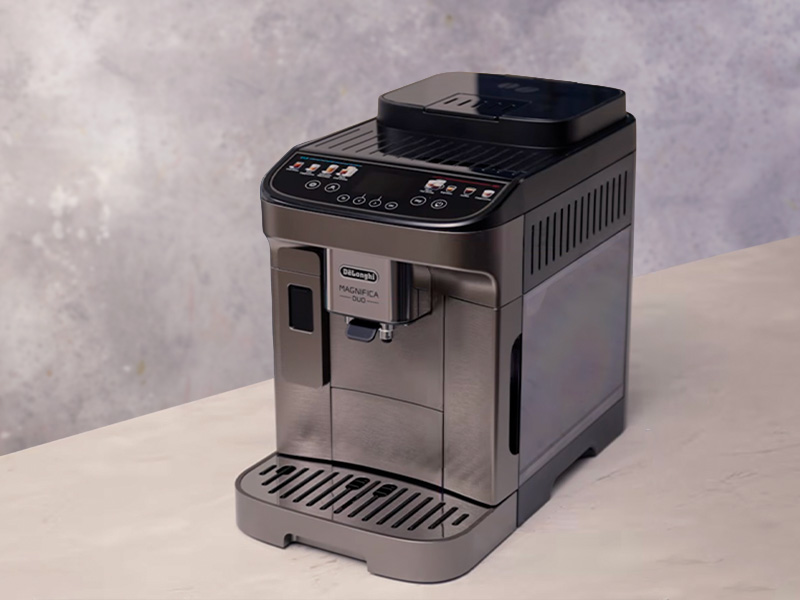
- ☕️ Espresso Quality: 8.5/10
- 🥛 Milk Quality: 8.5/10
- 📋 Drinks Options: 10/10
- 💸 Value for Money: 10/10
- 🏆 Overall Rating: 9/10
If you’re happy with nothing being done quite as well but getting A LOT more for your money, then the Magnifica Duo is the espresso machine for you.
While the espresso isn’t quite as good as the KitchenAid, the milk isn’t quite as good, and the design isn’t quite as good. You do get more drink options with both hot and cold foamed milk.
If you don’t ever drink iced coffee, then there’s no point sacrificing some espresso flavor. But if you, or people in your house do, then the Magnifica Duo could well be the best espresso machine for you at this price.
The Verdict
KitchenAid makes a compelling case for the KF3 to be the best value option in their range.
We found that the KF3 is a great all-rounder for lots of different coffee lovers. It looks great, it’s easy to use, you can make iced drinks, the espresso is good, and the milk foam is both flexible and good for a variety of drinks.
I wouldn’t say it’s outstanding in any one department. But being very good in nearly all makes it a brilliant option for a lot of people. Especially in households where there may be varying opinions on what is most important in an espresso machine.
We’d like more grind settings so we can be more precise with our beans. We’d also like the swappable bean hoppers of the more expensive models. But we’d have to pay $200 and sacrifice a lot more counter space for the bigger KF6 to get both of those things.
At every turn when testing for and writing this KitchenAid KF3 review, we were very impressed. It offers up a real challenge to the more established brands’ options at this price.
Psst… KitchenAid sometimes has pretty nice discounts on its espresso machines.