If you’re a coffee drinker with an (un)healthy coffee shop addiction (or who uses a pod machine), and are trying to figure out which Philips espresso machine to buy, you’re in the right place. The Philips 3300, 4400, and 5500 look almost identical, have the same internal systems, and are often priced close enough that the decision isn’t obvious.
We’ve tested all three machines over several weeks, using the same beans, water, and grinder settings, to find out what actually matters in daily use. Not just what’s listed on the spec sheet.
The one we would buy is the Philips 5500 – it offers the most flexibility and has extra features that put it well above the other 2 options. Especially if you’re an iced coffee fan and can grab one at a discount. Now, we don’t normally favor the top-of-the-range machine, and paying more only makes sense if you’ll actually use the extra features. So it won’t be the best choice for everyone.
In this guide, we’ll break down the real differences between the three Philips models, explain who each machine is best for, and help you choose the one that fits your lifestyle. Without overpaying for features you won’t use. Let’s get to it:
This article may contain affiliate/ compensated links. As an Amazon Associate, we earn from qualifying purchases at no additional cost to you. For more information please see our disclaimer here.
SAVE BIG on coffee gear
It’s the LAST DAY of Amazon’s Big Spring Sale with whopping savings of up to 40% off
We’ve combed through the sale to find the genuinely good deals on espresso machines, grinders, and coffee gadgets (not the fake “discounts” 👀). If you’re thinking about upgrading your setup, this is where to start:
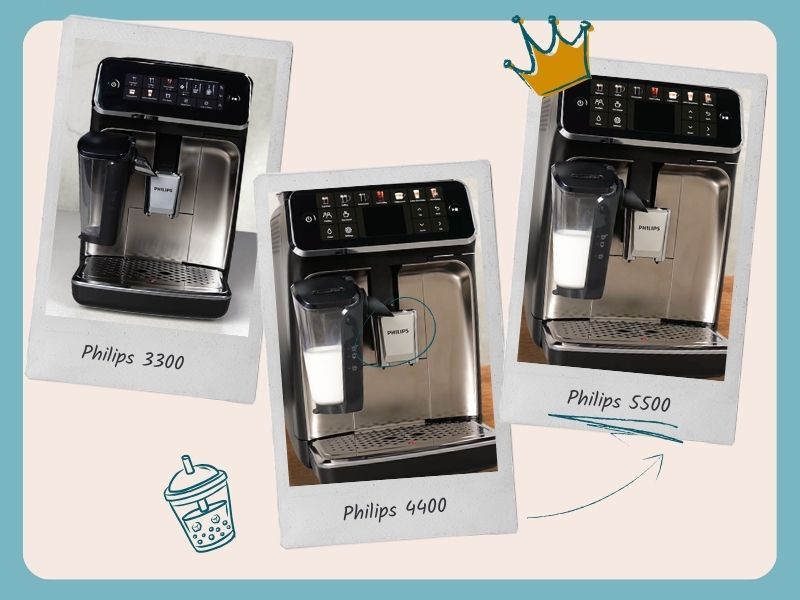

At a Glance: Which Is Best?
The bigger the model number, the more advanced the espresso machine.
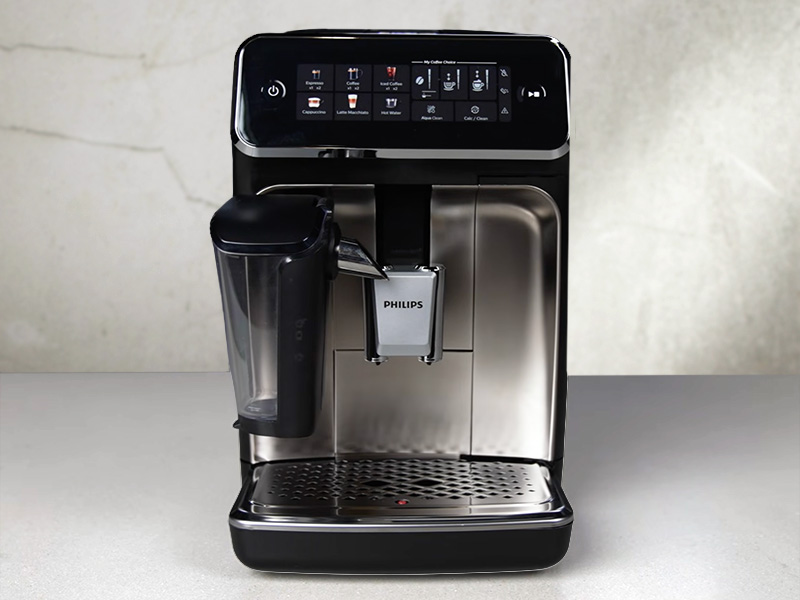
The 3300 is the cheapest option with only 5 coffee options, no user profiles & no display screen.
Coffee Quality: 8.5/10
Milk Quality: 9/10
Ease of Use: 10/10
Value for Money: 8/10
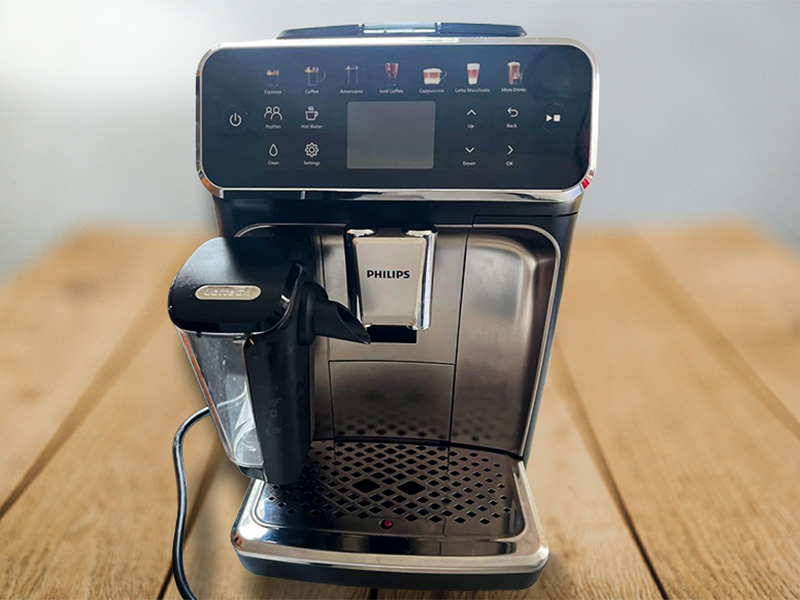
The 4400 has 12 coffee choices, 3 user profiles, and a TFT display, along with soft touch buttons.
Coffee Quality: 8.5/10
Milk Quality: 9/10
Ease of Use: 10/10
Value for Money: 8/10
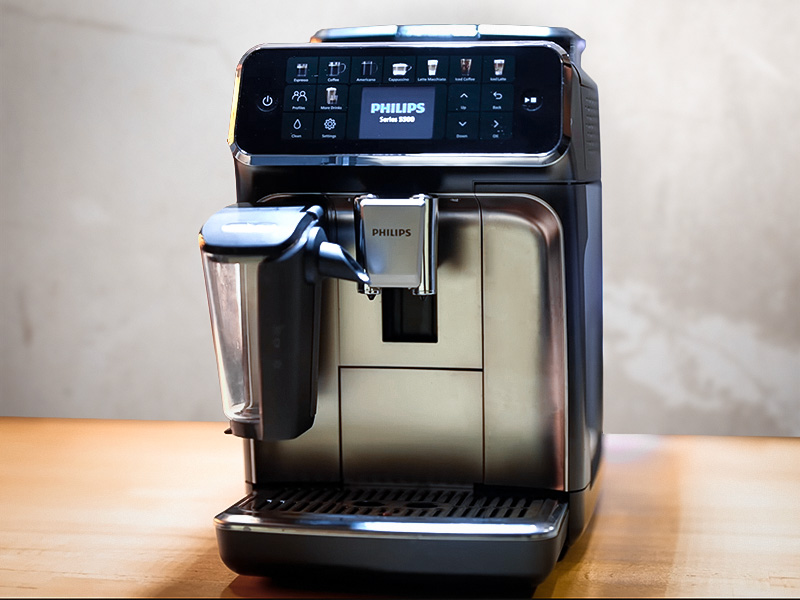
The 5500 has an “Extra Shot” feature, 21 coffee options, and 5 user profiles.
Coffee Quality: 9/10
Milk Quality: 9/10
Ease of Use: 10/10
Value for Money: 8.5/10
🤓 Scores are based on hands-on testing across drink consistency, ease of use, and how much bang for your buck you get based on the RRP for each machine.

Who each machine is for
If there’s one thing that Philips excels at, it’s making espresso machines that are insanely easy to use. So if you’ve never owned an espresso maker before, all 3 are simple to set up, use, and clean. But the 4400 and 5500 have more options and features, making them a stronger choice for most households.
✅ Buy the Philips 3300 if:
- You’re looking to upgrade from a pod machine. The 3300 is a significant step up in quality over Nespresso or Keurig machines.
- Nobody needs to share the machine with you. There aren’t any user profiles to save your settings to – not a problem if nobody else will mess up your coffee settings.
- You don’t need lots of options. If all you drink is black coffee and cappuccino, then there’s no need to pay for a machine that has more built-in drink options.
✅ Buy the Philips 4400 if:
- There are multiple coffee drinkers in your house. Having 2 user profiles, plus a guest one, will make life a lot easier.
- A modern looking machine is important. The addition of the TFT display makes the 4400 a much better looking machine than the 3300.
- Iced espresso is something you need. Getting creative with iced drinks needs iced espresso. A “must have” for anyone who likes to mix up their cold coffees.
✅ Buy the Philips 5500 if:
- You want the best coffee quality. The Extra Shot function makes a massive difference to how good the coffee tastes compared to the other two.
- Iced milk-based drinks are your go-to. Neither of the other two models has iced latte or iced cappuccino as an option.
- You love variety in your coffee. There are 21 options programmed into the 5500, making it ideal for any house that needs a wide variety of options for caffeination.

What are the differences between the 3300, 4400, and 5500?
You can’t tell by looking at the machines (or their price tags), but the Philips 3300, 4400, and 5500 have the same internal brew unit and grinder. This means that the important bit – the bit that actually makes the coffee – is the same across all 3 machines.
Where they differ is in features and convenience. As you move up the range, you’re paying for more drink options, user profiles, and extra functionality. Not a different brewing system.
In the sections below, we’ll break down exactly what you gain (and what you don’t) with each step up, so you can decide whether the extra features are worth paying for based on how you drink coffee.
Coffee Drink Options
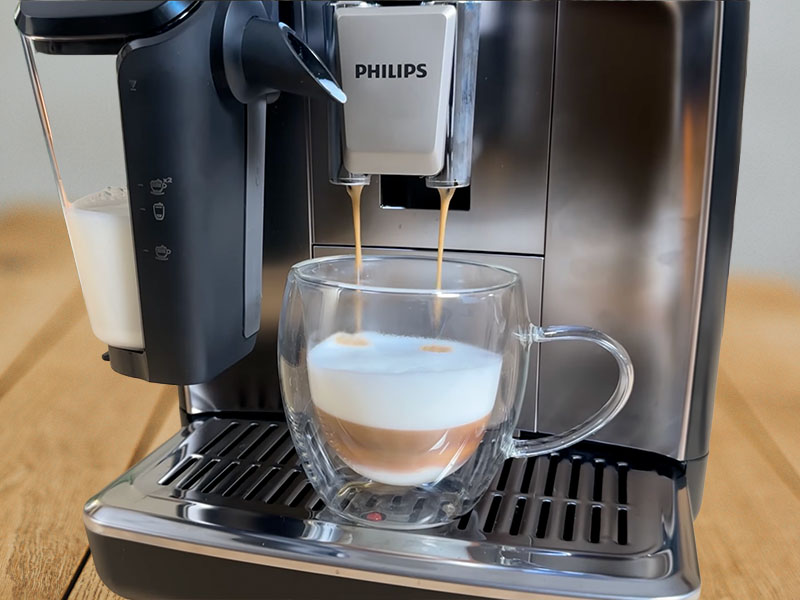
All three machines make good-tasting espresso and cappuccino. The main difference is how many options you get. (To see the differences in coffee quality, jump to our taste test.) With each step up in machine, the options significantly increase. At the touch of a button, the 3300 makes five drinks, the 4400 does twelve, and the 5500 does nineteen.
(The marketing literature says more because it includes just hot water and steamed milk. All super-automatic machine manufacturers do this, but we find it disingenuous.)
💡 Quick tip: If you only drink espresso, cappuccino, or black coffee, the Philips 3300 is enough. If you want lattes or iced espresso, start at the 4400. If you want flat whites or iced milk-based drinks, you’ll need the 5500.
The different drinks choices are:
| 3300 | 4400 | 5500 | |
|---|---|---|---|
| Espresso | ✅ | ✅ | ✅ |
| Americano | ❌ | ✅ | ✅ |
| Caffe latte | ❌ | ✅ | ✅ |
| Cappuccino | ✅ | ✅ | ✅ |
| Latte macchiato | ✅ | ✅ | ✅ |
| Coffee | ✅ | ✅ | ✅ |
| Hot water | ✅ | ✅ | ✅ |
| Warm milk portion | ❌ | ✅ | ✅ |
| Espresso lungo | ❌ | ❌ | ✅ |
| Cafe Crema | ❌ | ✅ | ✅ |
| Flat white | ❌ | ❌ | ✅ |
| Cafe au lait | ❌ | ✅ | ✅ |
| Ristretto | ❌ | ✅ | ✅ |
| Iced coffee | ✅ | ✅ | ✅ |
| Iced Americano | ❌ | ✅ | ✅ |
| Iced espresso | ❌ | ✅ | ✅ |
| Iced cafe crema | ❌ | ❌ | ✅ |
| Iced latte | ❌ | ❌ | ✅ |
| Iced cappuccino | ❌ | ❌ | ✅ |
| Iced cafe au lait | ❌ | ❌ | ✅ |
| Travel mug | ❌ | ❌ | ✅ |
In reality, the best Philips machine for you will depend on whether it actually makes your favorite drink.
- The 3300 really only covers the basics. It also only offers “foam-heavy” milk drinks, so no lattes or flat whites.
- The 4400 covers most of the favorites, including latte. Crucially, the addition of iced espresso is great for those who love getting creative with iced coffee.
- The 5500 has almost everyone’s favorite – you get flat white and a range of iced milk-based drinks. The “travel mug” option allows you to brew a large coffee for the commute, though you’ll struggle to fit a big mug beneath the spout.
🏆 Winner
We think the 5500 is the clear winner here, with the jump in price. Having flat white and the milk-based iced options really sets the 5500 apart from its two little siblings. Often, the addition of more drinks doesn’t add much, but here you’re getting options that you’ll probably want to use.
User Profiles
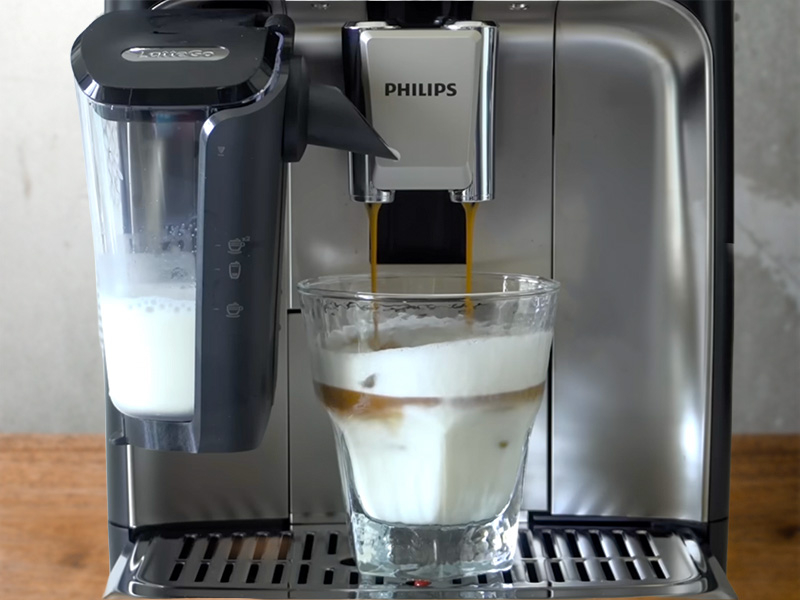
The Philips 3300 doesn’t have any user profiles; all the settings are clearly displayed on the machine, and changing them is pretty easy, so it’s not a huge deal. But if there are multiple people in your house with different preferences, then it’s going to get annoying pretty fast.
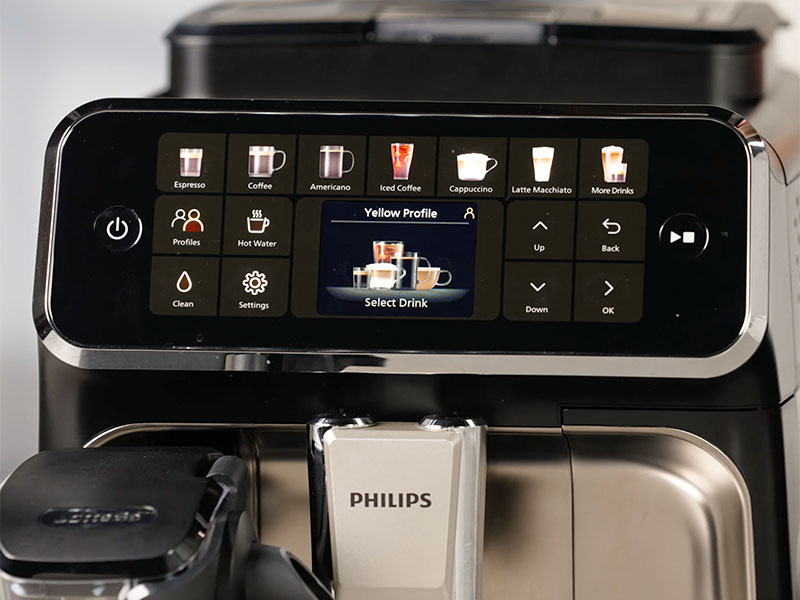
The 4400 has 2 profiles, and the 5500 has 4 user profiles. Plus, they both have a “guest” profile, so you can let people mess around with your machine without ruining your perfectly calibrated coffee. The other profiles are assigned a color, and you scroll through them by pushing the “profiles” button.
🏆 Winner
I’m honestly not sure if you ever need more than 2 profiles on a coffee machine. Not unless you have a household full of people with *really specific* preferences. I certainly wouldn’t be paying an extra couple of hundred dollars just for that. But profiles really help, so the 4400 and 5500 are clearly better options than the 3300 unless it’s just you using the machine.
User Interface
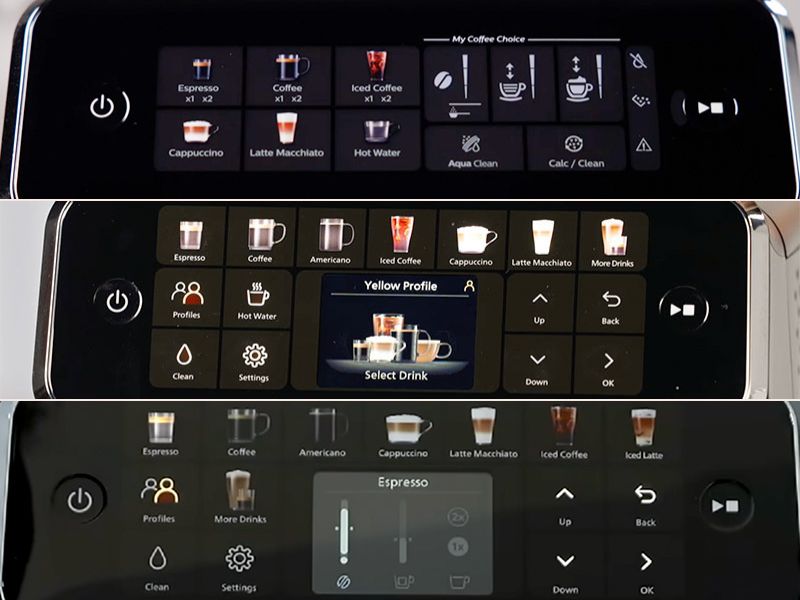
Philips seems to firmly believe in the use of soft-touch buttons over a fully touchscreen coffee machine. For ease of use, I think they’re probably right. As long as you don’t have so many buttons that it becomes overwhelming.
- The 3300 has soft touch buttons and no display
- The 4400 has soft touch buttons and a 3″ TFT display
- The 5500 is the same as the 4400 with (a few different) buttons and a display
Does it make a big difference? Not really.
The 3300 is very simple, so it doesn’t actually need a screen. Both the 4400 and 5500 would have too many buttons to have one for every drink, so the screen helps out.
🏆 Winner
They’re all incredibly easy to use. The screen makes things a little easier when customizing drinks, but it’s marginal. So, for me, this shouldn’t be the factor that decides which Philips machines you should choose.
Price & Value
At full recommended retail price, we honestly don’t think the Philips 3300, 4400, or 5500 offers great value for money. Not compared to the strong alternatives from other brands that offer better performance, flavor, or build quality.
The jump in price between the models is also significant, but as the internal workings of the machine are the same, it’s hard to justify. As a rough guide, the RRPs from Philips directly are:
- Philips 3300 – $900
- Philips 4400 – $1,050
- Philips 5500 – $1,400
However, it’s also fairly common to see the Philips machines with very attractive discounts on them.
When prices drop (in all the usual major sales events, but also just randomly throughout the year), the question of value changes completely. All of them become very attractive options. So if they’re full price when you’re looking, either keep checking back for a sale, or consider an alternative.

A battle of looks (and design)
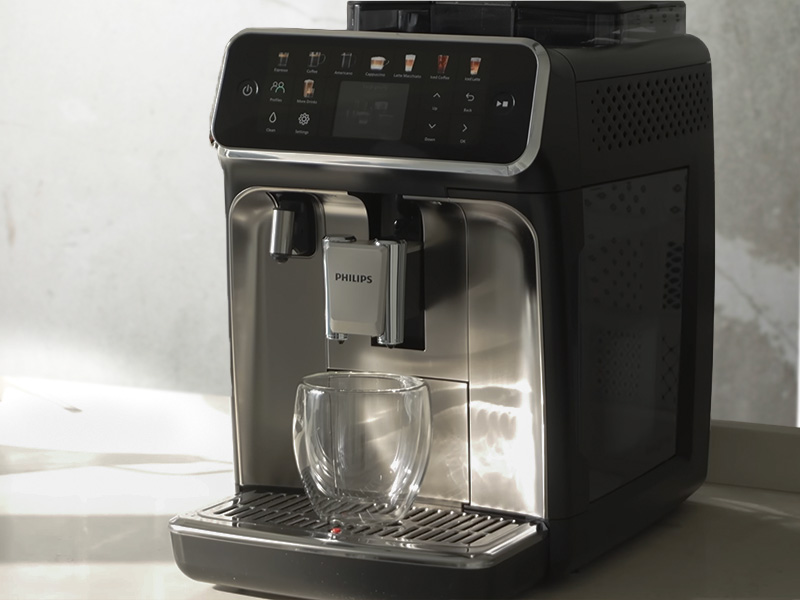
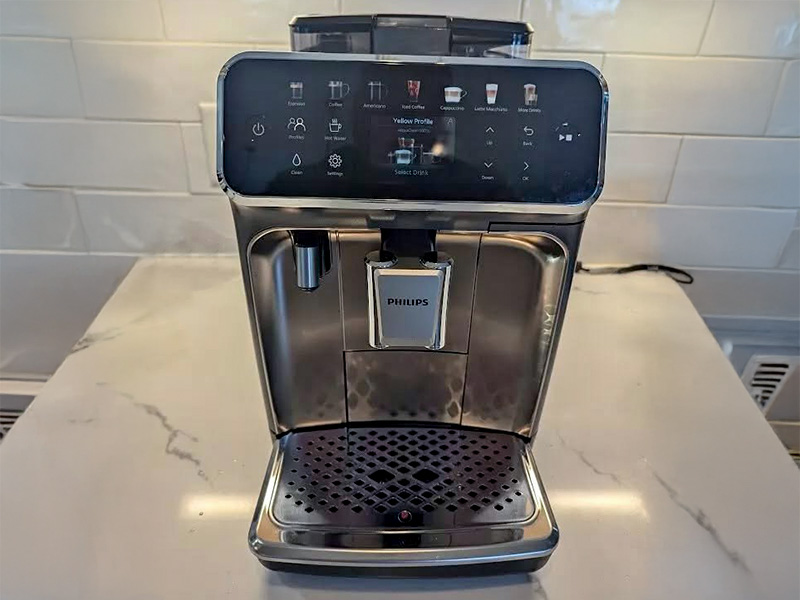
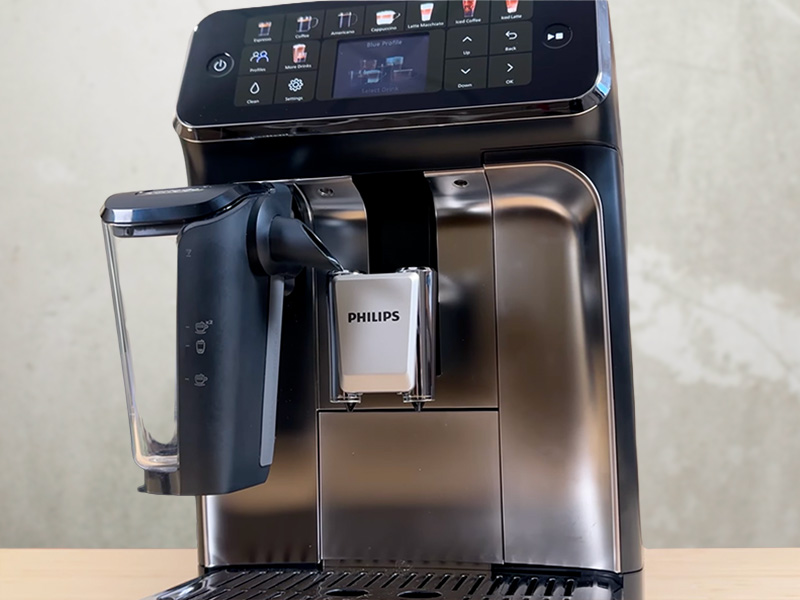
The Philips 3300, 4400, and 5500 all use the same outer shell. So, at first glance, they look almost identical other than the display.
They’re also identical in size and build quality, measuring 9.6 inches wide, 14.6 inches tall, and 17 inches deep. They all weigh 17.63lbs (8kg).
The only visual difference is the user interface. Both the 4400 and 5500 have a small color display, which makes a big difference. They look far more modern and far more stylish than the button-only 3300.
With literally everything else being exactly the same, design preference really comes down to whether or not you care about the screen. We prefer the cleaner, more contemporary look (and feel) of the 4400 and 5500. Even if Philips machines aren’t as striking as (admittedly more expensive) options from brands like Jura or KitchenAid.
One design feature of these 3 machines that was missing on older Philips models is the SilentBrew technology. This makes it a lot quieter to use (they claim 40% quieter), which is great if you live with light sleepers.
🏆 Winner
It’s a tie between the 4400 and 5500, comfortably leaving the Philips 3300 in the dust in terms of looks.

Espresso taste test
The most important (and our favorite) part of any machine comparison: which one actually makes the best coffee?
All 3 Philips machines have the same, very annoying, flaw: you need to make 20-30 coffees that are destined for the bin before they start making actually good coffee. We recommend buying some cheap beans (and patience) to run through a bunch of espressos before moving on to the coffee beans you actually want to drink.
Internally, the brew unit and grinder are the same across the 3300, 4400, and 5500. So, at their core, they’re capable of producing very similar espresso. However, it’s not exactly the same as the amount of control you have over the strength differs.
The Philips 3300 offers 3 Aroma settings – basically, how much ground coffee is used to make your drink. Whereas the 4400 and 5500 have 5 settings. This gives you a lot more control over how intense your coffee tastes. For most people, this extra customization makes it easier to get a flavor you’ll really enjoy.
There is, however, one standout feature that sets one machine head and shoulders above the other two.
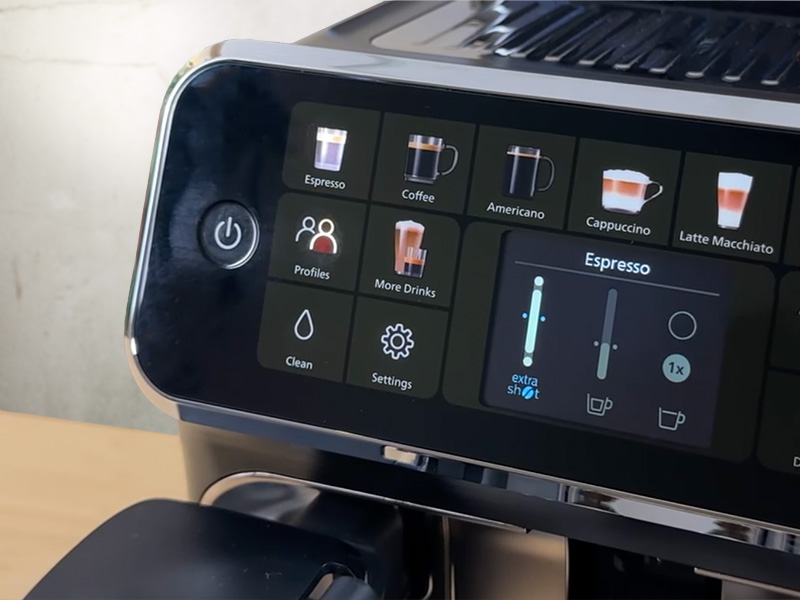
The Philips 5500 has an “Extra Shot” function that makes a huge difference to the overall flavor of the finished coffee. It dramatically boosts the intensity and richness of your drinks. The trade-off is higher coffee usage (around 0.7oz/20g per drink) but, for us, the improvement in flavor is 100% worth it.
🏆 Winner
The 5500 is the clear winner here. Although you’re using more coffee by using double shots for everything, the result is far better-tasting drinks compared to the 3300 and 4400.

What about the milk?
Okay, so the same brewing unit can produce different coffee results. But what about the milk?
There isn’t really any difference in the milk from the 3 machines in terms of quality.
However, the more extensive drinks list on the 4400 and 5500 includes milk-based drinks that require a denser microfoam than the 3300 (flat white rather than cappuccino-style milk). These are okay, but not really up to the standard of some competitor machines that also offer these drinks.
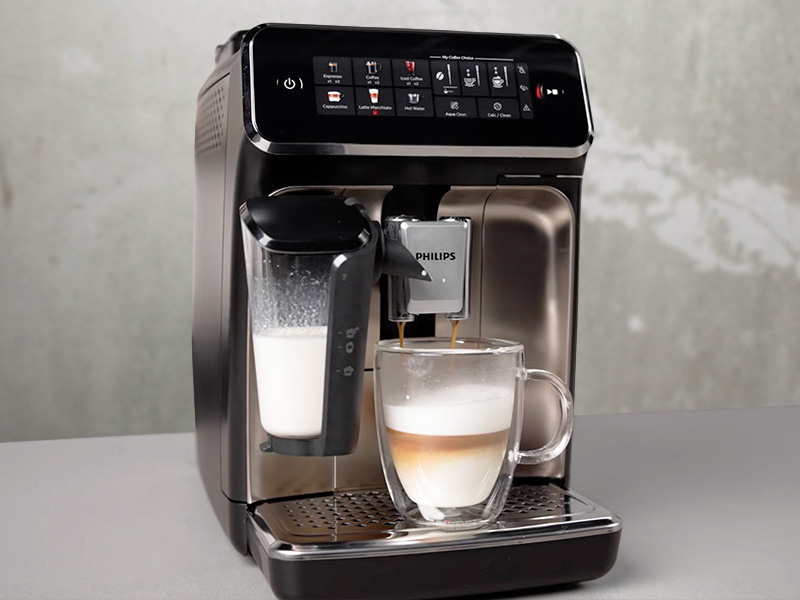
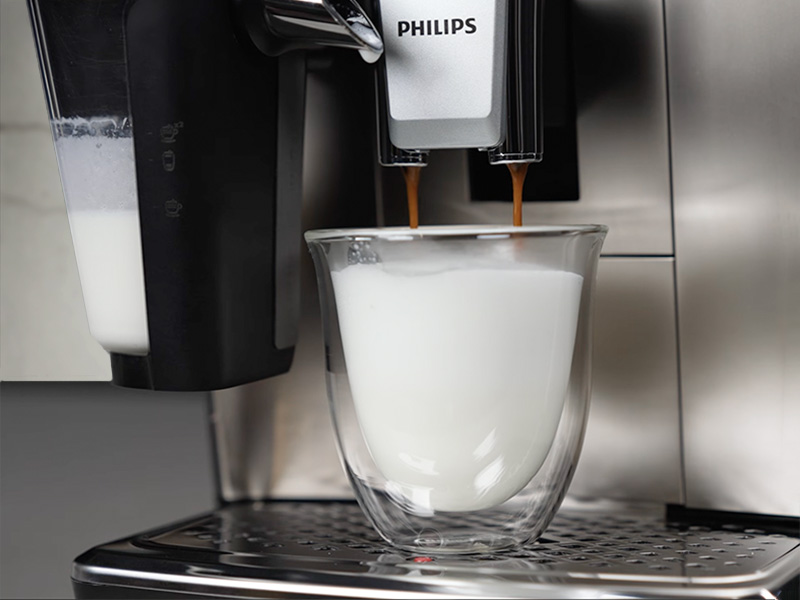
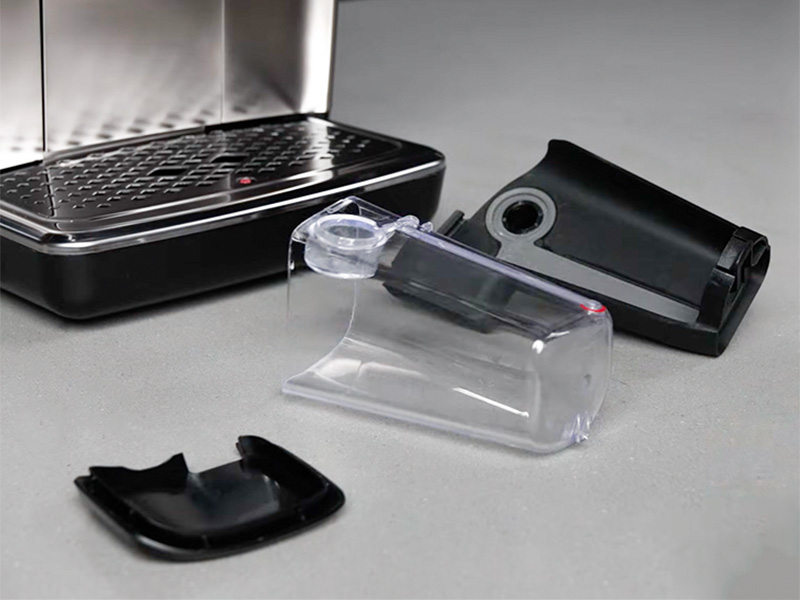
The larger bubbled foam that is ideal for a cappuccino or latte macchiatto is what the Philips LatteGo system excels at.
All 3 machines say they can be used with any milk alternative. We only tested it with Barista Oat milk (as that’s the only one we actually enjoy drinking) and got good results. Maybe a little less foamy than when using cow’s milk, but nothing less than expected from this type of espresso machine.
Any negatives can be forgiven for just how easy the milk system is to clean. We’ve tested a lot of super-automatic espresso machines at this point, and the LatteGo remains our favorite for cleaning. Milk systems can get very nasty, very quickly, so this is a HUGE plus in favor of Philips.
🏆 Winner
It’s a dead heat. Same milk system, same milk quality.

So, which Philips espresso machine should you buy?
For most people, the answer is simple: buy the Philips 5500 if you can find it at a discount.
We think the 5500 comfortably justifies the extra money over its cheaper siblings. It makes the best-tasting coffee of the three models, offers the widest range of drinks (including flat whites and iced milk-based drinks), and gives you the most control over the final flavor. If you’ll actually use those extras, the higher price is worth it.
That said, the Philips 3300 is a solid choice if you’re upgrading from a pod machine and only drink a few basics like espresso or cappuccino. It delivers the same core coffee quality but skips the extra features.
The Philips 4400 sits in the middle and makes sense for households with multiple coffee drinkers who want user profiles and iced espresso, without stepping up to the 5500’s price.
But the number 1 thing to keep in mind when choosing the best Philips espresso machine for you: none of them offer good value for money at full RRP. It’s only when they’re discounted (which they very frequently are) that the Philips range becomes competitive. Then the 5500 stands out as the best long-term buy, especially if you can find it around $1000.
Bottom line: If your budget allows, choose the Philips 5500. Otherwise, pick the model that matches how many people will use it and how many drinks you actually want. No more, no less.
Which is Your Winner?

You Might Also Like
-

Miele CM 6360 Review: Beautiful, Powerful, But Is It Right for You?
In this Miele CM 6360 review, we share our hands-on thoughts on who should buy it, who shouldn’t, and how it compares to Jura and Breville
-
Philips 5500 Review: Great For Beginners – Or Overpriced?
After weeks of testing, read our honest Philips 5500 review. In short, it’s easy to use with 19 drink options – but it’s not worth full price